
For over a century, the Victorian-era Blackwall Tunnel has been a vital artery for London. However, the arrival of the Silvertown Tunnel marks a significant shift in the capital’s infrastructure. Delivered by main contractor Riverlinx CJV, the project is an engineering feat of 1.4km twin-bore road tunnels and dedicated bus lanes. Beyond the subterranean works, it presents a compelling case study in how masonry can elevate essential utility into a permanent architectural legacy.
Beyond Utility
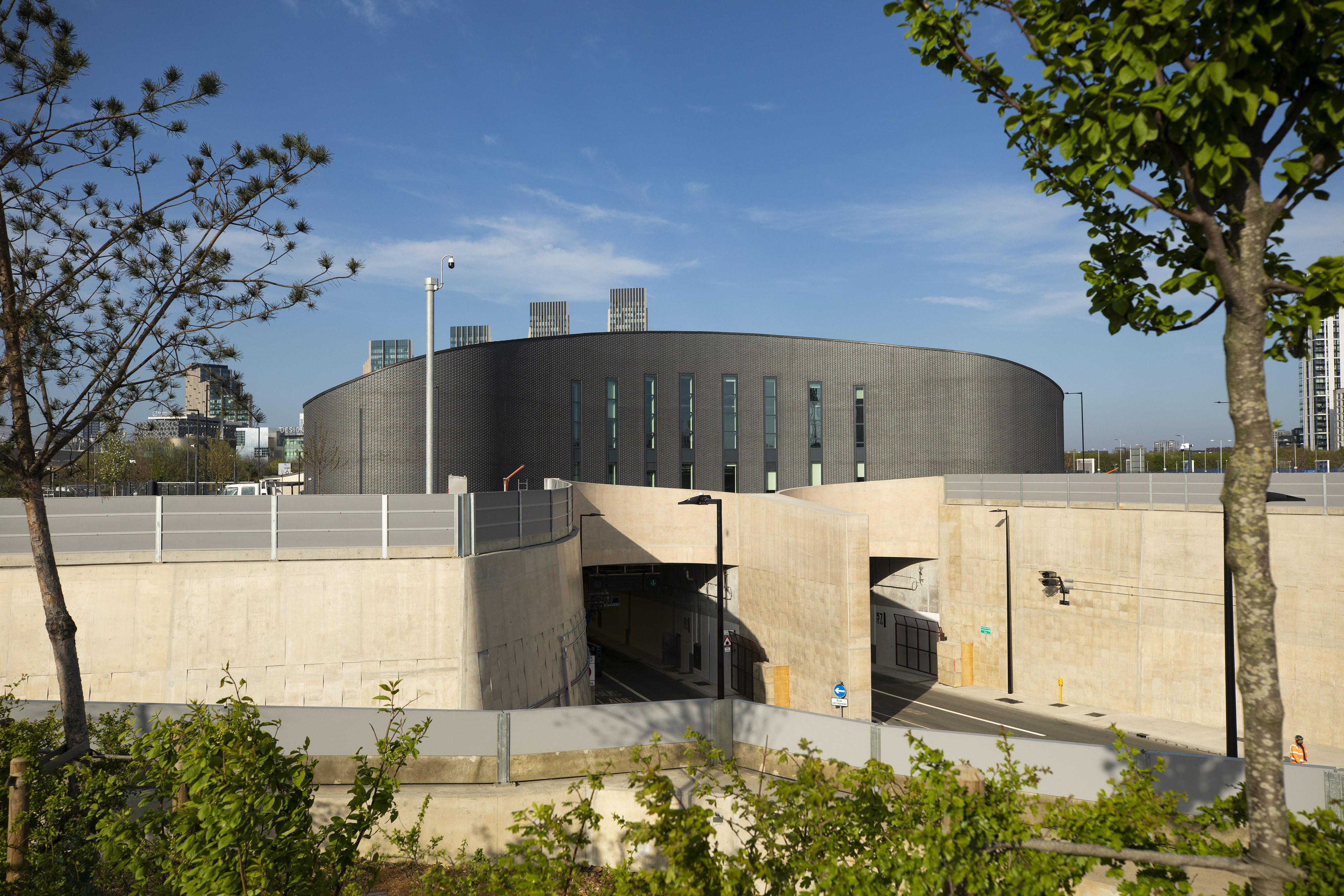
Commissioned to alleviate the chronic congestion and air quality issues plaguing East London, the Silvertown Tunnel is more than a transport solution; it is a permanent addition to the Thameside skyline. Tasked with housing the tunnel's operational "brains," architects dRMM sought to create buildings that acted as strategic "gateway markers."
The challenge was to design two Portal Control and Support buildings that felt grounded in their historic surroundings while asserting a modern, industrial importance. The answer lay in a material synonymous with London’s resilience: the engineering brick.
The Articulated Flemish Bond
The architectural language of the portals is a dialogue between two sites. While the southern Greenwich Portal is characterised by its elegant, sweeping curves, the northern Silvertown Portal acts as a beacon, featuring a conical copper crown sat atop a robust masonry plinth.
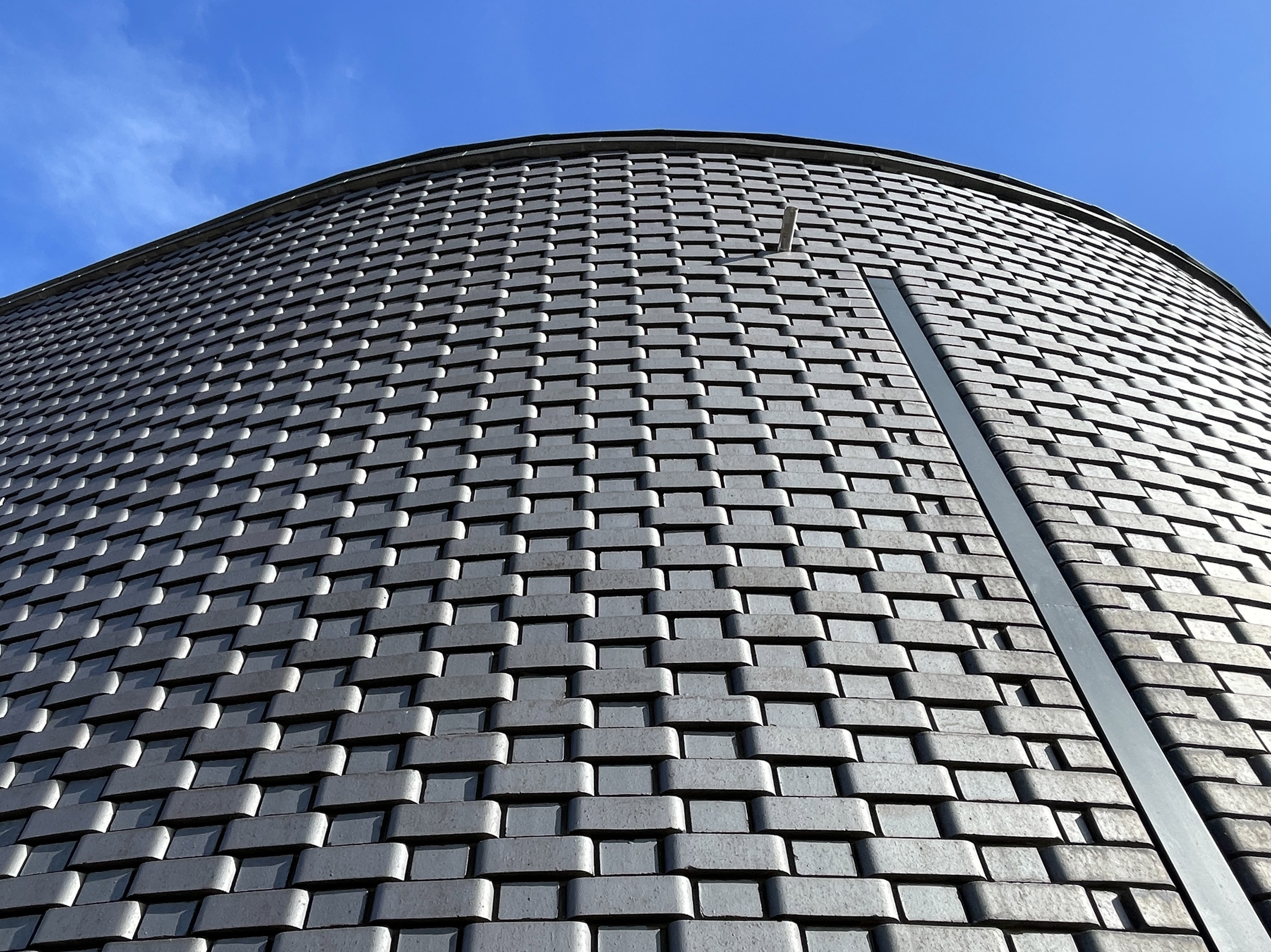
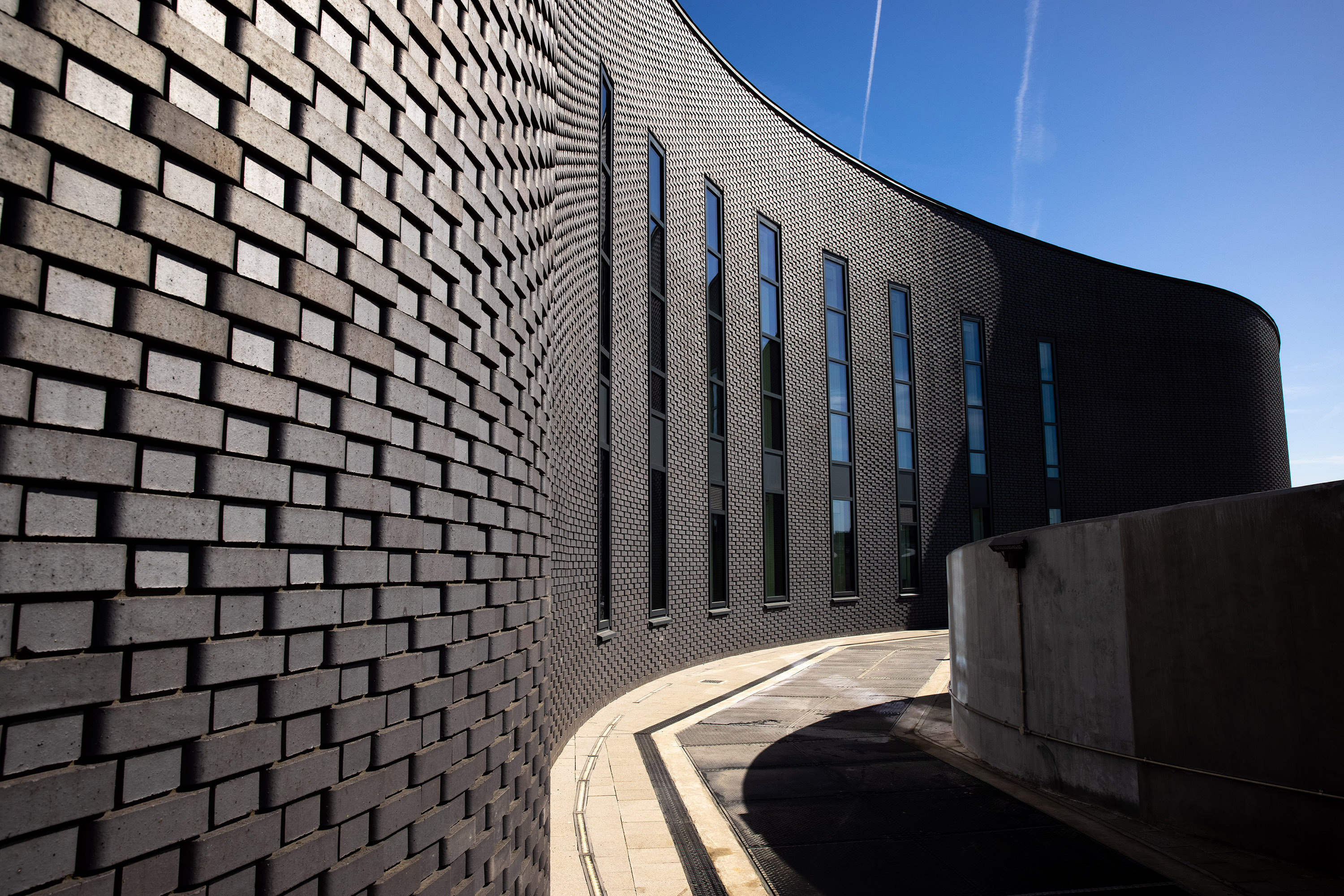
Unifying these two forms is a sophisticated "chain-link" effect, achieved through a bespoke articulation of Flemish bond brickwork. By manipulating the depth of the headers, the architects transformed windowless façades into rhythmic, textured surfaces. This play of light and shadow ensures the buildings remain visually engaging under the grey skies of London or the glow of artificial streetlighting.
The Strength of Staffordshire Blue
The Silvertown Portals represent a masterclass in the technical application of Ketley Class A engineering bricks. Realised on-site by specialist brickwork contractor AVV Solutions, the material choice was driven by a need for a "monolithic" aesthetic that could withstand the harsh environment of a major trunk road.
Sculpting with Double Bullnose
To navigate the buildings' tight radii, standard double-bullnose bricks were utilised as stretchers. Expertly laid by AVV Solutions in a Flemish bond with recessed headers and joints, and pointed with CPI EuroMix black mortar, the result is a seamless, tactile skin. This articulation is not merely decorative; the textured surface serves as a practical deterrent to graffiti, a vital consideration for public-facing infrastructure.
Weathering the Elements
Infrastructure projects are measured in decades, not years. The selection of Ketley clay bricks was paramount due to their exceptional resistance to water ingress. In a design where headers are recessed by up to 50mm, the risk of water pooling on the projecting stretchers is high.
Ketley’s clay bricks are uniquely qualified for this task, being independently tested for freeze-thaw performance within textured façades. This ensures that the intricate "toothed" aesthetic does not succumb to frost damage, maintaining the structural and visual integrity of the portals for generations.
A Contextual Legacy
By echoing the clay brick vernacular of the surrounding residential and industrial buildings in Greenwich and Silvertown, the project avoids the "anonymous" feel of typical infrastructure. Instead, through the collaboration of Riverlinx and AVV Solutions, it provides a robust, high-quality finish that celebrates the heritage of the area.
The Silvertown Tunnel portals stand as a testament to the fact that when civil engineering and high-quality masonry converge, the result is more than just a tunnel, it is a new landmark for the city.
Click the link for an exclusive look inside the Silvertown Tunnel https://www.youtube.com/watch?...
Brick Bulletin | Feature 292


