
In the heart of Manchester’s St Ann’s Square conservation area, Island stands as a sophisticated example of how traditional materials can be adapted for modern, high-density commercial architecture. Developed by HBD and the Greater Manchester Pension Fund, the project demonstrates a rigorous commitment to masonry detailing while utilising advanced off-site assembly.
For this week’s Brick Bulletin, we examine the design considerations that allowed Island to honour its historic context through the clever application of clay brick and precast technology.
Contextual Craftsmanship: The Natural Choice
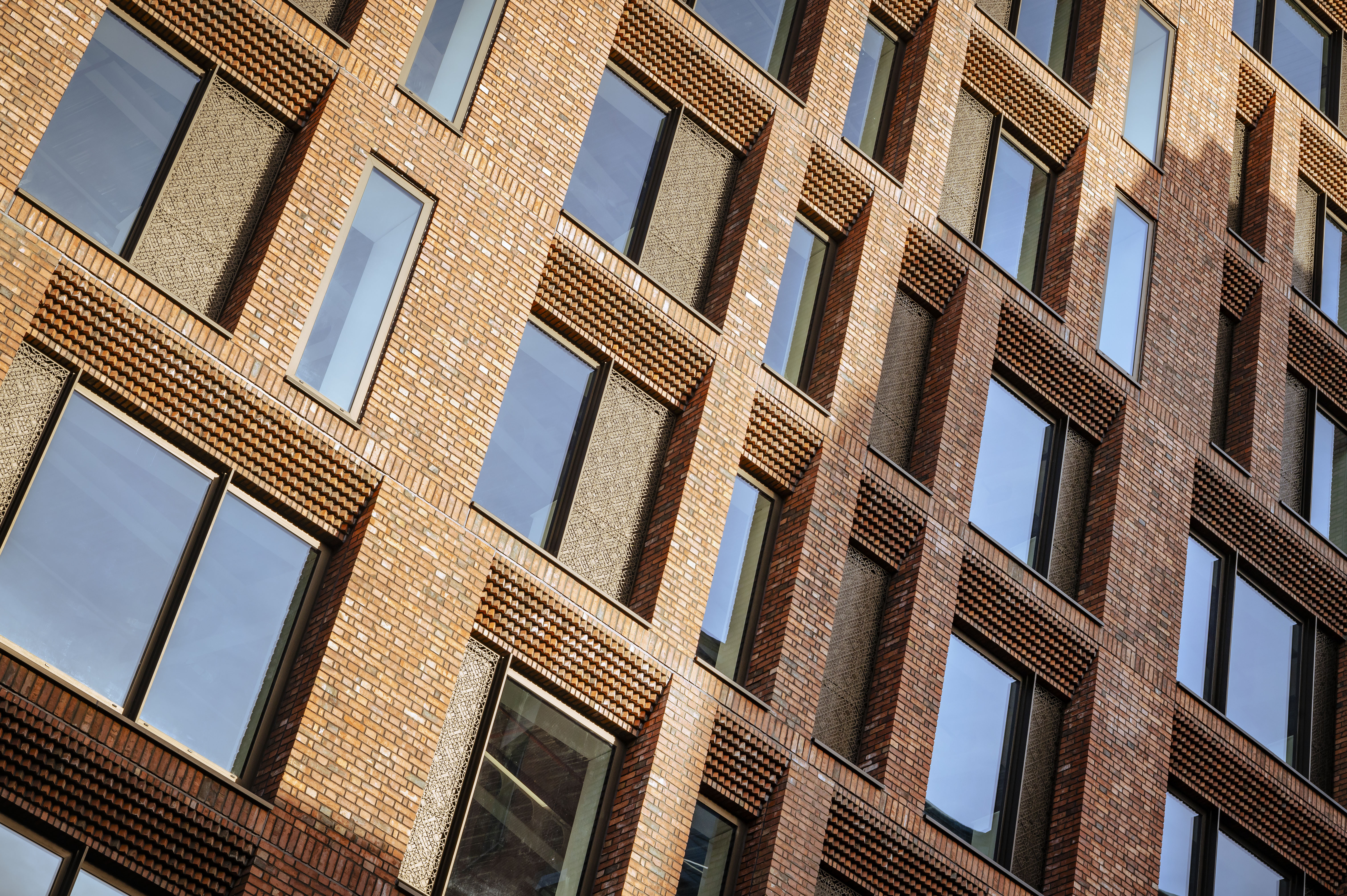
The St Ann’s conservation area is defined by its masonry heritage. To ensure the new structure felt like a natural extension of the city fabric, the design team selected a Natural Orange handmade brick blend by Cumbrian manufacturer Furness Brick.
The selection was driven by two primary design goals:
- The orange brickwork, contrasted with dark mortar, echoes the local Victorian vernacular while maintaining a contemporary edge.
- The use of headers allowed for the creation of smooth, curved corners that mimic existing historic buildings on the site’s perimeter, transitioning seamlessly back into a standard stretcher bond.
The Engineering of the Façade
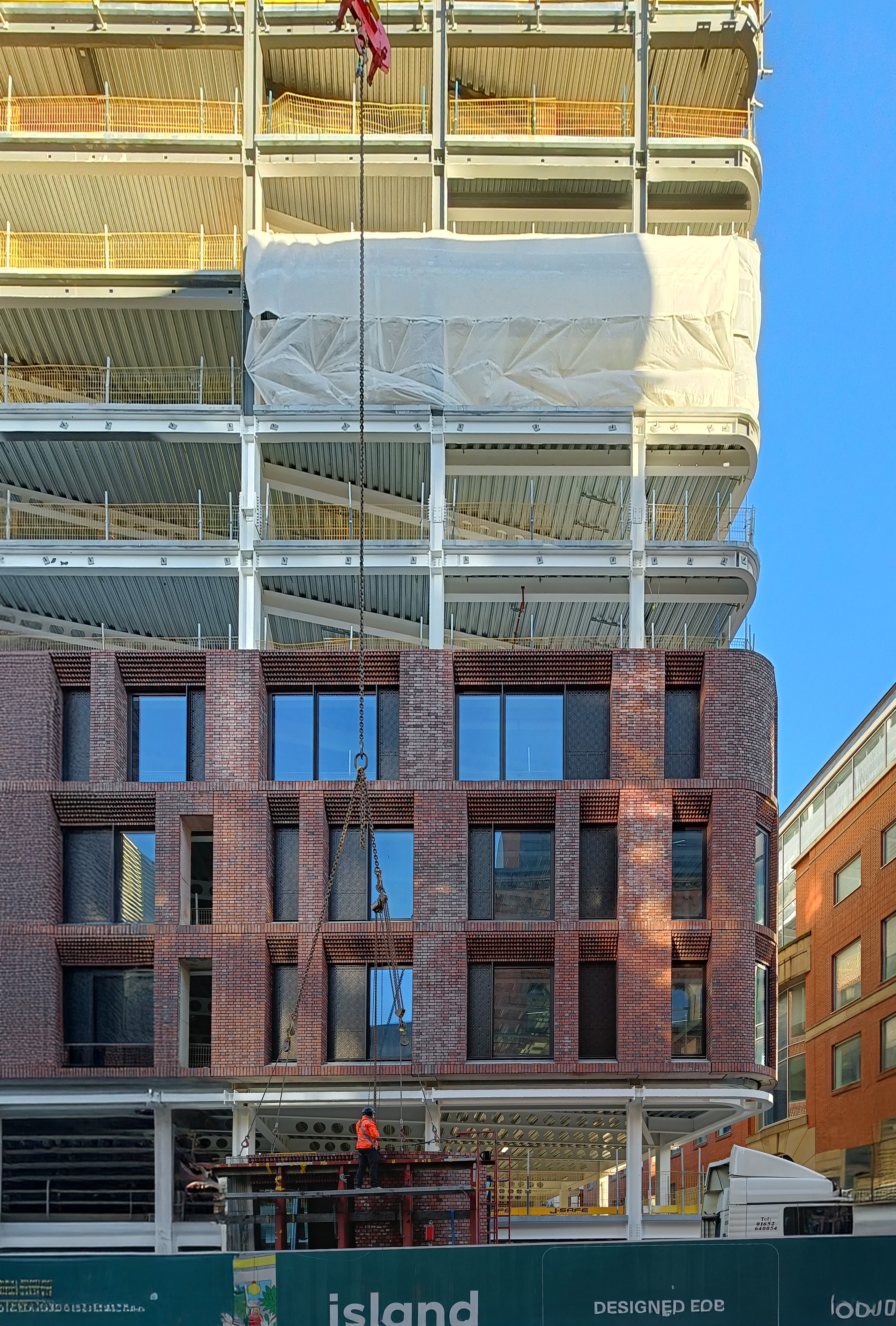
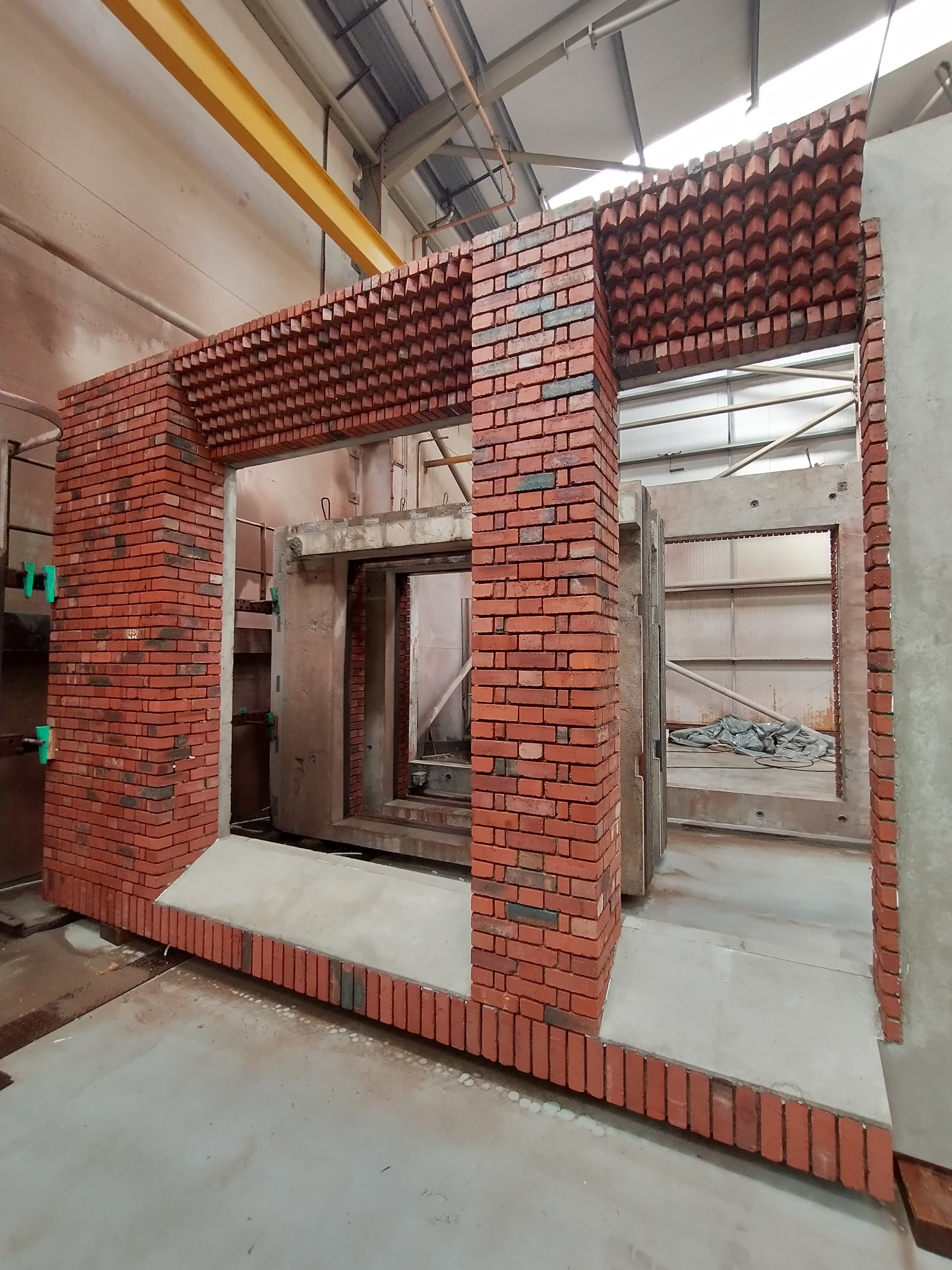
Island is a flagship case study for the technical capabilities of off-site manufactured brick-clad systems. Working with specialist contractor Techrete, the project utilised 270 precast panels faced with over 270,000 clay bricks.
The design achieves a complex, asymmetrical appearance through the strategic repetition of just six different module types. Key technical highlights include:
- Hidden Articulation: Vertical joints are concealed within window reveals, while horizontal joints are masked by a soldier course at each floor level, maintaining the visual integrity of the masonry.
- The 'Sawtooth' Profile: The flexibility of the clay brick-faced system is best seen in the angled sawtooth details, which would be incredibly labour-intensive to achieve via traditional on-site laying.
- Material Efficiency: Full standard clay bricks were cut in half prior to being cast into the panels. This maximised the yield of the handmade Furness blend without compromising the external depth or texture of the façade.
Factory-Controlled Precision
By moving the masonry work into a controlled environment, the project team ensured a level of consistency difficult to replicate in British weather:
- Precision Pointing: All mortar pointing was completed post-casting within Techrete’s production hall, ensuring uniform joints across all 270 panels.
- Integrated Assembly: Windows and aluminium panels were installed into the brick-clad units off-site, meaning the units arrived at the site as complete 'plug-and-play' façade components.
- Programme Gains: The entire façade was installed in just 13 weeks, with a single floor completed every seven days. This allowed the building to become watertight rapidly, accelerating the start of internal fit-outs.
Island proves that clay brick remains the premier choice for urban regeneration, providing a robust, high-quality finish that honours the past while embracing the efficiency of modern construction methods.
Recognition
Brick Awards 2025 Winner - Commercial
Client: HBD / Greater Manchester Pension Fund
Architect: Cartwright Pickard
Main Contractor: Bowmer + Kirkland
Brickwork/Precast Specialist: Techrete
Brick Manufacturer: Furness Brick (Cumbria)
Base Materials: Natural Orange handmade brick, patinated steel base.
Brick Bulletin | Feature 289


