

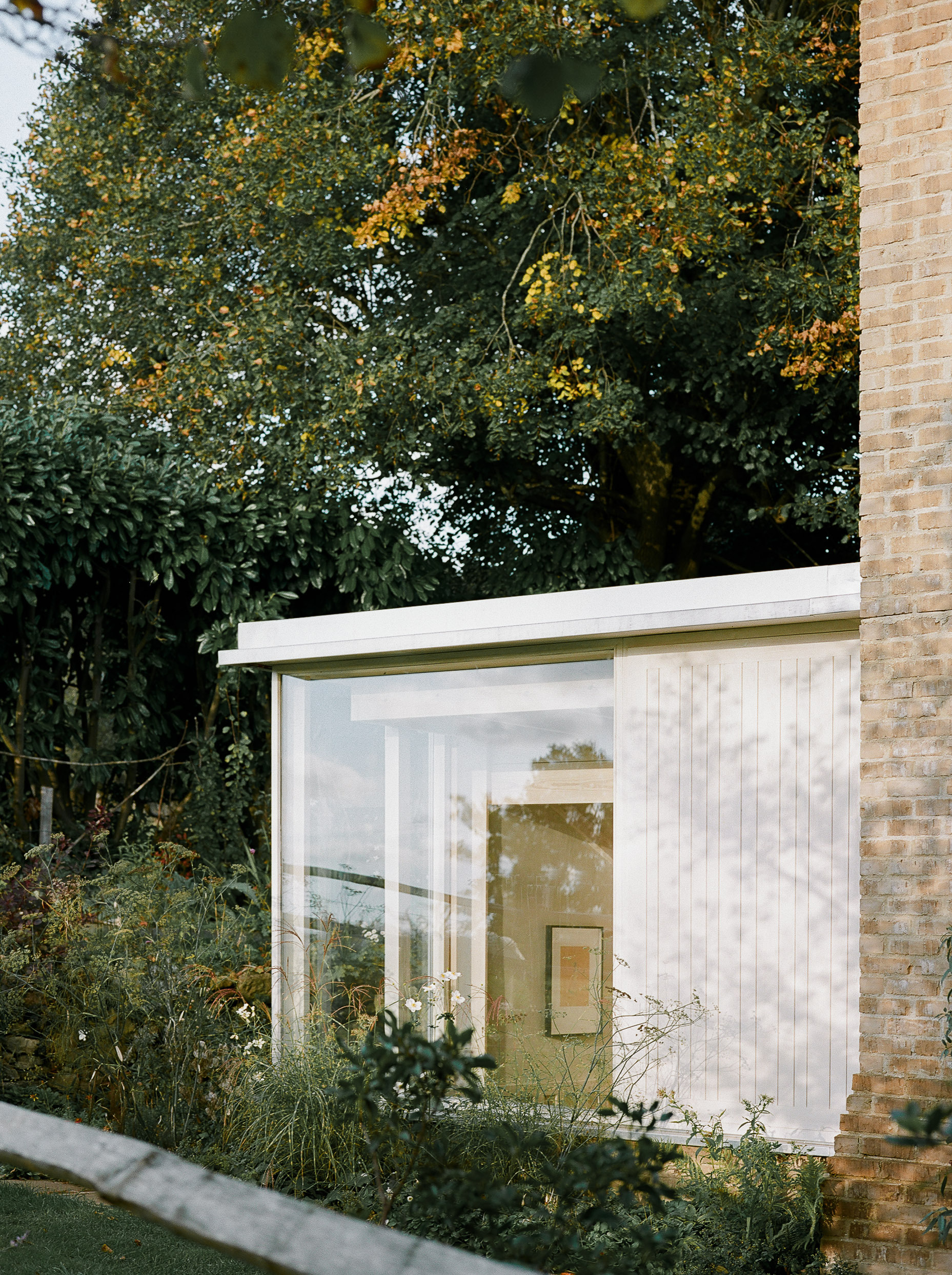
Set amidst the ancient woodland of Limpsfield Chart, Hop Cottage, an Edwardian semi-detached house originally serving as the working rooms for an adjacent conical Oast, has been extended by AOMD. Driven by a strict budget of £70,000 and a commitment to genuine resource efficiency, this 18-month self-build project demonstrates how small-scale residential interventions can champion circular construction principles without compromising on historic context.
Resource Efficiency and Circular Design
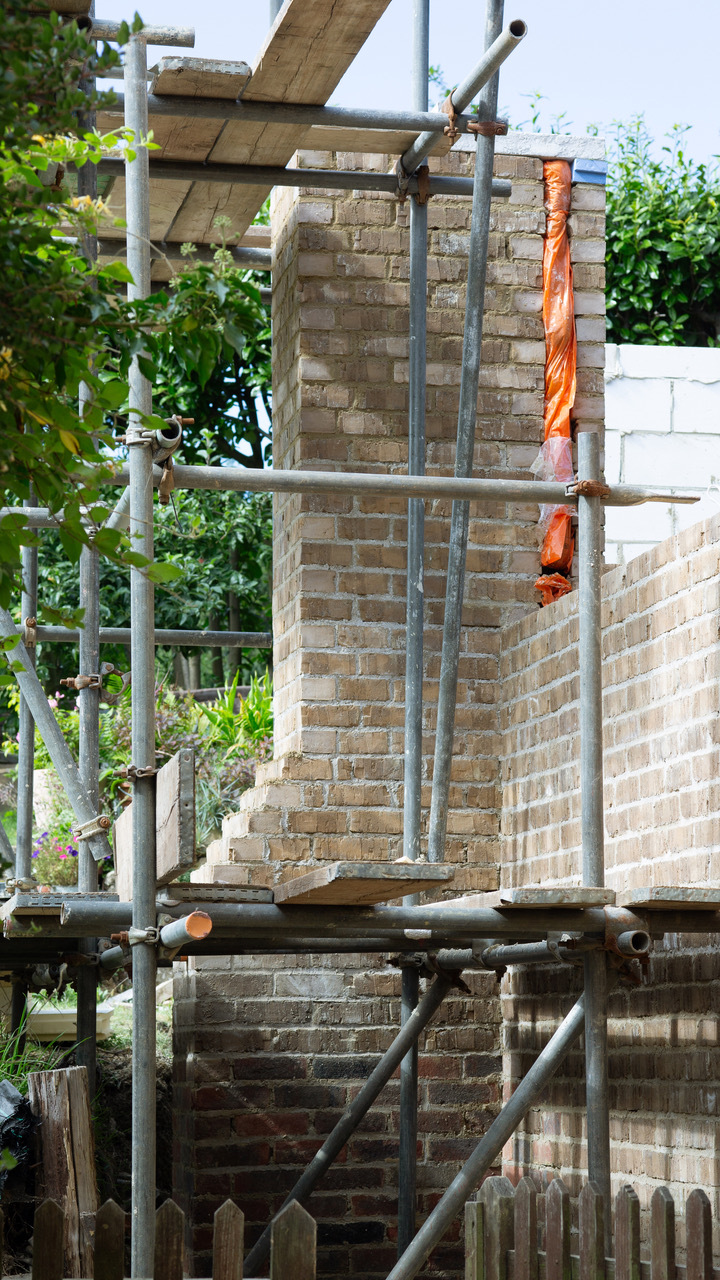
Rather than demurring to standard demolition and disposal, the design team prioritised a minimal-intervention approach that actively retained existing site assets. The circular material strategy relied on salvaging the existing fabric alongside efficient local procurement, utilising the exact footprint and concrete slab of a former conservatory. This redundant structure was meticulously dismantled so its clay bricks could be cleaned and re-used to construct the new below-ground retaining structure.
To complete the facade, the project sourced wienerberger UK’s PT447 Flint bricks from a yard specialising in over-orders and rejects just 10 miles away. By laying these cheaper, B-grade bricks backward to expose their rough, rear faces, the design achieved a premium, highly textured waterstruck finish. This tactile choice diverted perfectly viable material from downcycling while establishing a low-carbon sourcing model.
Contextual Architecture and Spatial Flexibility
Architecturally, the extension draws on the English vernacular, referencing Edwin Lutyens’s sympathetic additions and the domestic tactile quality of C.R. Mackintosh’s Hill House. A central brick chimney mediates between the interior and exterior, anchoring the new dining and reading spaces. Externally, the structural form steps into the steeply terraced garden, dividing it into three distinct, private "garden rooms."
Inside, the layout has been opened up to improve the home's connection to the landscape while actively planning for the owners' long-term mobility. Ultimately, Hop Cottage demonstrates how local collaboration, a self-build methodology, and the careful reuse of material resources can be deftly and economically integrated into a historic rural context, revealing the potential for a contemporary local vernacular.
Recognition
Architect: AOMD
Brick Manufacturer: wienerberger UK
Brick Name: PT447 Flint
Brick Bulletin | Feature 294


