
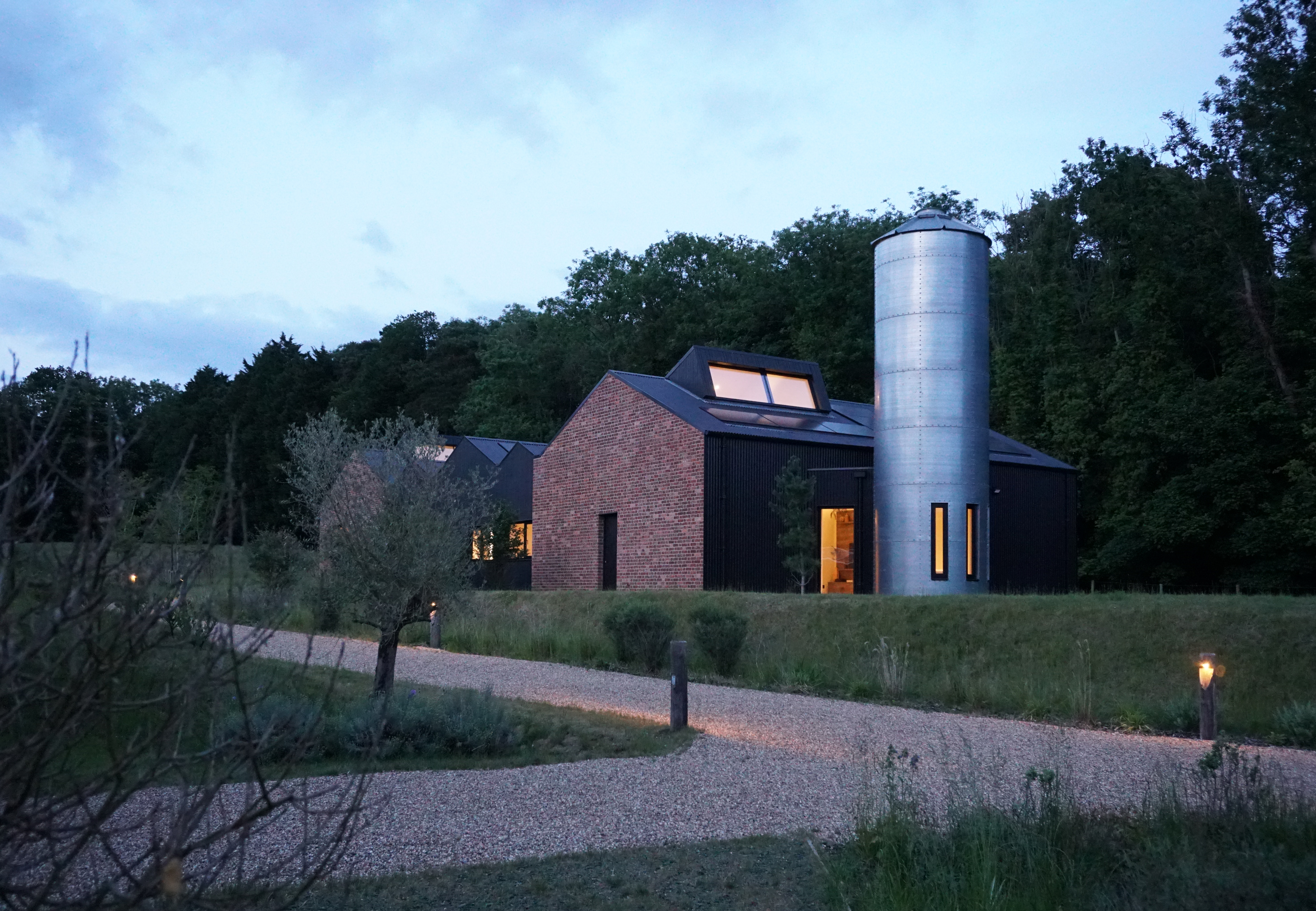
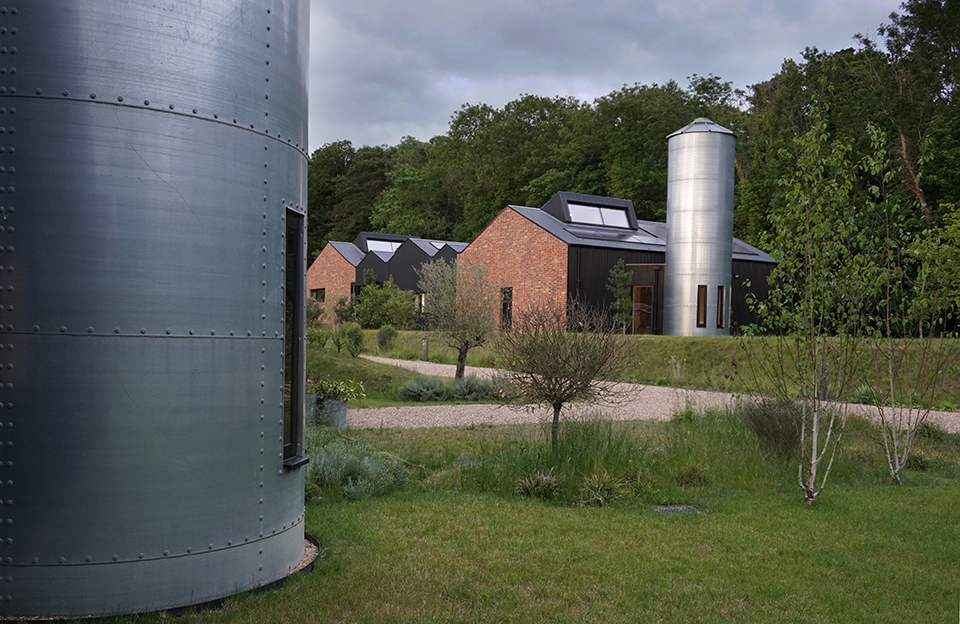
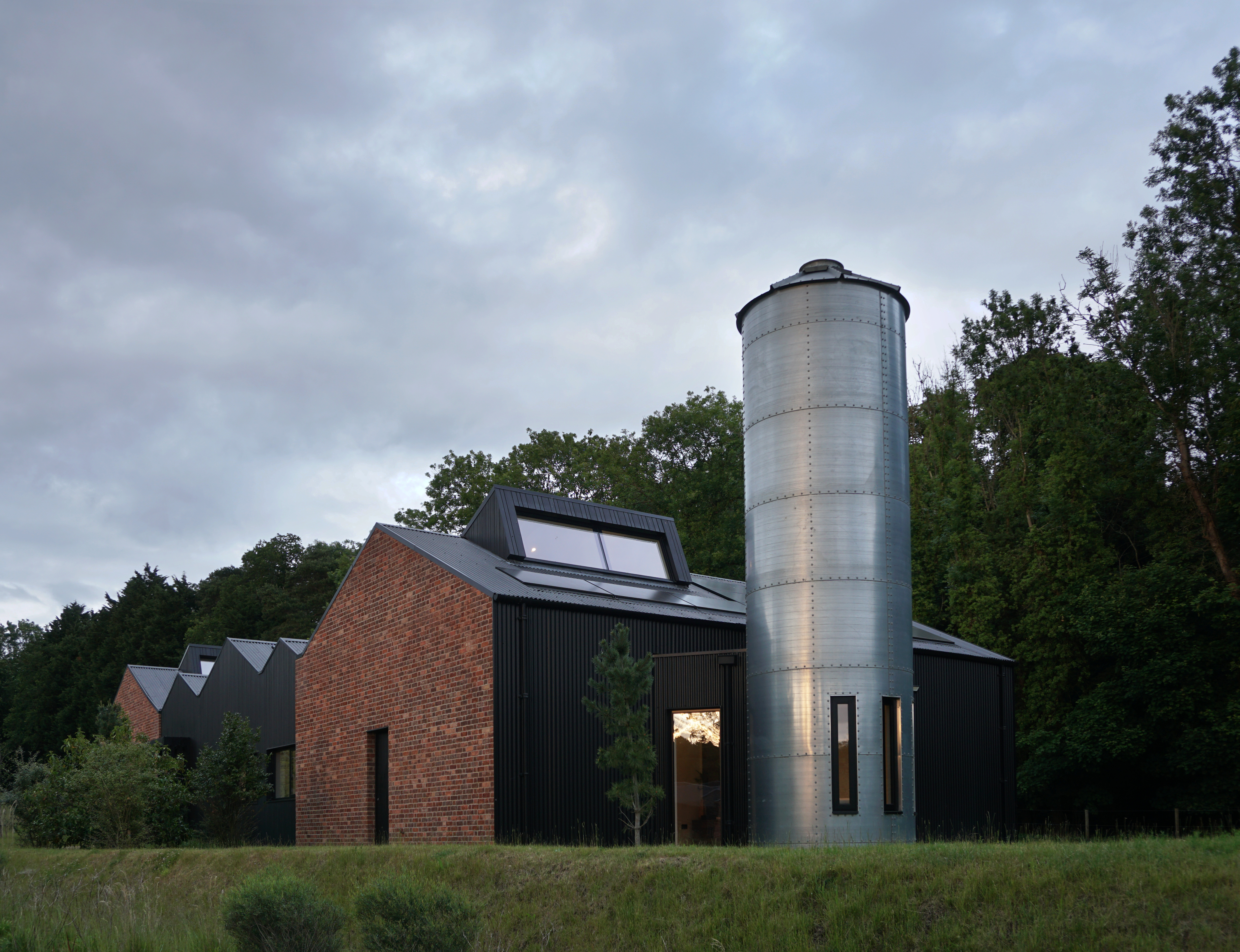
Birch Grove in Chalfont St Giles, Buckinghamshire, is a small residential development by Millbank Homes set beside ancient woodland within the Chilterns Area of Outstanding Natural Beauty and the Green Belt. Comprising three contemporary dwellings and a garage barn, the project replaces a former smallholding previously occupied by more than 20 derelict agricultural structures.
While the scheme is notable for navigating complex planning constraints, it also provides a strong example of how clay brick can anchor contemporary rural architecture within a sensitive landscape context.
Planning context and design response
Residential development on the site was only permitted after very special circumstances were demonstrated. Ibbotson Architects supported the planning case through a coordinated approach that included removal of redundant buildings, landscape improvements and a reduction in overall visual impact.
The architectural language follows agricultural typologies rather than suburban housing forms, helping the scheme align with both Green Belt policy and AONB objectives. Within this strategy, clay brick plays a key role in rooting the buildings in the Chilterns vernacular.
Clay brick specification and character
A defining feature of Birch Grove is the use of handmade clay bricks in a bespoke blend originally manufactured by Northcot Brick for the restoration of Battersea Power Station. Their selection reflects both contextual sensitivity and the need for material robustness.
The clay bricks exhibit:
- a sanded, irregular face texture
- tonal variation ranging from red/brown and pink/brown to yellow and grey
- dark red/grey and light grey notes with brown clinker speckling
- a bright pink-orange core visible on cut units
This variation introduces visual depth across the façades and avoids the uniform appearance often associated with standard facing bricks.
Traditional bond, contemporary application
The brickwork is laid in a burnt header Flemish bond, a pattern associated with traditional Chilterns construction. This choice reinforces local distinctiveness while allowing the architecture to remain clearly contemporary in form.
For architects and specifiers, the project demonstrates how careful bond selection and brick blending can satisfy conservation expectations without constraining modern massing and detailing.
Integration with the wider material palette
Working with contractor Rosguill Developments, the design team combined clay brick with a restrained agricultural palette including:
- stainless steel cladding referencing silos
- corrugated metal
- slatted timber
- knapped flint
Within this mix, clay brick provides visual weight and permanence at key elevations, helping balance the lighter industrial materials and ensuring the buildings sit comfortably within the rural setting.
Performance-led envelope design
The homes adopt a fabric-first approach, with the masonry envelope contributing to overall thermal performance. High insulation levels, energy-efficient glazing and a high standard of airtightness were specified to reduce operational energy demand.
Each dwelling achieves EPC A (SAP scores above 100). Based on design-stage modelling, the homes are intended to operate at net zero carbon in regulated energy use, supported by roof-integrated photovoltaics, battery storage, air source heat pumps, Mixergy smart hot water systems and mechanical ventilation with heat recovery.
Enhancing site condition
Approximately 60% of the derelict buildings on the former smallholding were removed, increasing openness in line with Green Belt policy. The site was remediated and replanted with native woodland and wildflower meadow to strengthen ecological connectivity with the adjacent ancient woodland.
The landscape proposals comply with the 12 Building with Nature standards and report an overall Biodiversity Net Gain of 227%, calculated using the statutory metric in force at the time of submission.
Lessons for clay brick specification in sensitive settings
Birch Grove illustrates the continuing relevance of clay brick in high-performance rural housing. Through careful blend selection, traditional bonding and disciplined detailing, the material provides:
- strong contextual alignment
- long-term durability
- visual richness without pastiche
- compatibility with contemporary forms
Birch Grove shows how clay brick can act as the primary mediator between modern residential requirements and established local character.
Brick Bulletin | Feature 284


