
West Bromwich Town Hall and Library stand as proud symbols of civic ambition and architectural excellence. Originally designed by Alexander & Henman in 1874-75, with the library later added by Weller and Proud, the Italian Gothic landmark has long been at the heart of the town’s cultural identity. Today, thanks to a carefully considered restoration, this Grade II-listed building is once again ready to serve its community, proving that heritage conservation and environmental responsibility can go hand in hand.
Funded by the Government’s Towns Fund Programme and delivered for Sandwell Metropolitan Borough Council, the £6.9m project was designed by APEC Architects and constructed by Morgan Sindall through the Construction West Midlands II framework. The ambition was clear: preserve the building’s rich architectural character while adapting it for modern community use, helping to revitalise West Bromwich’s cultural quarter.
Heritage Conservation as a Route to Sustainability
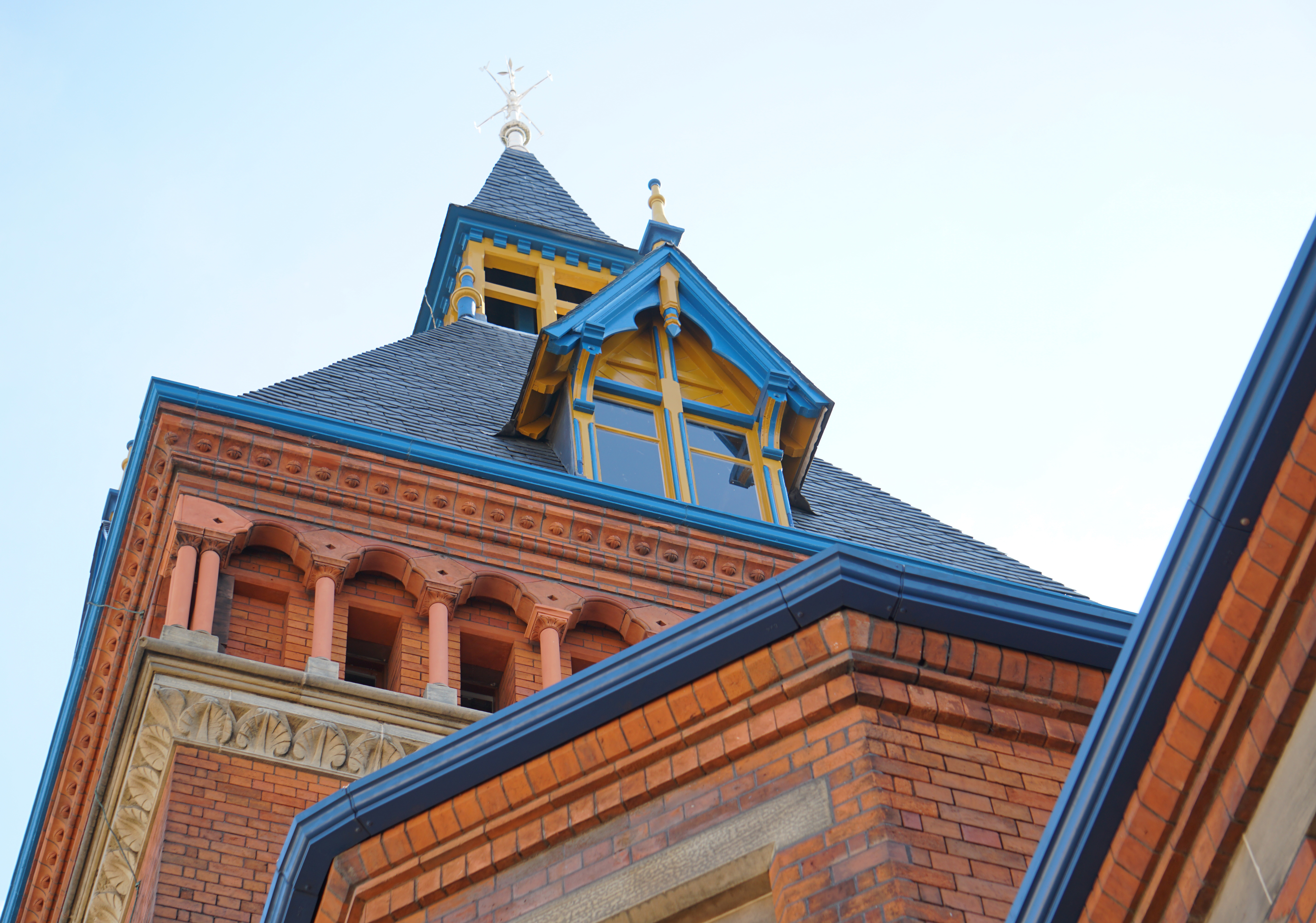
At the heart of the project was careful repair and reuse of original materials, which reduced the need for new resources. Traditional craftsmanship was combined with modern conservation techniques to restore detailed timberwork, replace and repair the slate roof and leadwork on the cupola dome, and refurbish more than 200 large windows, some with intricate stained glass. The iconic terracotta colonnade on the Town Hall tower was also restored, along with extensive stonework repairs. Missing architectural features, including a roof finial lost in 1916, were faithfully recreated using historical references.
This approach not only preserved the building’s historic character but also minimised waste and material replacement, demonstrating how careful heritage work can inherently reduce environmental impact.
Brickwork Conservation: Matching the Past
Almost all of the brickwork required conservation, with varying levels of intervention depending on exposure and age. Extensive repointing and selective brick replacement were carried out across façades, structures, and the chimney stack.
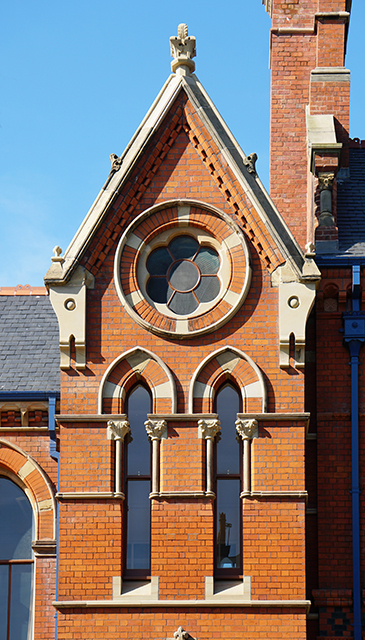
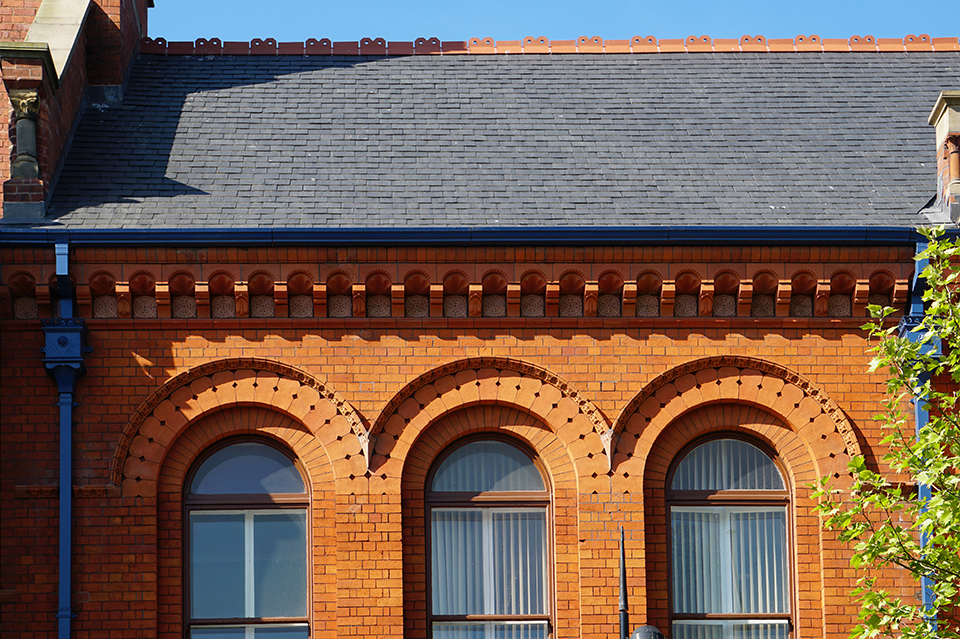
Northcot Brick created two bespoke imperial-sized blends, machine-made Regency Orange and handmade Brickfield Orange, to match the colour, texture, and precision of the original masonry. Ornate brick detailing, including decorative string courses, banding, arches, bullnose ledges, dentil courses, and embossed fleur-de-lis bricks, were repaired or remade. Where original bricks survived, they were sent to Northcot for templating and recreation, ensuring continuity of craftsmanship.
This careful work preserved historic materials wherever possible and avoided unnecessary demolition, highlighting the environmental benefit of repair over replacement.
Tangible Environmental Practices
The project implemented practical measures that directly reduced environmental impact:
-
Reuse of original building materials wherever possible
-
Diesel-free site operations, with temporary offices housed within the existing building to reduce energy use
-
Construction waste diverted from landfill
These choices reflect sustainability emerging naturally from heritage-led decisions, rather than abstract or unverified metrics.
Community and Local Impact
The restoration also prioritised social sustainability. Local skills and trades were at the centre of delivery: 35 local craftspeople, seven apprentices, and 18 work experience students contributed to the project. Half of all supply chain spending remained within 20 miles of the site. Volunteers donated 252 hours to support community engagement, and charitable organisations received donations, strengthening the building’s connection to the town it serves.
A Model for Sustainable Heritage Restoration
West Bromwich Town Hall and Library demonstrate how heritage conservation can align with environmental responsibility. By focusing on repair, reuse, and skilled local labour, the project protected the past while minimising resource use and supporting the local community.
This project is a clear reminder: brick and masonry, when carefully conserved and matched, are durable, adaptable, and inherently sustainable building materials, and heritage-led projects like this show their value beyond aesthetics.
Brick Bulletin | Feature 278


