
In Birmingham’s Jewellery Quarter Conservation Area, The Pressworks offers a compelling example of how contemporary brick design can support sustainable, heritage led regeneration. Transforming a disused mid nineteenth century manufactory into 48 new homes, the scheme demonstrates the enduring relevance of brick as both a contextual and future facing material.
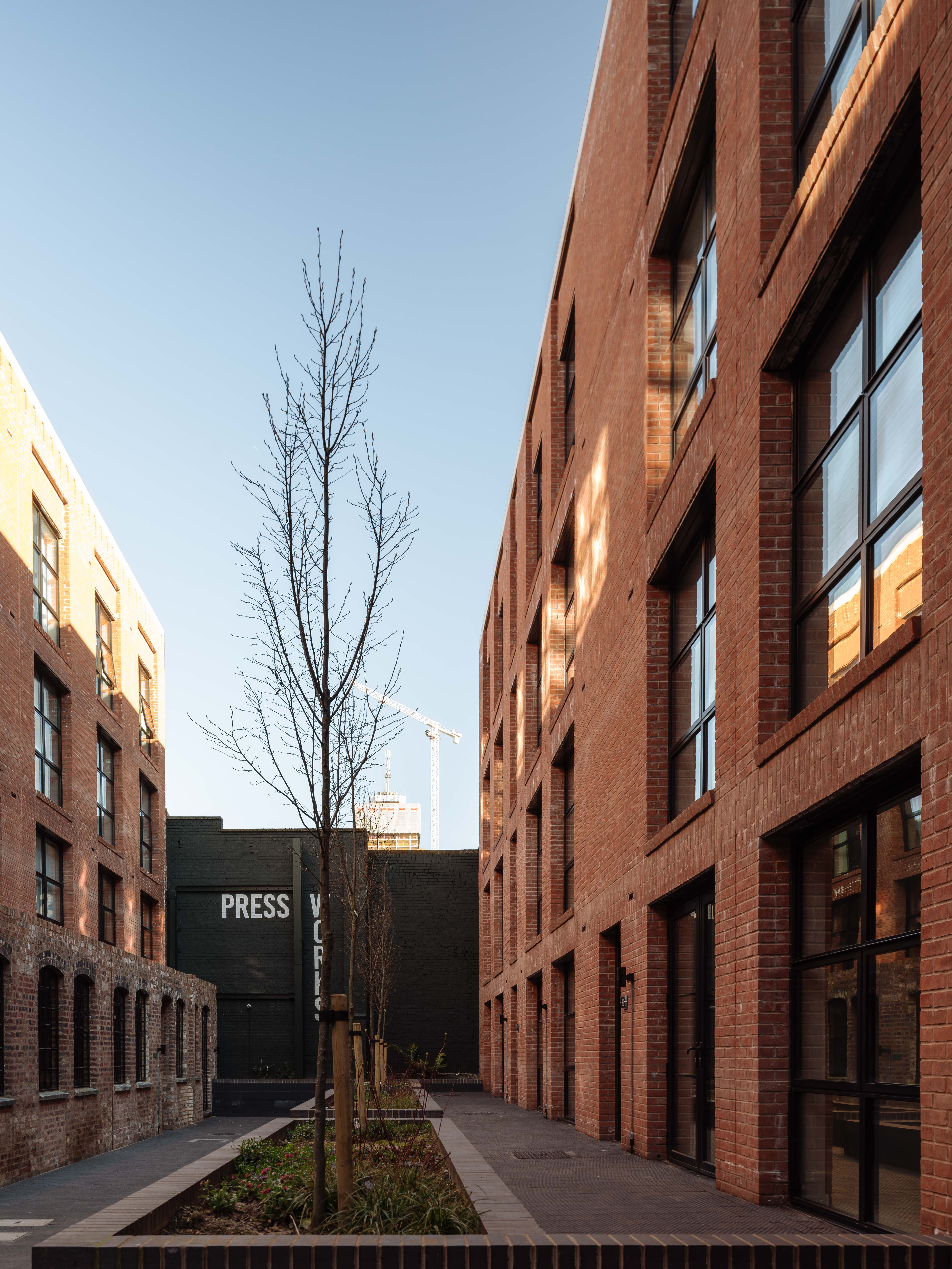
At the heart of the development sits a Grade II listed industrial building, carefully restored to reveal its original architectural character. Poor quality overbuild was stripped away, allowing the historic structure to inform the design language of the new residential blocks. Rather than imitation, the project adopts a respectful contrast, drawing on proportion, rhythm and detailing while embracing modern construction methods.
Brick plays a central role in delivering this approach. Over a modern light gauge steel frame, the project team required fully self-supporting brick façades to achieve the desired architectural clarity. Working closely with IG Masonry Support, a bespoke B O S S A1 masonry system was developed. Concealed lintels within the brickwork allow window head details to remain visually clean, while transferring loads into structural brick pilasters.
These pilasters are more than technical devices. Visually and structurally, they reference those of the listed building, reinforcing continuity across old and new. Precisely executed by specialist contractor L Mason, the solution removed the need for secondary steelwork, reducing material use while allowing brick to be expressed honestly and efficiently.
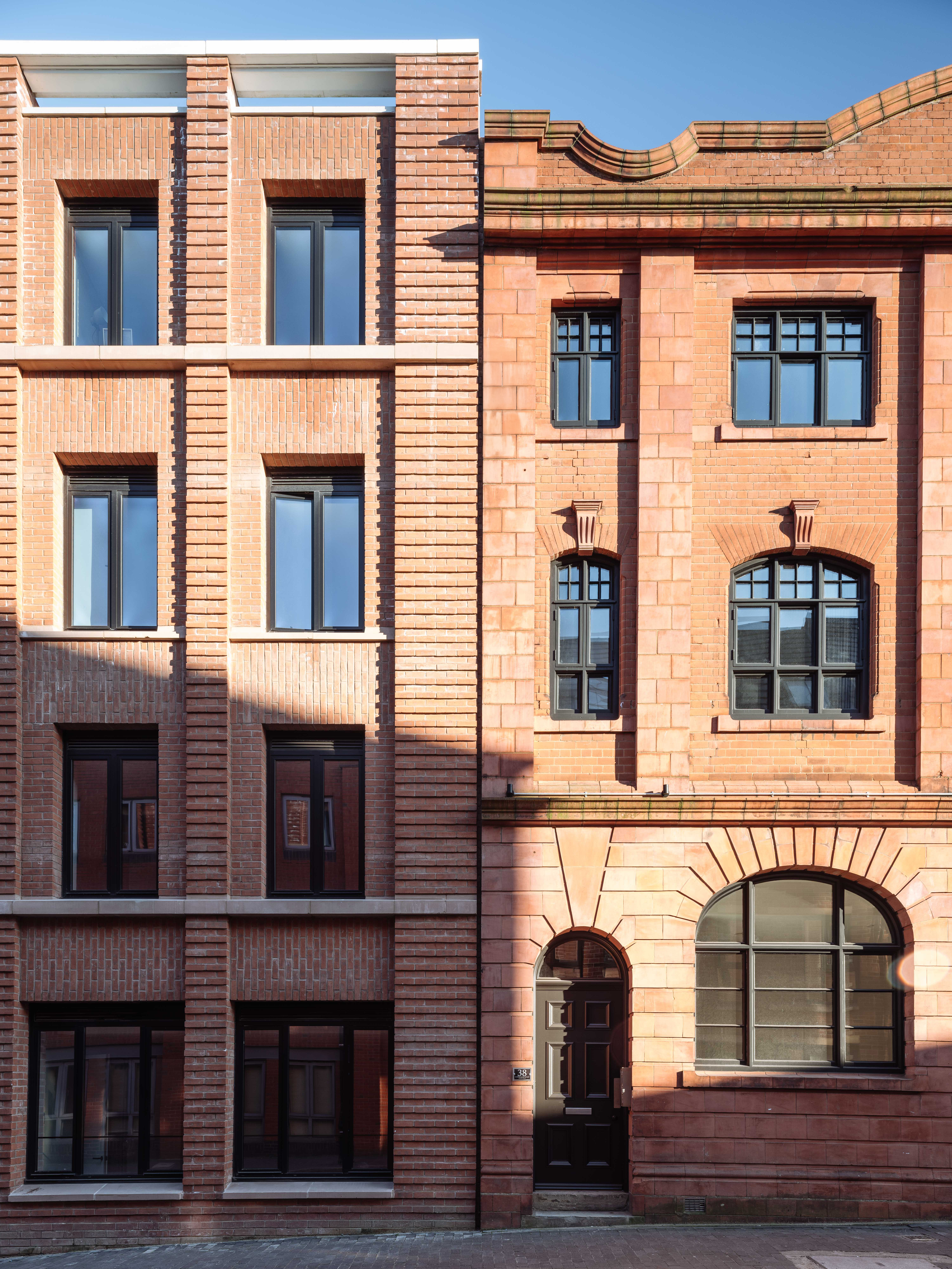
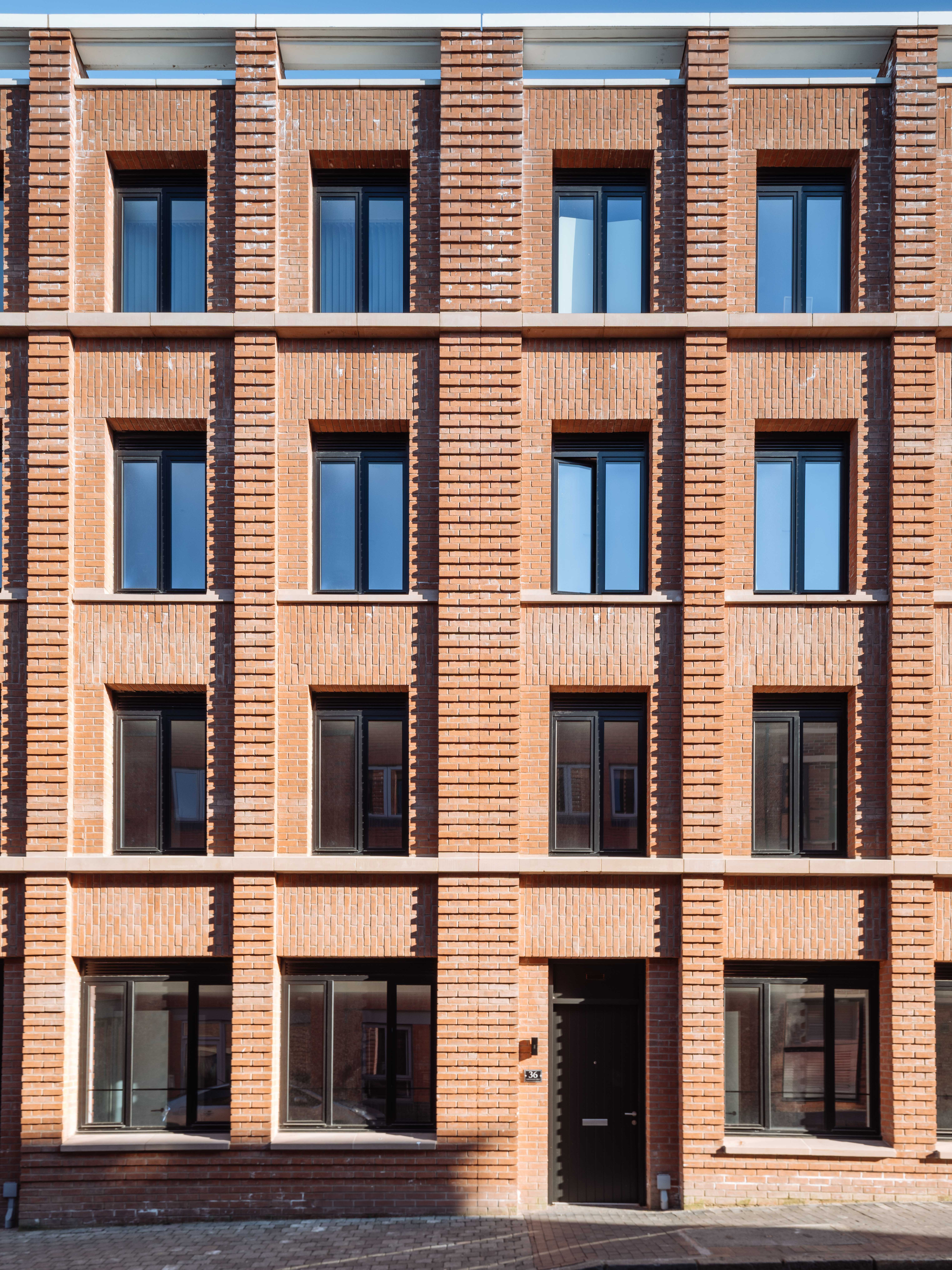
The two new street façades flanking the listed building adopt distinct identities while remaining closely tied to their context. On the left-hand block, 20mm rustication at ground level echoes the terracotta detailing of the historic structure and continues vertically through the pilasters. Between these, recessed half brick panels and inset full brick windows introduce depth and texture. Vertical stretcher bond detailing above window heads references the original self-supporting brick lintels of the industrial building.
The right-hand block takes a more restrained approach, with a rusticated base, deep window reveals and stepped brick lintels. Here the emphasis is on solidity, precision and the play of light and shadow across the brick surface, demonstrating how subtle changes in detailing can significantly alter architectural character.
Sustainability is embedded throughout the project, not only in design intent but in material choice and construction practice. L Mason’s work on the listed building included the careful reuse of cast-off bricks to repair damaged areas, reducing waste and preserving material continuity. This approach reinforces the inherent sustainability of brick as a durable, reusable and long-life material.
For the new build elements, Forterra’s Eco Stock Shelton Red Multi brick was selected. Its sustainability credentials, colour compatibility with the existing brickwork and cost effectiveness made it well suited to the project. On site, the brick proved robust and adaptable, supporting complex detailing within a constrained budget. This highlights the role brick manufacturers play in enabling architects to meet environmental, aesthetic and commercial goals simultaneously.
The Pressworks stands as a strong example of what can be achieved through collaboration between architects, brick manufacturers, technical specialists and skilled contractors. It shows how thoughtful brick design and innovation can support sustainable development while enhancing historic settings. For architects working within sensitive urban contexts, it offers a clear message: brick remains a powerful and responsible material for shaping the future of our built environment while respecting its past.
Brick Bulletin | Feature 277


