
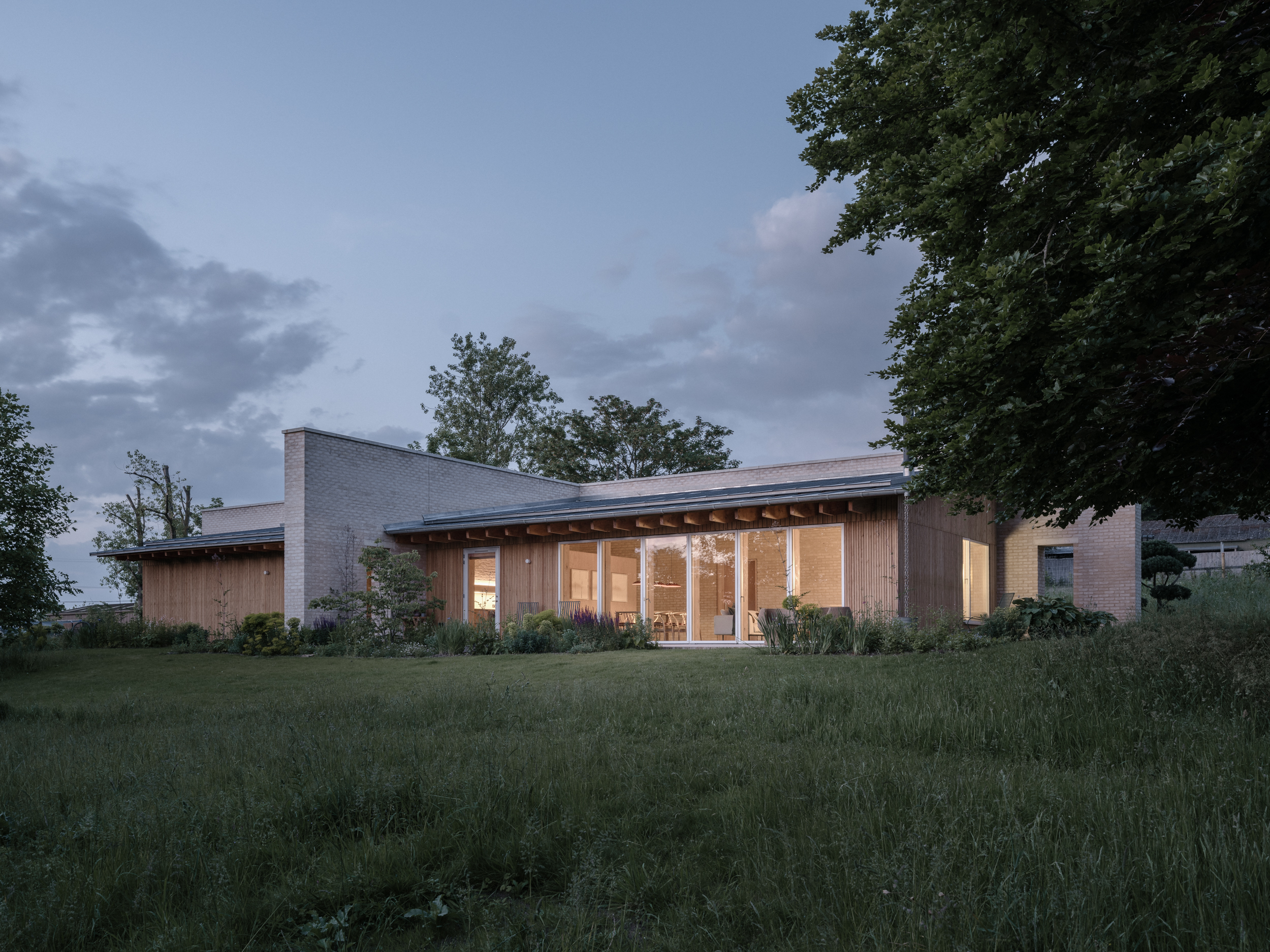
Amento is a house that begins with an idea about geometry. Designed by James Gorst Architects, it is formed around the intersection of two perpendicular walls, creating a broken cruciform in plan. This simple yet precise ordering device precedes programme, scale and occupation. The geometric template shapes not only how the house is organised but how it interacts with landscape, material and light.
Defining Walls and Material Presence
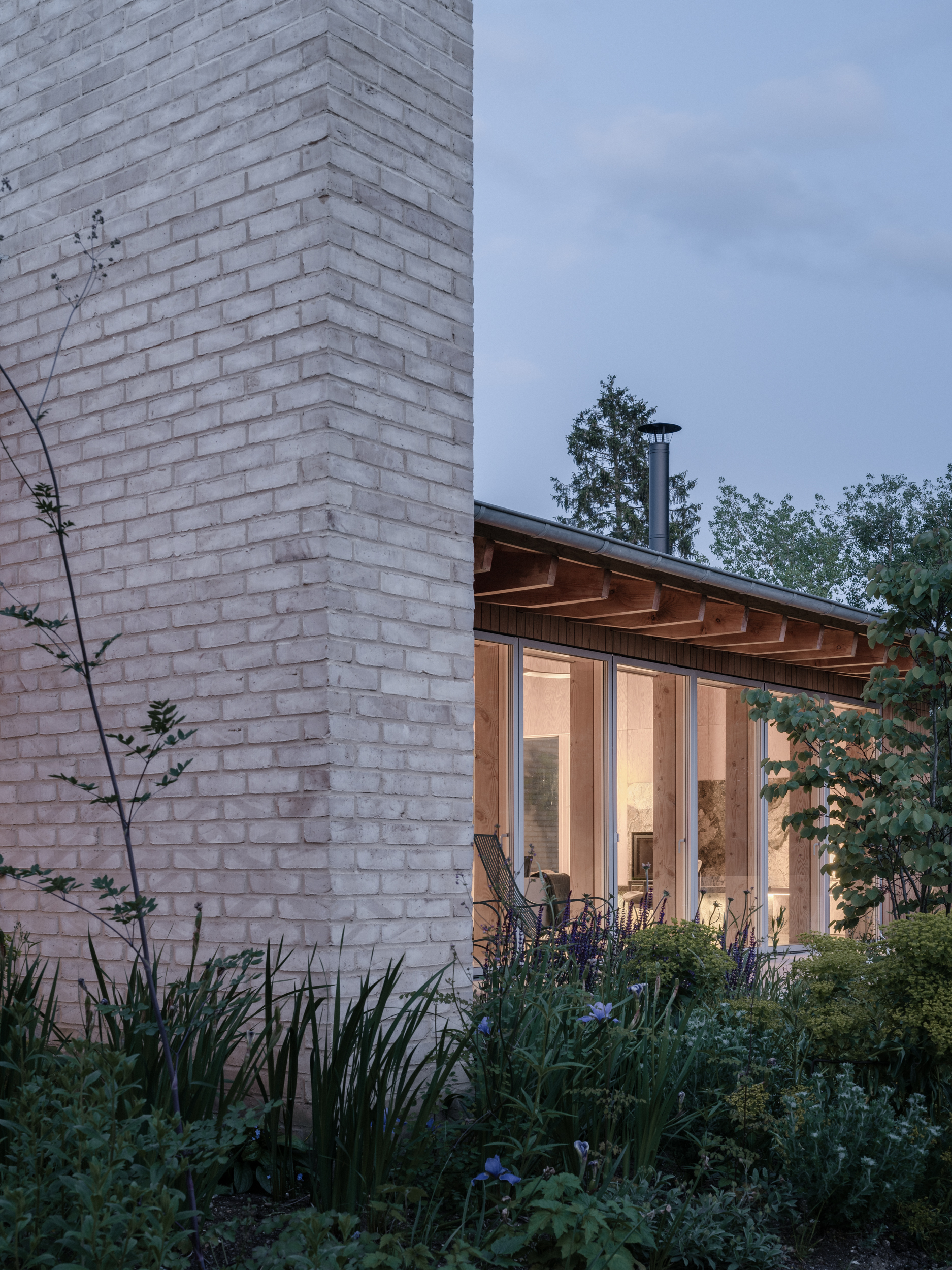
The defining walls are constructed in white wienerberger PT445 wheat clay brick, laid with lime mortar and executed by Gipping, the project’s brickwork contractor. Deep and weighty, they rise against the bordering tree line, extending beyond the inhabited quadrants they shelter. Their scale and presence contrast with the mono pitched roofs below, suggesting a different architectural order. These walls read as enduring lines through the site, potentially remnants of an earlier structure, repurposed to support the modest shelters beneath.
Performance and Durability
The wienerberger PT445 wheat clay brick provides specific advantages for both performance and resilience. With a compressive strength of at least 26 N per square millimetre and an F2 durability rating, it is suitable for exposed masonry and will perform reliably over decades. Its density contributes significant thermal mass, allowing walls to store heat and release it gradually, helping to stabilise indoor temperatures. This characteristic supports comfort in the face of temperature fluctuations associated with climate extremes. Laid in lime mortar, the brickwork accommodates moisture movement and thermal expansion while maintaining long term structural stability.
In addition to its structural performance, the brick’s properties make it well suited to climate resilient construction. It is capable of withstanding heavy rainfall, frost cycles and extended sun exposure without loss of integrity. Its thermal mass reduces overheating in summer and helps retain warmth in winter, while breathable lime mortar allows moisture to move safely through the wall, reducing the risk of damp related damage over time.
Framing Spaces and Views
At Amento, the walls extend beyond the inhabited quadrants to frame the landscape. Each quadrant benefits from a carefully oriented outlook onto the garden. Deep openings in the thick walls allow movement between spaces while maintaining enclosure and shelter.
The house’s programme is organised clearly within the cruciform plan. The north western quadrant accommodates the master bedroom and study. The south western quadrant contains kitchen, dining and living spaces. The south eastern quadrant houses children’s bedrooms and shower rooms, while the north eastern quadrant accommodates the garage, plant and utility rooms. The geometric brick template provides order and legibility, supporting functional clarity throughout.
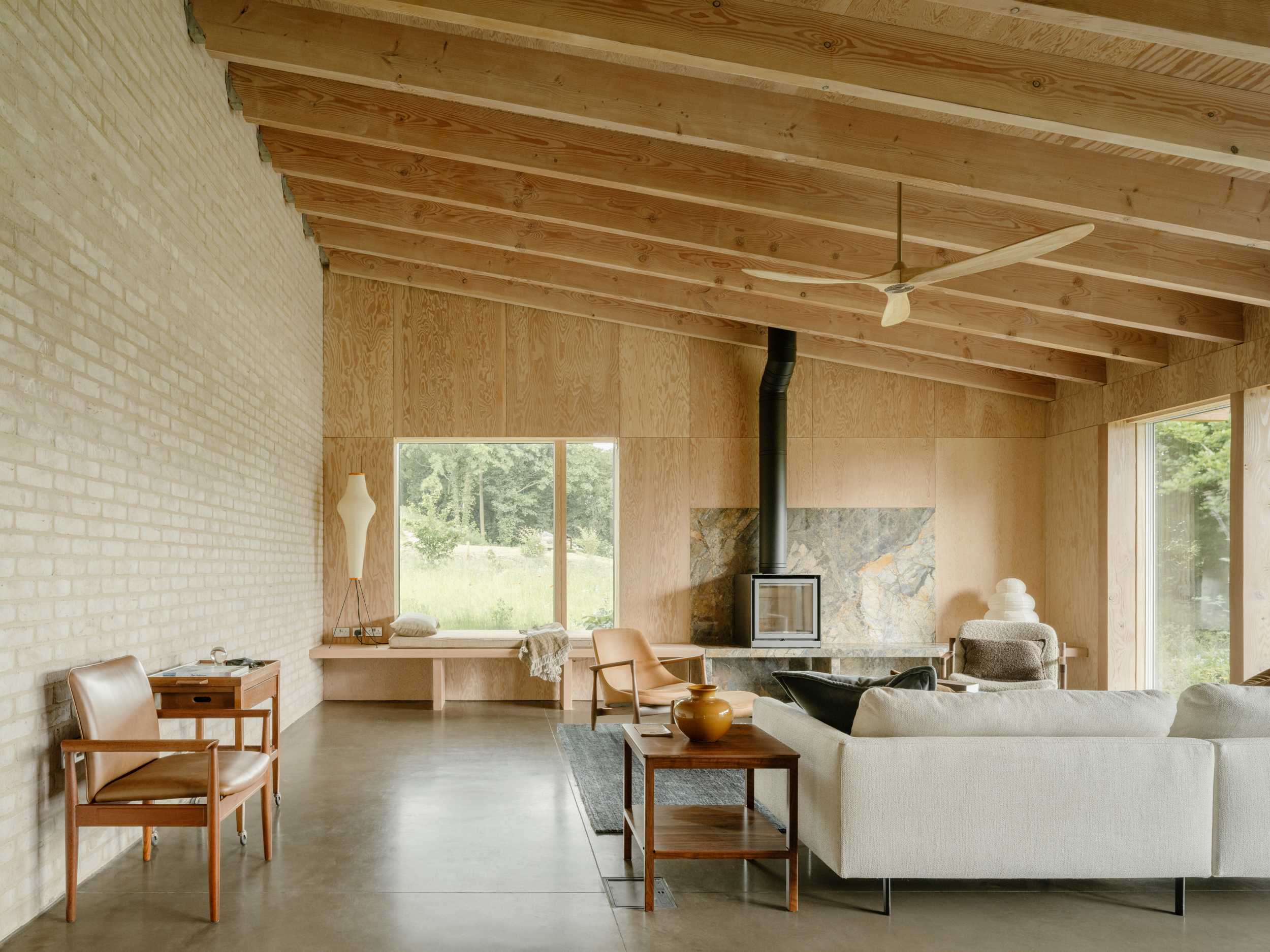
Internally, the material palette is restrained to allow the surrounding landscape to dominate. Pale clay brick and lime mortar walls are anchored by an umber polished concrete floor, while Douglas Fir veneered panels introduce warmth and pattern. Brick is left exposed as a finished surface, removing the need for applied finishes. Occasional moments of colour punctuate the calm backdrop, but the masonry provides continuity and structure.
Clay Brick as a Long Term Framework
Amento demonstrates how clay brick can combine structural clarity with long term environmental resilience. Through the collaboration between James Gorst Architects and Gipping, the project shows how thoughtful material selection and skilled execution support durability, adaptability and reliable performance under changing weather conditions. Here, brick is not simply a construction material, but the generator of form, the mediator of environment and the framework around which life and architecture unfold.
Brick Bulletin | Feature 279


