
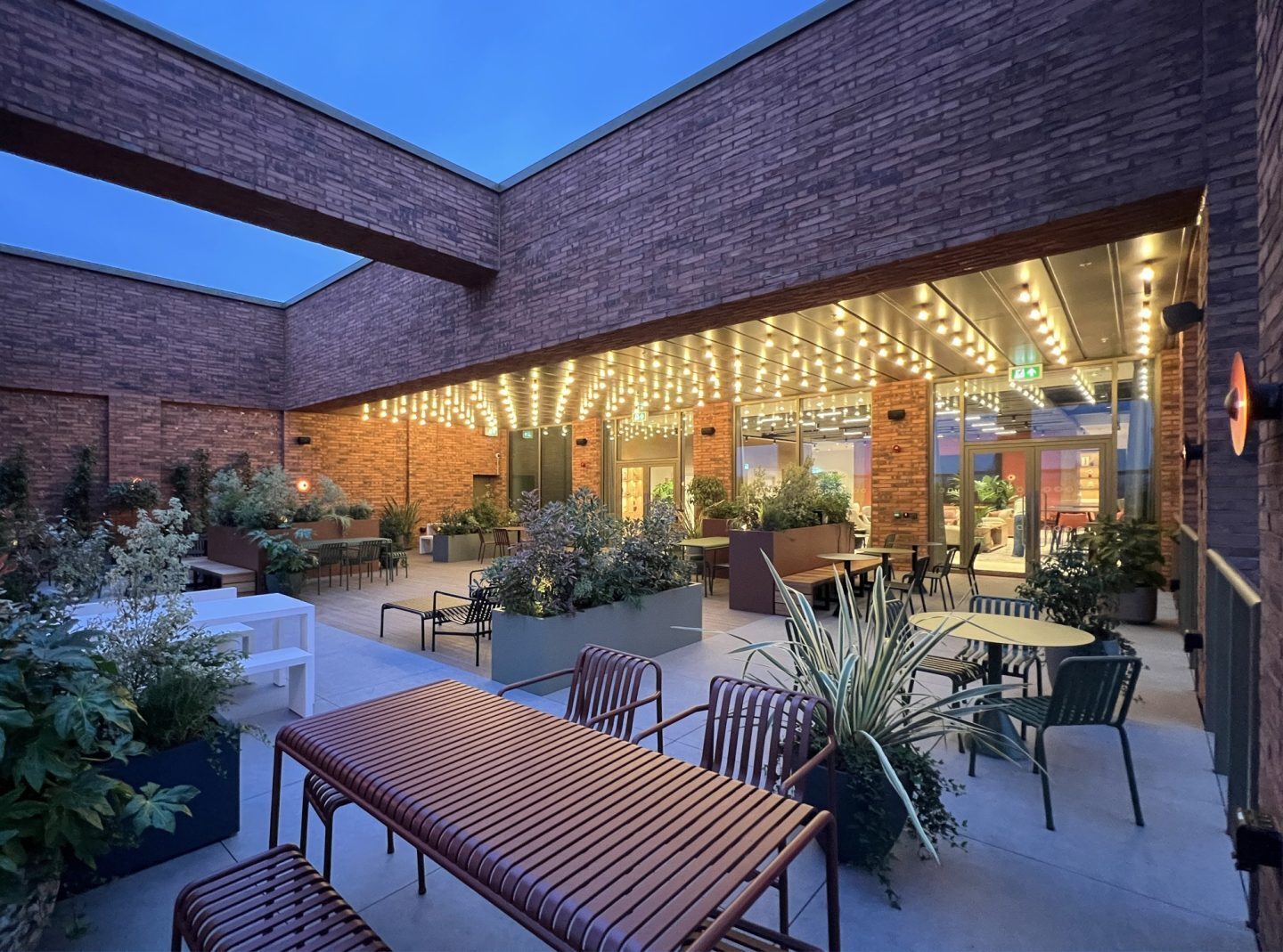
Located within Manchester’s Oxford Road Corridor Innovation District, 3 Circle Square is a next generation office building that demonstrates how clay brick can sit at the forefront of contemporary, sustainable commercial design. Designed by Bridge Architects, the building forms part of the wider Circle Square masterplan and is targeting Net Zero embodied carbon during construction, placing material selection, brick specification and craftsmanship at the heart of the project.
Brick as context and character
Clay brick is fundamental to Manchester’s architectural identity. From Georgian warehouses and Victorian civic buildings to the city’s historic railway infrastructure, red brick defines much of the urban character. At 3 Circle Square, these influences are reinterpreted through proportion, texture and bond rather than pastiche.
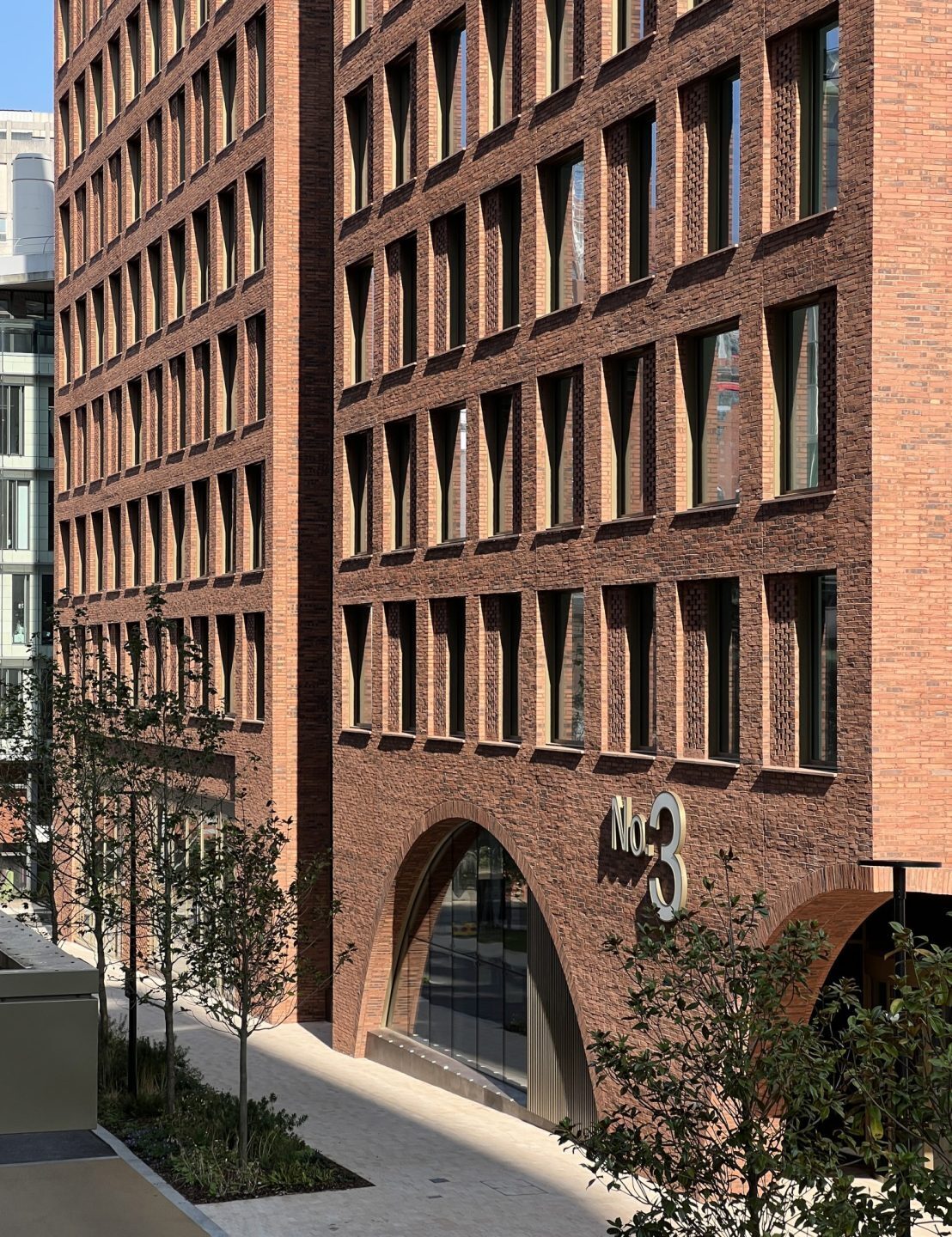
The façade is constructed using a deep red handmade brick supplied by York Handmade Brick, with 385,000 Waterstruck Thirkleby Blend bricks manufactured specifically for the scheme. Part of York Handmade’s Viking range, the brick offers natural tonal variation and a softly textured surface that responds well to light and shadow across the elevation.
At the architect’s specification, the bricks were produced in a bespoke long format measuring 327 x 65 x 102mm, interspersed with standard sized bricks of the same blend. This careful variation in unit size allowed the brickwork contractor to create rhythm and refinement across large façade areas while maintaining the strength and durability required of a major office building.
Bond, proportion and visual depth
The long format brick plays a defining role in the architectural expression. Laid in strong horizontal courses, it emphasises the linear quality of the building and gives the elevations a calm and ordered appearance. A dark red weatherstruck mortar joint enhances shadow lines, enriches surface texture and reinforces the horizontal emphasis of the brickwork.
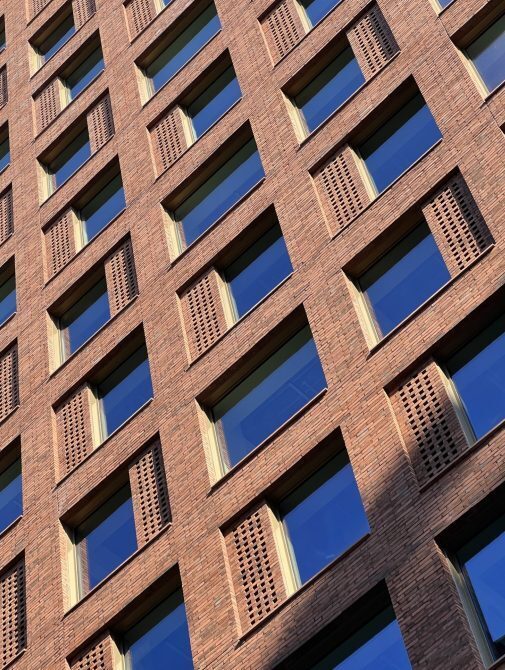
Throughout the façade, brick bonds are used as a design tool as much as a structural necessity. Projecting bricks, horizontal soldier courses and hit and miss detailing are carefully integrated by Kinlan Brickwork Ltd to add depth, relief and visual interest. These techniques ensure the building reads well both at street level and from longer distances, providing richness without visual clutter.
Arches, openings and craftsmanship
At ground floor level, the building is anchored by a series of large brick arches filled with clear structural glass. These arches reference Manchester’s railway architecture and provide a strong, welcoming entrance to the office reception. Alongside them, rectangular openings define retail and service areas, clearly distinguishing public and functional zones within the building.
Above, windows are arranged in a regular punched opening pattern and are set deep within the brickwork. This creates a sense of solidity while also contributing to thermal performance. Window frames in a mid bronze metallic finish sit comfortably against the red brick, introducing a contemporary contrast that complements rather than competes with the masonry.
Texture with purpose
One of the most distinctive features of the façade is the use of decorative perforated brick panels. These panels conceal integrated ventilation routes within the window surrounds, allowing the building to ventilate naturally through the façade rather than relying on rooftop plant.
This strategy released valuable roof space for solar panels, supporting the building’s long term energy performance. Importantly, the perforated brickwork turns a technical requirement into an architectural feature, demonstrating how thoughtful brick detailing can combine performance, texture and craftsmanship.
Collaboration and craft
From the early material ambitions set by Bridge Architects to the bespoke manufacture of bricks by York Handmade Brick and the precise execution of complex bonds and detailing on site, 3 Circle Square is a clear example of collaborative clay brick design.
By combining traditional brickmaking expertise with modern construction techniques and sustainable thinking, the project demonstrates how clay brick continues to evolve. The result is a building that delivers environmental performance, architectural depth and a lasting contribution to Manchester’s rich brick built heritage.
Brick Bulletin | Feature 280


