
At PLATFORM_ in Edinburgh, clay brick is used as a unifying and defining material, shaping the architectural character of a contemporary Build-to-Rent development within a changing industrial context. Led by jmarchitects, the scheme demonstrates a clear and considered material strategy, using brick to respond thoughtfully to both its physical setting and wider regeneration context.
Located between Bonnington Road Lane and Anderson Place, with the Water of Leith forming its northern boundary, the scheme responds to both its physical setting and the wider transformation of the area.
The development provides 464 apartments, ranging from studios to three-bedroom homes, supported by a wide range of shared amenities including co-working spaces, lounges, a gym, a family room and a café. Alongside this, a series of courtyards, roof terraces, a woodland ecological area and a publicly accessible pocket park contribute to a layered and well-considered external environment. Within this context, clay brick plays a key role in establishing continuity, identity and durability.
A Contextually Responsive Palette
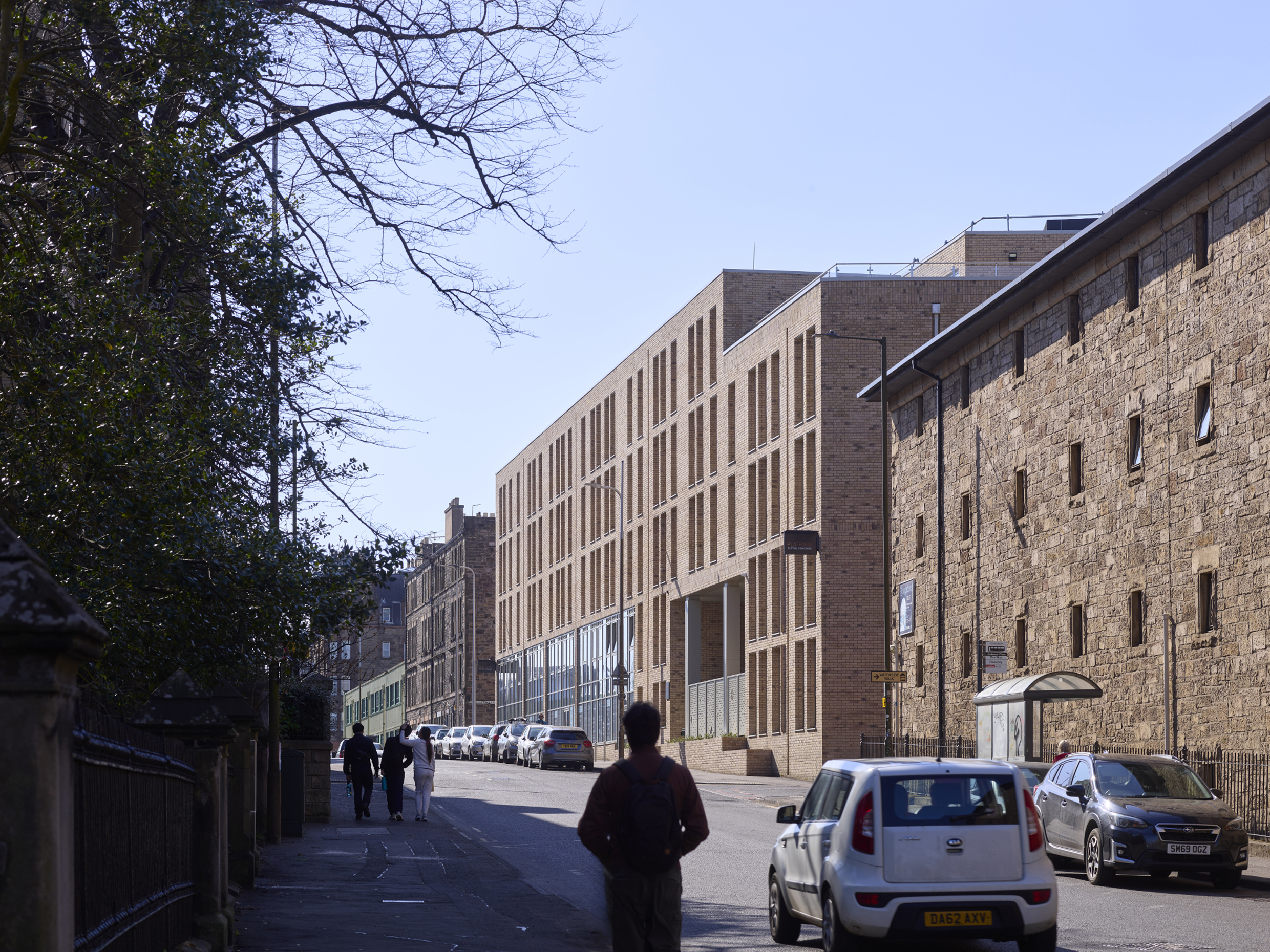
The surrounding townscape presents a diverse material language, combining robust red brick industrial buildings with lighter stone structures, including the Category B listed warehouse bond opposite the site. PLATFORM_ responds to this setting through a carefully composed palette of clay bricks, allowing the new development to sit comfortably alongside both historic and emerging architecture.
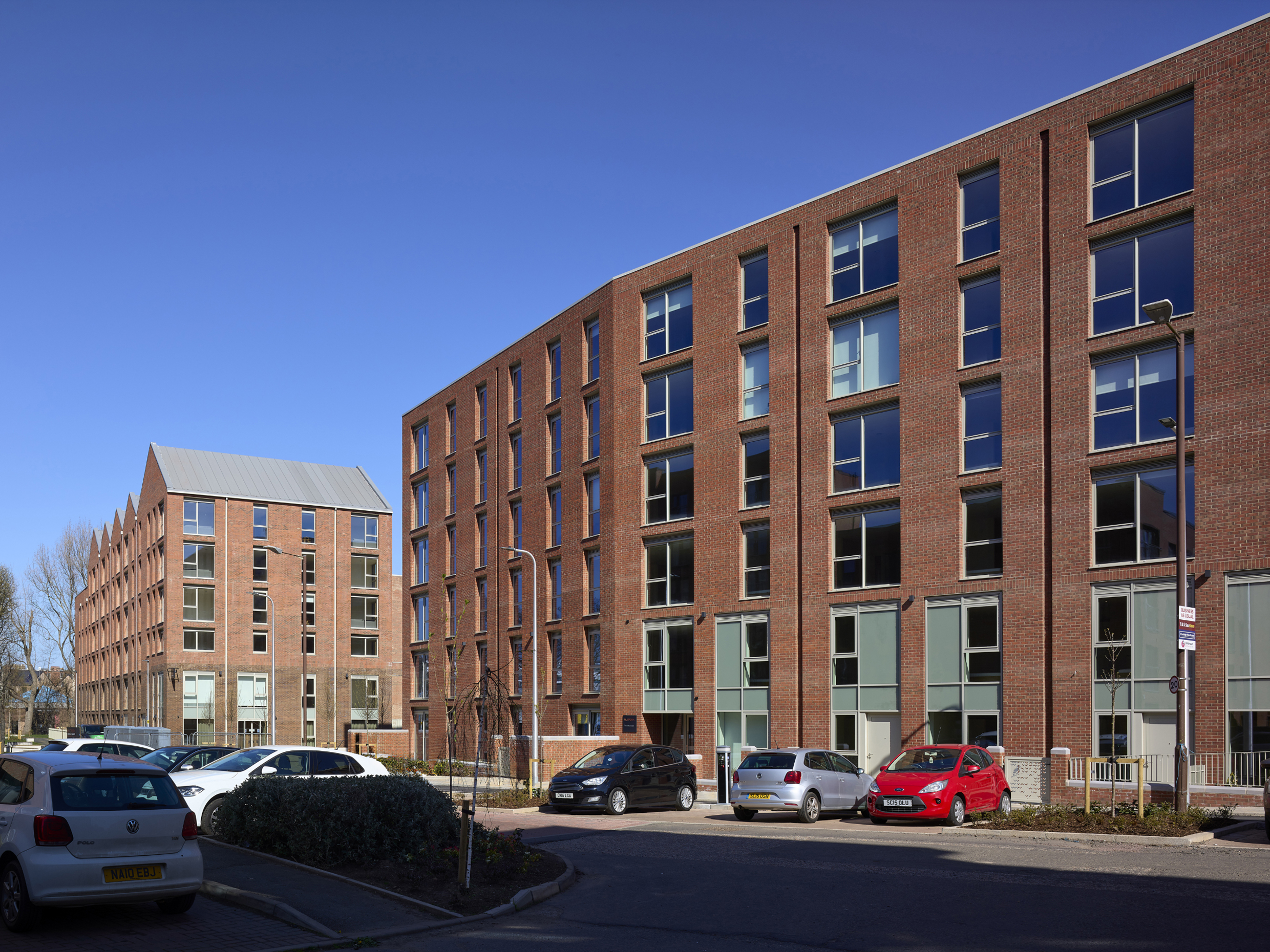
Bricks have been sourced from Ibstock PLC and wienerberger UK, introducing a subtle variation in tone and texture. From Ibstock, Britley Old English, Britley Old English Brown, Britley Old English Buff and Ivanhoe Cream Original are used, while Windmill Orange Multi from wienerberger UK adds a complementary richness. Together, these bricks establish a balanced range of brown, buff, red and orange hues that reflect the character of the local context without direct imitation.
Cohesion Across the Development
Although multiple brick types are used, the scheme maintains a coherent visual identity through a restrained and consistent approach to detailing. Pale mortar is applied throughout, alongside light-toned window frames and metalwork, which helps to unify the elevations and soften contrasts between the different brick finishes.
This approach allows the clay brick to remain the primary architectural expression, ensuring that variation is perceived as richness rather than fragmentation. Across the three principal building components, the palette reads as a cohesive whole, supporting the clarity of the overall masterplan.
Expressing Form and Structure
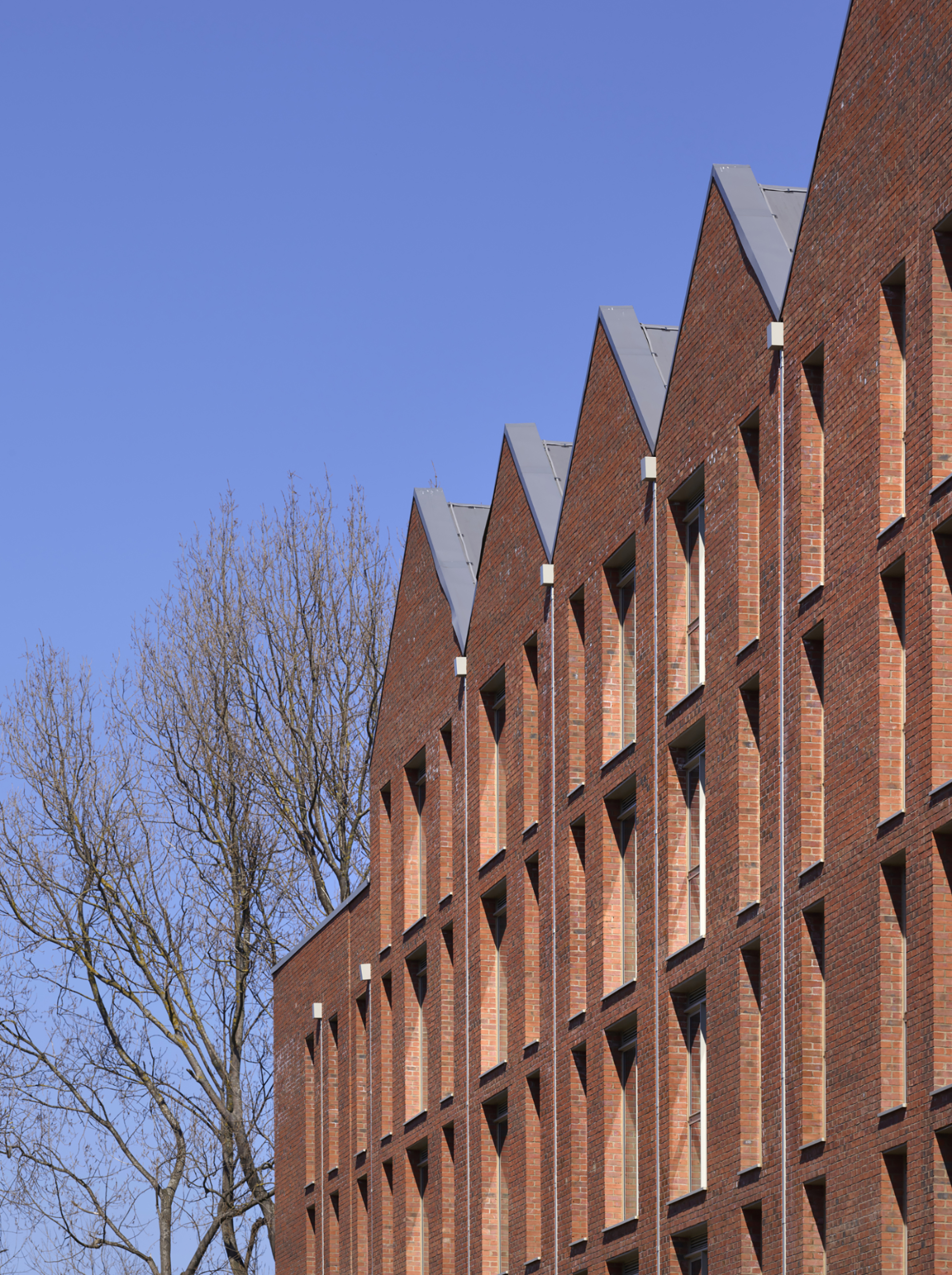
The buildings are organised in response to the surrounding urban grain, with a new street running through the site and terminating at the archway of the listed bond. The northern block extends towards the Water of Leith through a series of finger-like projections, while the central block forms a perimeter around the Biscuit Factory, and the southern block addresses Bonnington Road.
Clay brick is integral to expressing this structure. The façades are characterised by a clear vertical emphasis, with a regular grid of openings creating rhythm and order. The natural tonal variation of the brickwork enhances this composition, providing depth and subtle movement as light conditions change throughout the day.
Articulation Through Detail
Brick detailing is used with precision to articulate key architectural moments. Entrances, corners and primary frontages are distinguished through variations in bond and form, including stacked bonds, soldier courses and chamfered or angled brickwork.
These elements introduce hierarchy and visual interest while maintaining a disciplined overall composition. At ground level, brick colonnades define thresholds and create a strong base for the buildings, reinforcing the relationship between the public realm and private residential spaces.
The detailing remains deliberately controlled, ensuring that each intervention contributes to the legibility of the scheme rather than competing for attention.
Texture, Pattern and Scale
The use of multiple brick types and bonding patterns allows for a subtle layering of texture across the development. These variations help to break down the scale of the buildings, particularly in larger elevations, making them more responsive to both the pedestrian experience and longer views across the site.
This approach draws from the functional and often incremental nature of historic industrial construction, where material variation emerged naturally over time. At PLATFORM_, this quality is reinterpreted in a contemporary manner, balancing consistency with visual richness.
Extending Brick into the Landscape
Clay brick is not confined to the façades but extends into the landscape, forming planters, low walls and boundary elements. This consistent use of material creates a strong connection between the buildings and their surrounding spaces, including courtyards, terraces and the pocket park.
These elements help to ground the architecture within the site, providing both physical and visual continuity. The robustness of clay brick also makes it particularly suitable for these applications, ensuring durability in high-use external areas.
A Lasting Material Approach
The selection of clay brick at PLATFORM_ reflects both aesthetic and practical considerations. As a material, it offers longevity, low maintenance and the capacity to weather gracefully over time, contributing to the enduring quality of the development.
Brick Bulletin | Feature 299


