
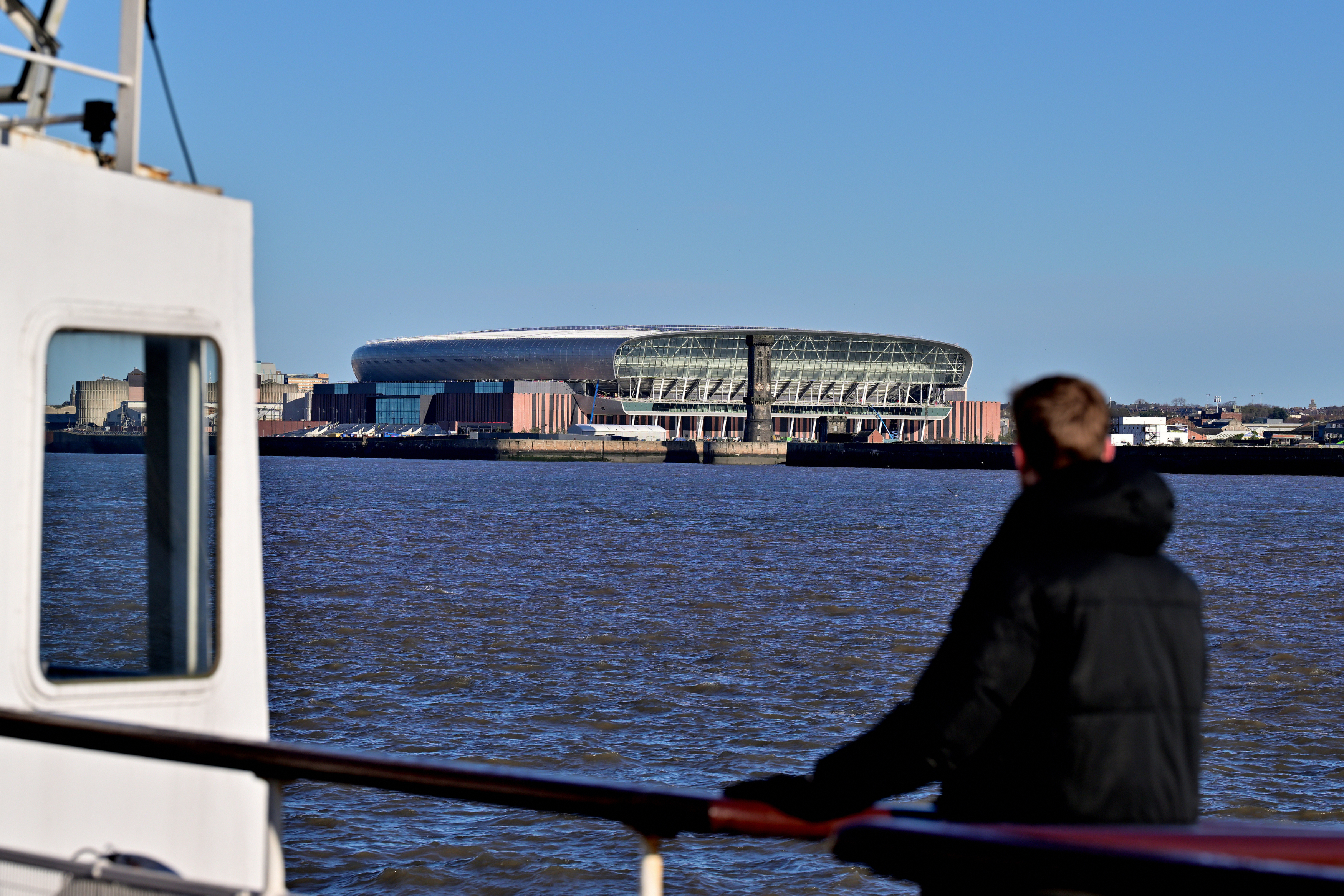
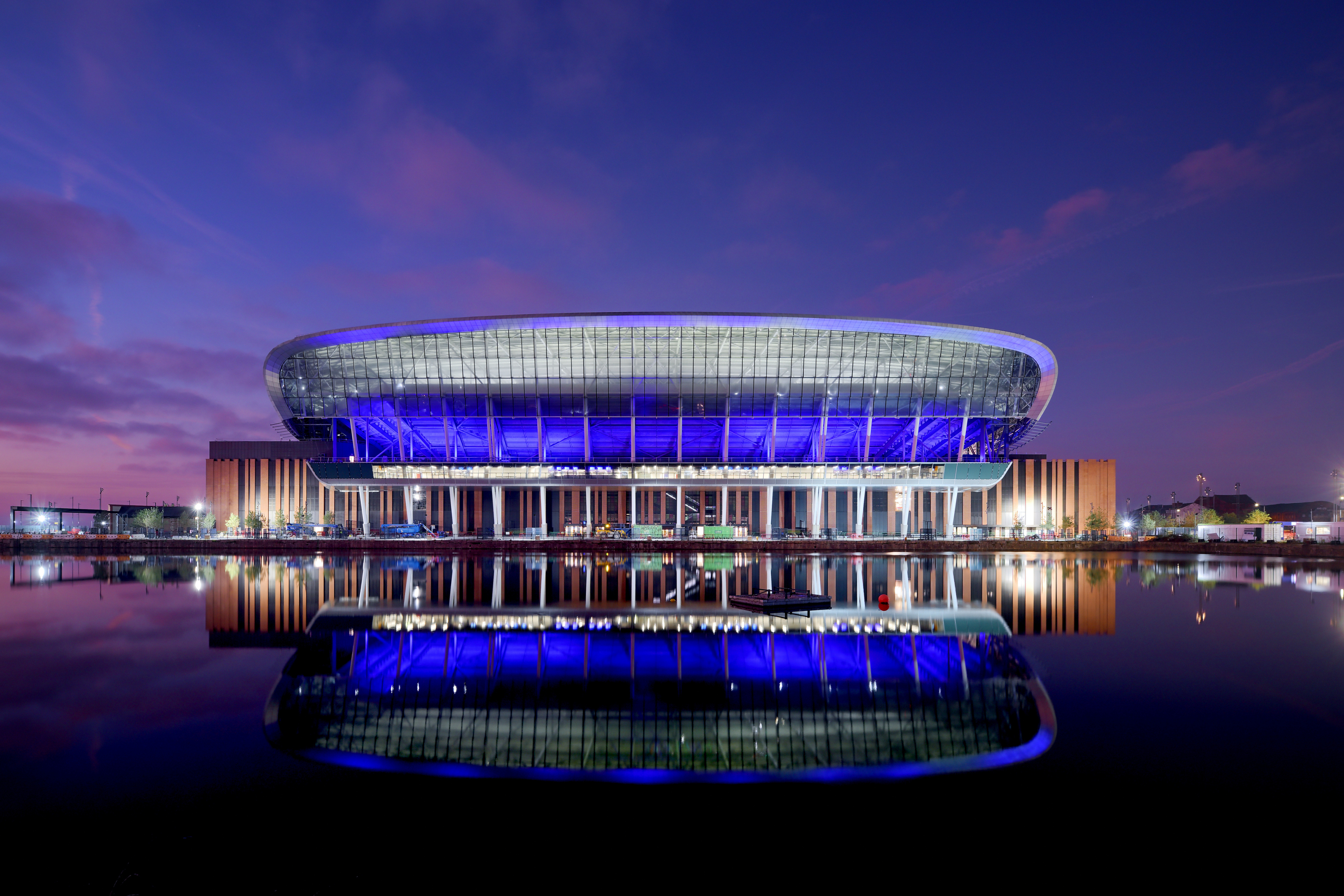
The transformation of Bramley-Moore Dock into Everton Football Club’s new home marks one of the most compelling examples of design-led regeneration in the UK. Rising from a historically industrial waterfront, the stadium demonstrates how carefully considered materiality, particularly clay brick, can anchor a modern structure firmly within its cultural and architectural context.
Designed by MEIS Architects and delivered by BDP Pattern, the 52,888-seat stadium is far more than a sporting venue. It forms the centrepiece of a wider regeneration strategy, expected to contribute £1 billion to the local economy and support the creation of approximately 15,000 jobs. At its heart lies a clear ambition: to respect and reinterpret Liverpool’s dockland heritage while delivering a world-class, future-facing stadium.
Designing for Atmosphere and Identity
A defining feature of the stadium is the South Stand, widely referred to as the ‘blue wall’. Accommodating more than 14,000 supporters in a single tier, it establishes an imposing presence that shapes both the stadium’s silhouette and its matchday experience. The steep geometry and proximity to the pitch echo the celebrated intimacy of Goodison Park, reinforcing a strong visual and emotional connection between players and fans.
This emphasis on atmosphere is not purely spatial, it is also material. The stadium’s brickwork draws inspiration from the iconic Archibald Leitch latticework that characterised Everton’s historic ground. Rather than replicating these details literally, the design interprets them through contemporary clay brick detailing, enabling the club’s heritage to be expressed in a subtle yet meaningful way.
Brick as a Mediator Between Past and Present
The architectural language of the development is firmly rooted in the industrial vernacular of Liverpool’s waterfront. The surrounding docklands are typified by robust brick warehouses, whose scale, rhythm and craftsmanship informed the stadium’s façade design.
Handmade clay bricks play a critical role in softening what is, by necessity, a large and complex structure. Their tonal variation and texture lend warmth and depth, reducing the perceived scale while enhancing the building’s tactile qualities at street level. In this context, brick becomes not only a cladding material but also a storytelling device, bridging the gap between historic fabric and new intervention.
BDA member, Michelmersh Brick Holdings PLC Legacy products from Charnwood were carefully selected to ensure compatibility with the adjacent Grade II-listed Hydraulic Engine House. This considered specification approach ensures visual cohesion across the site, allowing new and old elements to coexist harmoniously. The result is a development that feels both contemporary and contextually grounded, an increasingly important consideration in heritage-sensitive urban regeneration.
Craft, Detail and Durability
The use of clay brick across the stadium also reflects a commitment to durability and long-term performance. In a challenging waterfront environment, material resilience is critical. Brick’s inherent robustness, combined with its low maintenance requirements, makes it particularly well suited to such applications.
At Bramley-Moore Dock, attention to detailing elevates the material beyond its functional role. Carefully articulated bond patterns, shadow lines and junctions create visual richness, ensuring the façades reward both distant views and closer inspection. This level of craftsmanship reinforces the civic quality of the building, positioning it as a lasting addition to Liverpool’s architectural landscape.
Inclusive and Future-Focused Design
Beyond its architectural expression, the stadium has been designed with inclusivity at its core. It incorporates 279 wheelchair positions, sensory rooms, multi-faith spaces and gender-neutral facilities, setting a benchmark for accessibility in major UK sporting venues. These considerations reflect a broader shift within stadium design towards creating welcoming, inclusive environments for diverse audiences.
Sustainability has also been embedded throughout the project lifecycle. The site itself presented significant challenges, requiring the infill of 480,000 cubic metres of sand to stabilise the former dock. Laing O’Rourke’s delivery strategy utilised off-site manufacturing and advanced digital modelling to enhance efficiency and quality.
Notably, 95% of site materials were reused, significantly reducing waste. Prefabricated components helped minimise on-site disruption, while integrated solar panels and energy-efficient systems contribute to lowering the stadium’s operational carbon footprint. Together, these measures demonstrate how large-scale developments can align engineering innovation with environmental responsibility.
A Landmark in Brick-Led Regeneration
Reflecting on the project, BDP Pattern’s Architect Director, Jon-Scott Kohli, described the stadium as “a home for the Everton family”, highlighting the role of craftsmanship and materiality in shaping its identity. The “warm glow of the handmade bricks” stands in deliberate contrast to the scale of the structure, reinforcing its human quality and connection to place.
Bramley-Moore Dock exemplifies how clay brick can underpin a sophisticated architectural response, one that respects heritage while embracing modern design principles. It illustrates the continued relevance of brick in contemporary construction, particularly in projects where context, durability and visual richness are paramount.
As the stadium prepares to welcome supporters, it stands not only as a new chapter for Everton Football Club, but also as a benchmark for design-led regeneration. Through its sensitive use of brick and its thoughtful integration into a historic setting, it offers a powerful reminder of the material’s enduring ability to shape meaningful, lasting architecture.
Brick Bulletin | Feature 298


