
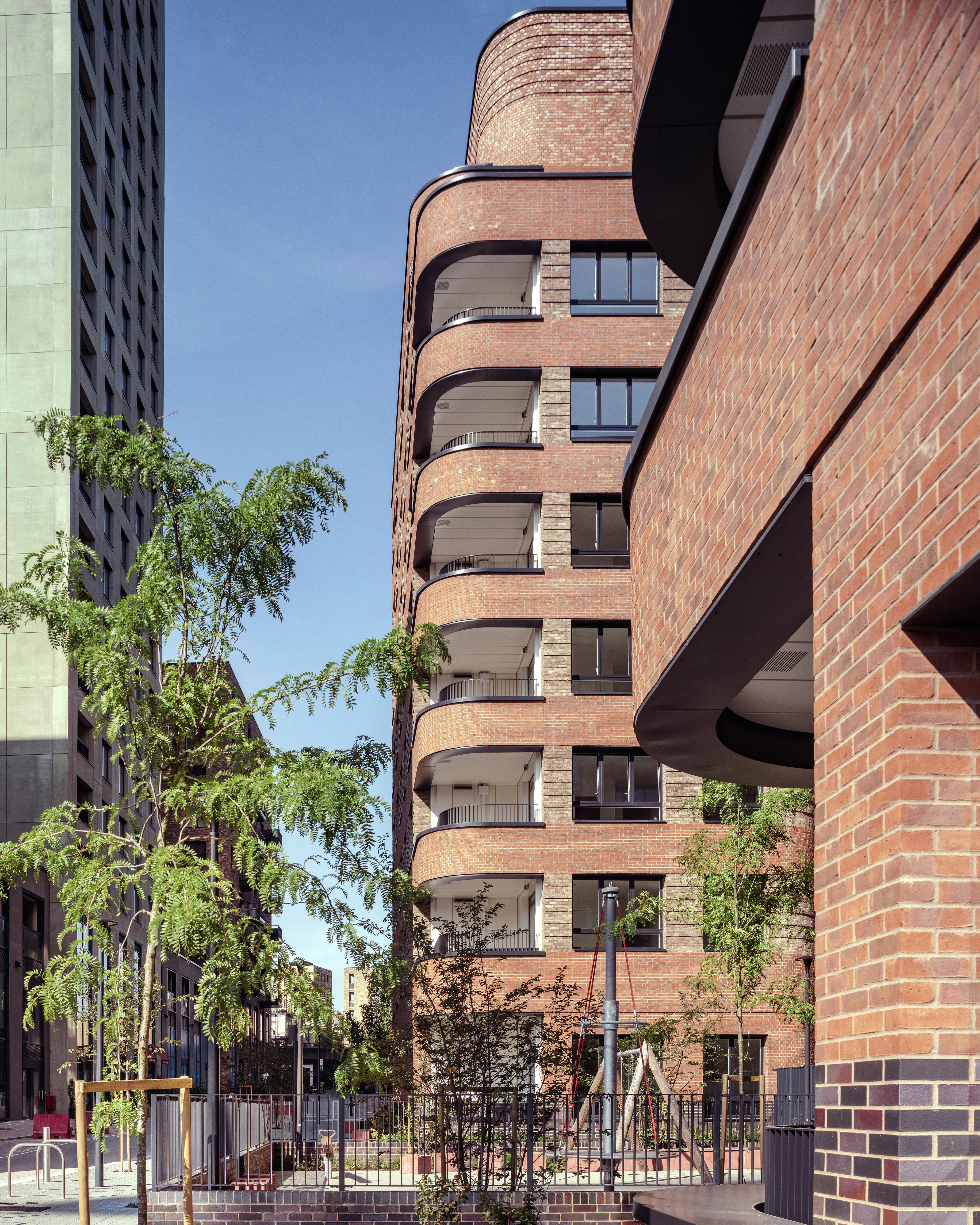
Bulrush Court at Leaside Lock represents the second phase of a significant residential redevelopment by The Guinness Partnership in Bromley by Bow, east London. Situated within the London Legacy Development Corporation zone and forming part of an ambitious 950-home masterplan, the scheme demonstrates how considered brick design can drive both architectural quality and place-making in high-density, affordable housing.
Recognised for its design excellence, Bulrush Court was awarded winner of the Large Housing Development category at the Brick Awards 2025, underlining the project’s success in combining material quality, craftsmanship and thoughtful urban design.
Designed by Pitman Tozer Architects, the development delivers 144 high-quality affordable homes within a mid-rise mansion block, alongside 213 sq m of commercial space and a carefully designed public realm. The project responds directly to the client brief: to provide accessible, high-density homes while maintaining a strong sense of identity, material quality and long-term durability.
Urban Form and Human Scale
A key design consideration was how to balance density with liveability. The building is organised around a communal landscaped courtyard, adopting a perimeter block typology that defines streets, squares and internal courts. This approach reinforces a legible urban grain while maintaining a distinctly human scale.
The massing ranges from seven to nine storeys and was developed through a series of collaborative workshops and Quality Review Panel sessions. This iterative design process ensured that the building responds sensitively to its context, presenting four distinct edge conditions that engage with surrounding streets, neighbouring buildings, landscaped areas and the River Lea.
Brick as an Organising Principle
Clay brick is central to the architectural expression of Bulrush Court. The façade composition uses 102.5mm brickwork and is structured into three clear elements: a civic face, a courtyard elevation and a darker plinth. Together, these elements bring hierarchy, texture and coherence to the scheme.
The careful selection of clay brick reinforces this approach. Ibstock’s Olde English Grey and Commercial Red along with Michelmersh Brick Holdings PLC’s Avorio clay bricks provide tonal variation and durability, supporting both the aesthetic ambition and the long-term performance of the building.
The Civic Face: Formality and Rhythm
Facing Imperial Street, the civic elevation presents the most formal expression of the building. Here, darker banded brickwork is used to establish a strong linear rhythm, with brick detailing between window openings reinforcing the façade’s ordered composition.
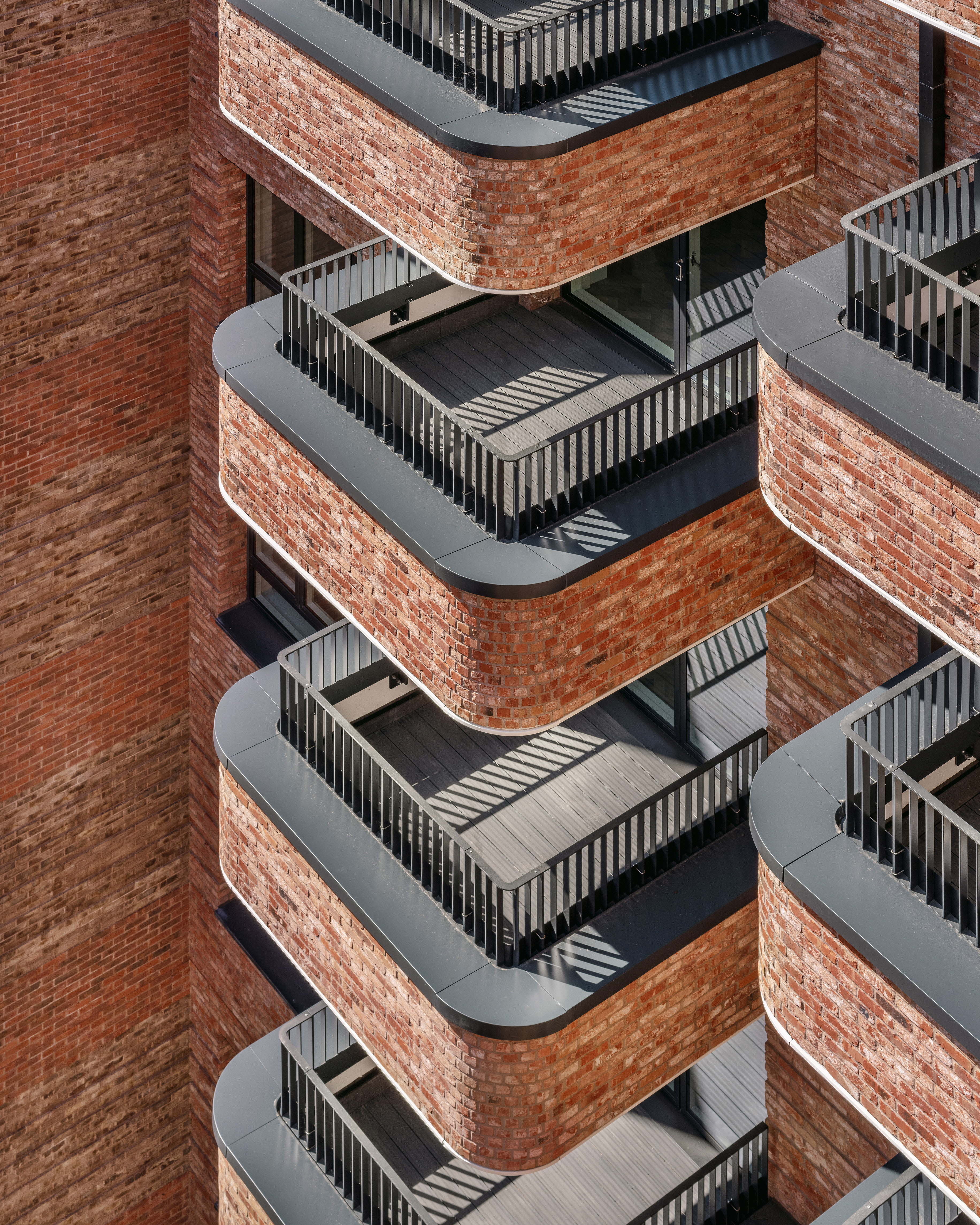
Curved corners are achieved through the use of snapped headers, avoiding the need for bespoke brick specials while maintaining precision in detailing. Inset balconies are integrated within the structural grid, with two window sizes and consistent pier dimensions contributing to a clear and rational architectural language.
This controlled use of brick not only defines the building’s public identity but also demonstrates how repetition and proportion can achieve visual richness without unnecessary complexity.
The Courtyard Elevation: Informality and Light
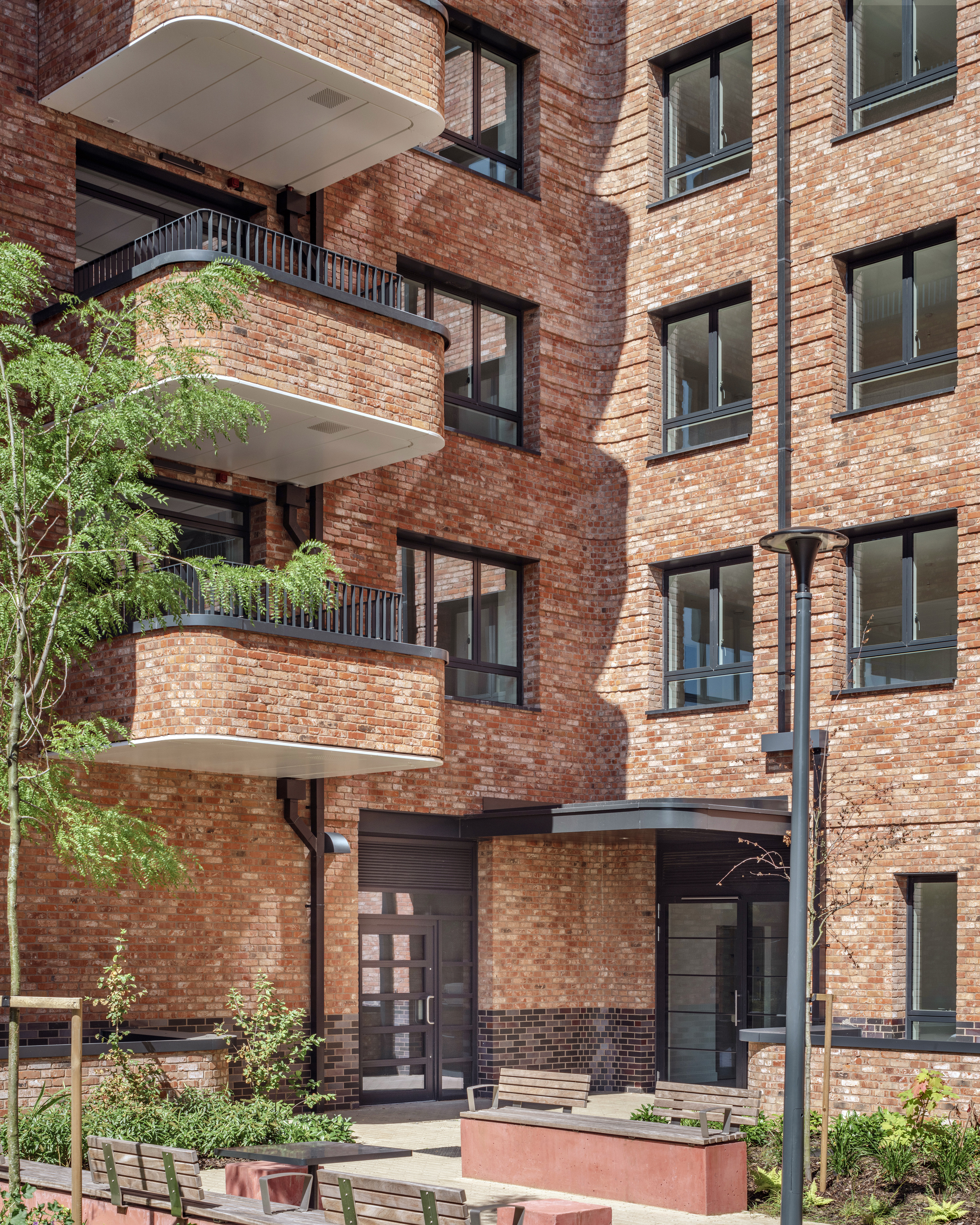
In contrast, the courtyard elevation adopts a more relaxed character. Constructed in a lighter red brick, it is designed to enhance daylight penetration and signal the transition to a semi-private residential space.
Brick banding is used more sparingly and vertically to highlight entrances, while cantilevered balconies overlook the communal garden. These balconies combine brick bases with metal railings and incorporate gently curved brick edges, softening the geometry and providing a subtle dialogue with the civic façade.
Horizontal banding helps unify varying window sizes and balcony arrangements, drawing on lessons from earlier residential schemes such as The Reach and Mint Street. The result is a façade that feels cohesive yet informal, supporting a strong sense of community within the inner court.
A Grounded Base: The Brick Plinth
At ground level, a darker brick plinth anchors the building within its streetscape. This design move reflects long-standing London traditions, where robust base courses provide both visual weight and resilience to wear.
At Bulrush Court, the plinth reinforces the building’s layered composition, offering a clear base that ties together the varied elevations above. It also contributes to legibility at street level, enhancing the pedestrian experience and reinforcing a sense of permanence.
Delivering Lasting Value Through Design
Bulrush Court illustrates how thoughtful design considerations, particularly in the use of brick, can elevate affordable housing. Through careful massing, a strong material identity and precise detailing, the scheme achieves a balance between individuality and coherence.
By responding to context, prioritising durability, and employing brick as both a structural and expressive material, Pitman Tozer Architects have created a development that is firmly rooted in its surroundings. The result is architecture that supports community life while delivering long-term value – a key objective for contemporary residential design.
As part of a broader regeneration effort, Bulrush Court stands as an example of how brick can continue to play a vital role in shaping sustainable, distinctive and enduring urban environments.
Brick Bulletin | Feature 297


