
Clay brick remains a cornerstone of the built environment, valued for its durability, consistency, and extensive range of finishes. From sensitive heritage restorations to avant-garde contemporary designs, its longevity and aesthetic versatility allow architects to bridge the gap between tradition and innovation.
Rather than being a uniform material, clay brick offers an expansive design palette through variations in colour, texture, and format.
Colour and Natural Variation
Clay bricks are manufactured in a broad spectrum of tones, from traditional reds and buffs to modern greys and charcoals. This colour is not merely a surface treatment; it is a result of the natural minerals in the clay and the precise firing temperatures within the kiln.
By carefully managing the kiln atmosphere, expert members of the Brick Development Association produce high specification clay bricks with deep, permanent hues. Blended bricks can also be specified to introduce subtle tonal movement across a façade, ensuring a building sits naturally within its context.
Texture and Surface Finish
The tactile quality of a brick is determined by its manufacturing process.
- Wirecut (Extruded): Produced by tensioned wires cutting a continuous column of clay. The result is a smooth, precise, and crisp finish that suits contemporary, sharp-edged architecture.
- Stock (Molded): Clay is pressed into sand-lined molds. This creates a "sand-faced" texture with softer, slightly irregular edges and a traditional, matte appearance.
- Waterstruck: A centuries-old method using water as the releasing agent. This creates a unique, "slop" texture characterised by organic lip-marks, folds, and a smooth yet undulating face.
Beyond the initial forming, clay bricks can undergo further processing to enhance their character:
- Sanded & Dragfaced: Sand can be blasted into the wet clay to soften the tone, or wires can be dragged across the face to create deep, directional grooves that catch the light aggressively.
- Tumbled (Distressed): Fired bricks are mechanically rotated to soften sharp corners and scuff the faces. This process provides an aged aesthetic essential for sensitive heritage infill or "reclaimed" styles.
- Rusticated: A heavy, irregular texture applied to simulate the rugged, weathered appearance of natural stone.
These textures dictate how light interacts with the building, creating shadows and depth that evolve throughout the day. While smooth bricks emphasise precision, highly textured surfaces are naturally more forgiving, maintaining their character even as they weather or age over decades.
Glazing and Specialist Finishes
For projects requiring a bold statement, glazed clay bricks offer a reflective, glass like finish in almost any colour. Beyond their vibrant appearance, glazed bricks provide excellent frost resistance and are impervious to moisture, making them ideal for high traffic areas or as decorative accents to highlight structural features.
The Art of Detail: Bonding, Mortar, and Specials
The final appearance of a façade is as much about the assembly as the brick itself.
- Bond Patterns: Whether using a traditional English Bond or a contemporary Stack Bond, the pattern dictates the visual rhythm and scale of the wall. Read more in our Brick Bonds Technical Support
- Mortar Selection: Mortar typically accounts for 15% to 17% of a brick wall's surface area. Choosing a contrasting or matching colour can fundamentally alter the building's character. Read more in our guide: Mortar for Brickwork
- Jointing Styles: The profile of the mortar joint (such as bucket handle or flat/flush) the definition and shadow lines of the masonry. Read more in our guide: Alteration and Repair of Brickwork
- Special-Shaped Bricks: To achieve seamless curves, intricate arches, or sharp angles, special-shaped bricks can be manufactured to meet bespoke architectural requirements. Read more in our Technical Support Guide: Brick Arches
We have a range of general, technical and structural guides, designed to make working with clay brick even easier.
From Heritage to Contemporary Design
The enduring appeal of clay brick lies in its innate adaptability. In heritage and conservation projects, it is selected to align with historic pallets and traditional craftsmanship. Conversely, in contemporary architecture, clay brick is being reimagined in expressive new ways, from "hit and miss” brickwork to highly patterned façades that challenge the boundaries of the material.
Case Studies:
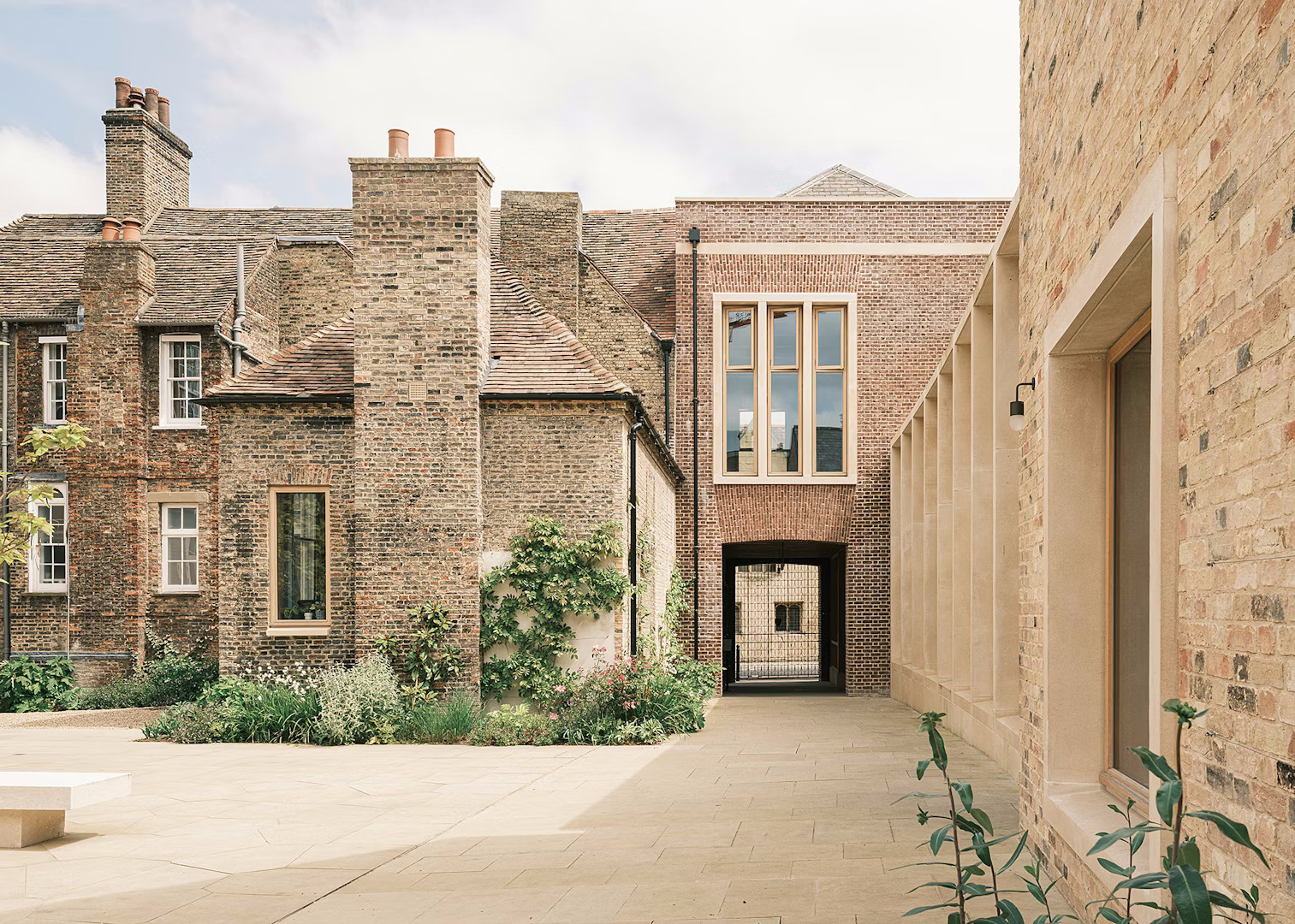
Pembroke College
A redevelopment marking Pembroke College’s most significant expansion since the fourteenth century, yet its greatest achievement may be how lightly it treads. Working within one of Cambridge’s most historically layered sites, the project proves that meaningful sustainability can grow directly from the careful handling of existing fabric, particularly clay brick, the material that has shaped this place for centuries. https://www.brick.org.uk/brick-bulletin/pembroke-college
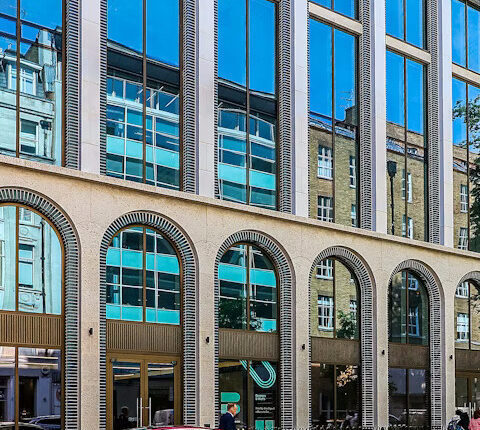
Berners & Wells Street, London
This project serves as a compelling case study for contemporary innovation, demonstrating how clay brick can be reimagined through expressive "hit and miss" masonry and textured glazing. It illustrates the material's evolution from a traditional building block into a versatile medium capable of creating sculptural, light filled façades that define modern urban architecture. https://www.brick.org.uk/brick-awards/2024-winners/commercial/berners-and-wells-street
By combining established technical performance with an evolving design palette, clay brick remains the material of choice for architects seeking to create a lasting legacy.


