
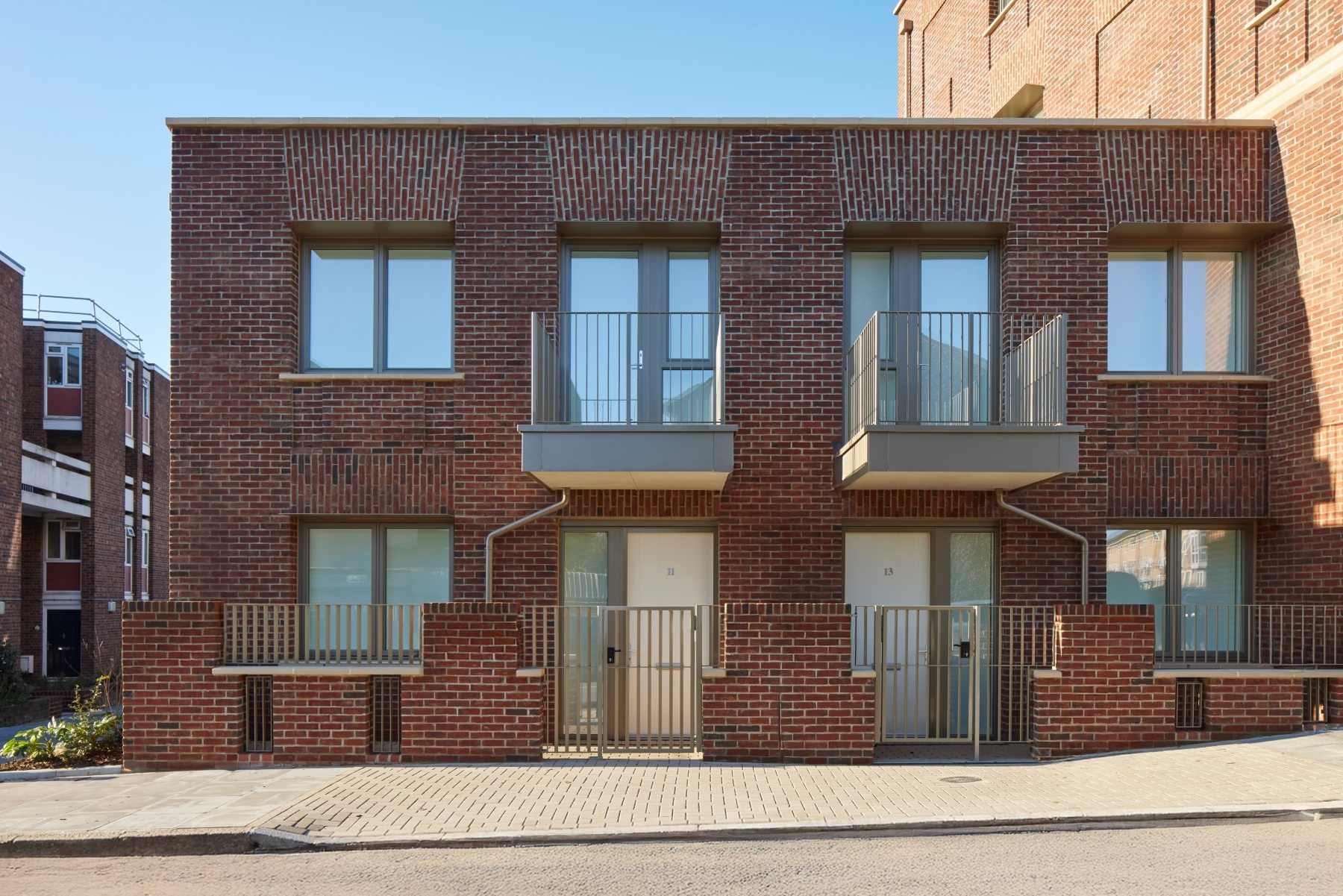
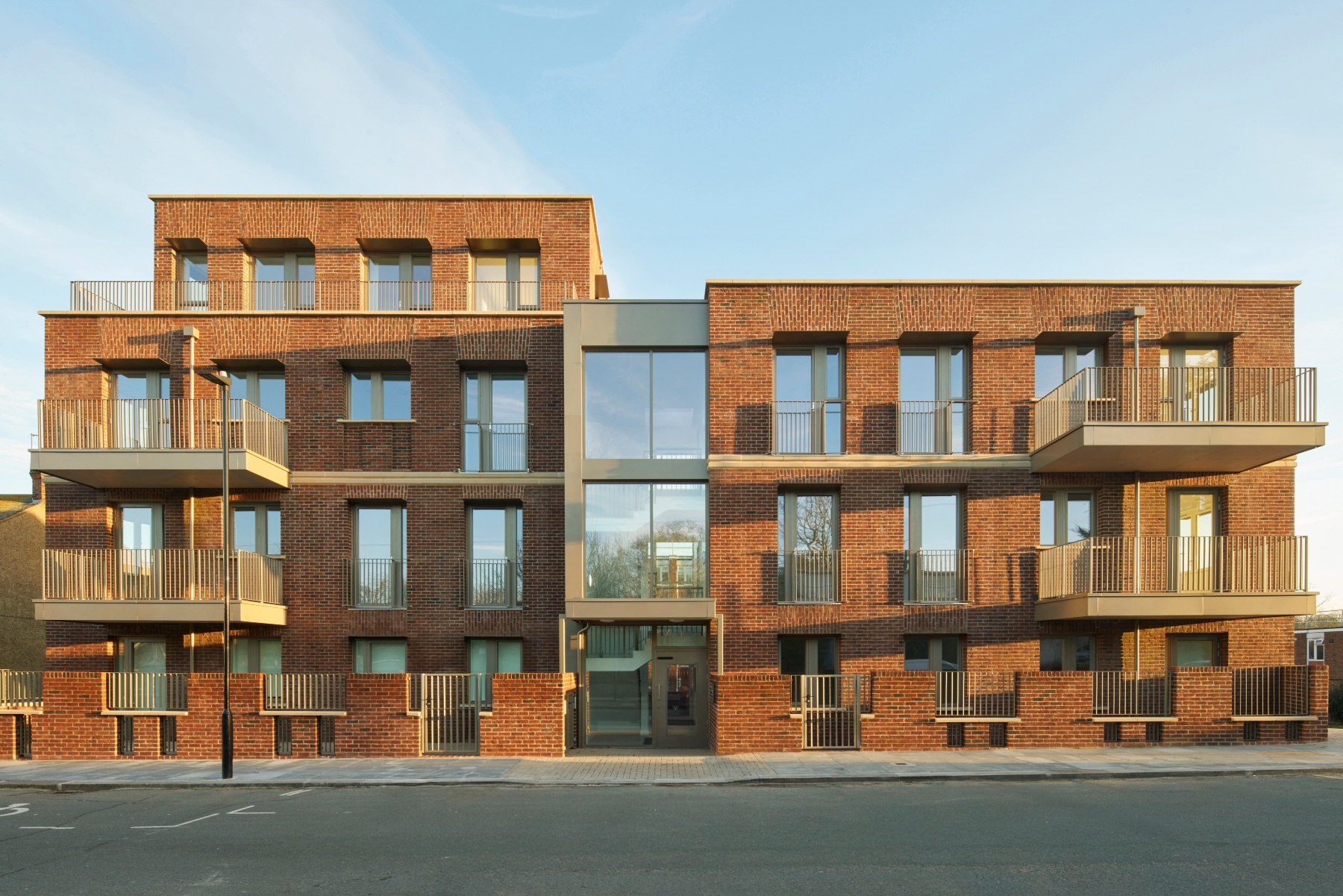
In the delivery of net-zero carbon housing, complex or high-cost technologies are often prioritised. However, a 100% social rented housing development at Edith Road in Haringey demonstrates that carbon reduction can be achieved through fabric-first principles and traditional material choices.
Designed by Satish Jassal Architects and delivered by the London Borough of Haringey, this infill scheme transforms a former council-owned car park into eight council homes. Recognition of its material and environmental integration came at the 2025 Brick Awards, where the project was Highly Commended in the Sustainability category. Central to the project’s measured thermal performance and structural durability is the use of clay brick.
Measured Carbon Reduction
Rather than relying on carbon offset payments, Edith Road addresses its carbon footprint entirely through on-site measures. The project achieved a 104.6% reduction in carbon emissions compared to the UK’s Part L Building Regulations (2013) baseline, fulfilling the Greater London Authority's (GLA) Energy Hierarchy:
GLA Energy Hierarchy Performance:
- Be Lean (Fabric Energy Efficiency): 15.3% reduction
- Be Green (On-site Renewables): 89.4% additional reduction
- Total Cumulative Reduction: 104.6% (Exceeds Net Zero)
This performance is rooted in a fabric-first approach. The building envelope uses loadbearing brickwork and timber webbed joists to provide insulation and thermal mass, reducing heat loss through the building fabric. Space heating and electricity are supplied via individual air-source heat pumps and rooftop photovoltaic panels, lowering operational energy demands and running costs for residents.
Material Procurement and Lifecycle
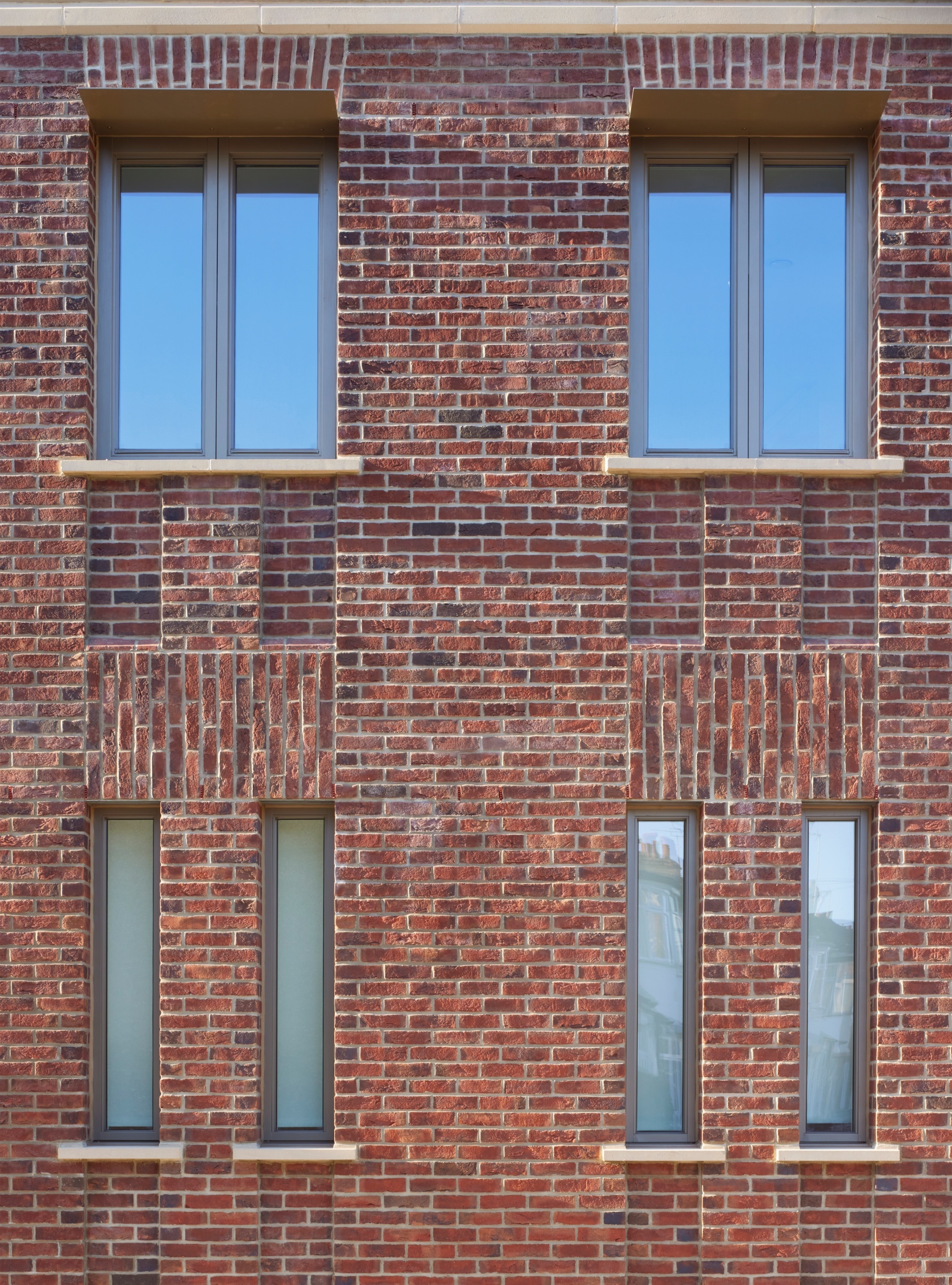
The external envelope features wienerberger’s Morado clay brick, sourced through The Bespoke Brick Company. Clay brick was selected for its local contextual match, durability, and low-maintenance lifecycle.
- Resource Efficiency: Close coordination with the contractor, Alexander James Contracts, minimised clay brick offcuts and site waste, while stone banding and metalwork were fabricated offsite to control quality.
- End-of-Life: The use of brickwork allows for potential future disassembly and material recovery, reducing whole-life embodied carbon.
Urban Infill and Fabric Integration
Edith Road provides a blueprint for delivering high-performance social housing on complex, small-scale urban infill sites. The development repairs a gap in the street scene, providing five apartments, two townhouses, and one wheelchair-accessible home (75% of the total provision is family-sized).
Housing Mix Breakdown:
- Apartments: 5 units
- Townhouses: 2 units
- Wheelchair Accessible: 1 unit
Clay brick serves as the material link between the new buildings and the surrounding landscape. The public realm features detailed brickwork, including stepped piers, recessed gables, and stack bonds executed by TP Brickwork Ltd. Beyond the new housing units, the project updated the adjacent council estate infrastructure by re-landscaping pathways, edging communal areas with brick, and building new refuse and cycle stores.
Post-Occupancy Data
To verify that the development performs as designed, a planning condition mandates ongoing monitoring of energy performance. Monitored post-occupancy data confirms that the building operates within its net-zero carbon parameters, delivering low utility costs and stable internal temperatures for residents.
Property-funded and delivered by Haringey Council’s housing and regeneration teams, Edith Road demonstrates how local authorities can use traditional brick construction to deliver long-term, repeatable, and low-carbon affordable housing.
Architect: Satish Jassal Architects
Client: London Borough of Haringey
Brick Manufacturer: wienerberger
Brick Name: Morado
Brickwork Contractor: TP Brickwork Ltd
Accolade: Highly Commended at the 2025 Brick Awards (Sustainability Category)
Brick Bulletin | Feature 295


