
Details
Project Country: Spain
Brick Manufacturer: Non-UK
Architect: PERIS + TORAL Arquitectes
Brickwork Contractor: Piera Ecocerámica
About the project
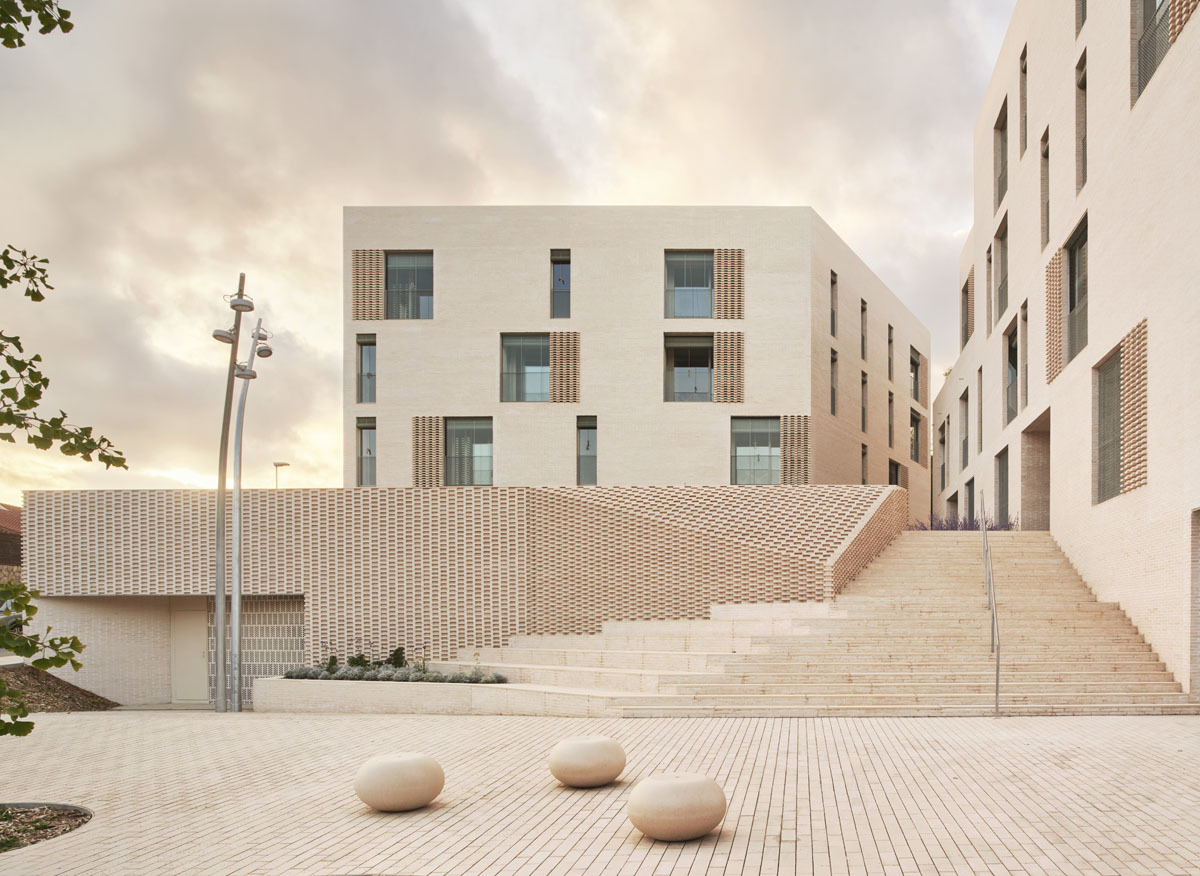
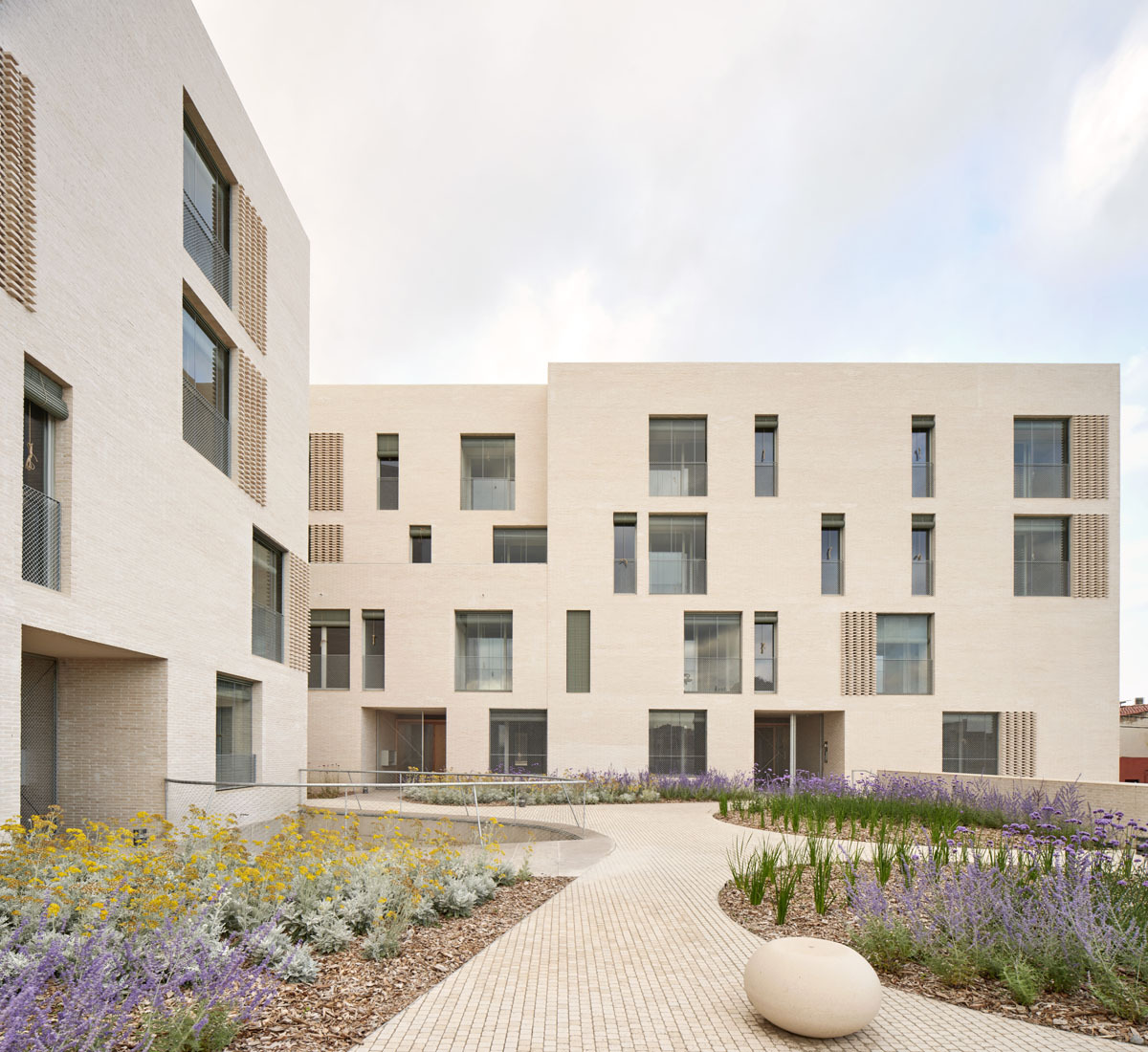
The residential complex splits the volume into two parts to articulate the urban space. A passageway, extending the neighboring alignments, connects the two levels of the new square through a stepped terrace. The project includes the redevelopment of the surroundings and green areas with SUDS that provide privacy to ground-floor dwellings. The parking and future facilities are naturally ventilated and lit through planted courtyards. All homes have cross ventilation, and in winter the terraces function as galleries. The use of handmade brick latticework ensures privacy, enhances airflow, and improves thermal inertia.
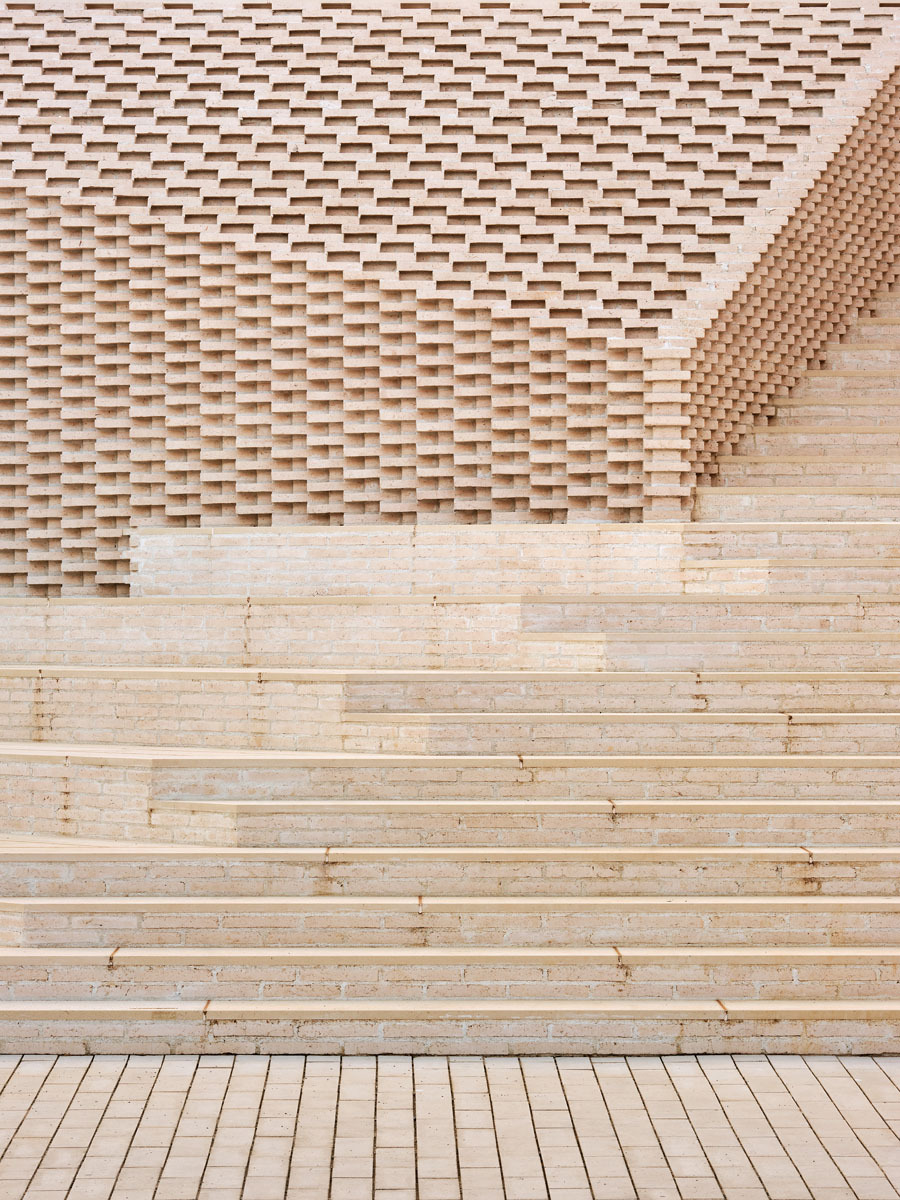
Although planning regulations defined a maximum envelope with an L-shaped building and a facility arranged as a plinth, the project splits the construction into two volumes. Fragmenting the massing and breaking the corner extends Carrer Ciutat Reial and creates a passage that transforms the facility roof into a public square from which the buildings are accessed, encouraging social interaction. A stepped stair connects this square with the city center, turning the passage into a shortcut toward the adjacent municipal sports complex. The stepped seating also acts as a place of stay and organizes access to the facility. Handmade brick, fired with biomass, unifies the ensemble through different bonds and latticework that allow ventilation and daylight, reinforcing the continuity between public space and architecture.
Beyond circulation, the passage functions as an air corridor crucial to the project’s climatic strategies. The dwellings are organized into three cores so that all units benefit from cross-ventilation through the living areas. The two-level parking structure is naturally ventilated through strategically placed courtyards that guarantee air movement and at least twenty air changes per hour. Natural lighting and ventilation allow trees and climbing plants to be introduced, taking advantage of vegetation’s CO₂ absorption capacity and enabling future adaptation to other uses as mobility patterns evolve. This environmental strategy links the urban void with the performance of the building, using intermediate spaces as climatic regulators.
At ground level, planting plays an important bioclimatic role in the reurbanization. Floodable planting beds around the building ensure privacy for ground-floor dwellings while functioning as a sustainable urban drainage system, collecting rainwater for irrigation and infiltrating the remainder. Vegetation surrounding the building helps regulate humidity and mitigate the urban heat-island effect, while reinforcing the continuity of the public realm around the new square.
Constructively, a self-supporting exposed brick façade is placed in front of the slabs so that insulation remains continuous, avoiding thermal bridges, with a solution achieving less than 0.2 W/m²K. Energy production relies on centralized aerothermal systems powered by photovoltaic panels and a stratified storage tank, allowing domestic hot water temperatures to be reused for heating and achieving an A energy rating.
To achieve a nearly zero-energy building, the strategy reduces summer demand through cross-ventilation and thermal inertia, enhanced by exposed slabs and interior masonry walls. In winter, terraces incorporate a glass curtain. The double enclosure acts as a thermal buffer and solar-gain gallery, allowing the living room and at least one bedroom to relate to the exterior through this intermediate space, improving comfort while reducing operational energy demand.


