
Details
Location: Glasgow
Brick Manufacturer: Ibstock PLC
Brick Name: Drumquin
Architect: CRGP Architects
Brickwork Contractor: E&P Bricklaying Services Ltd
About the project
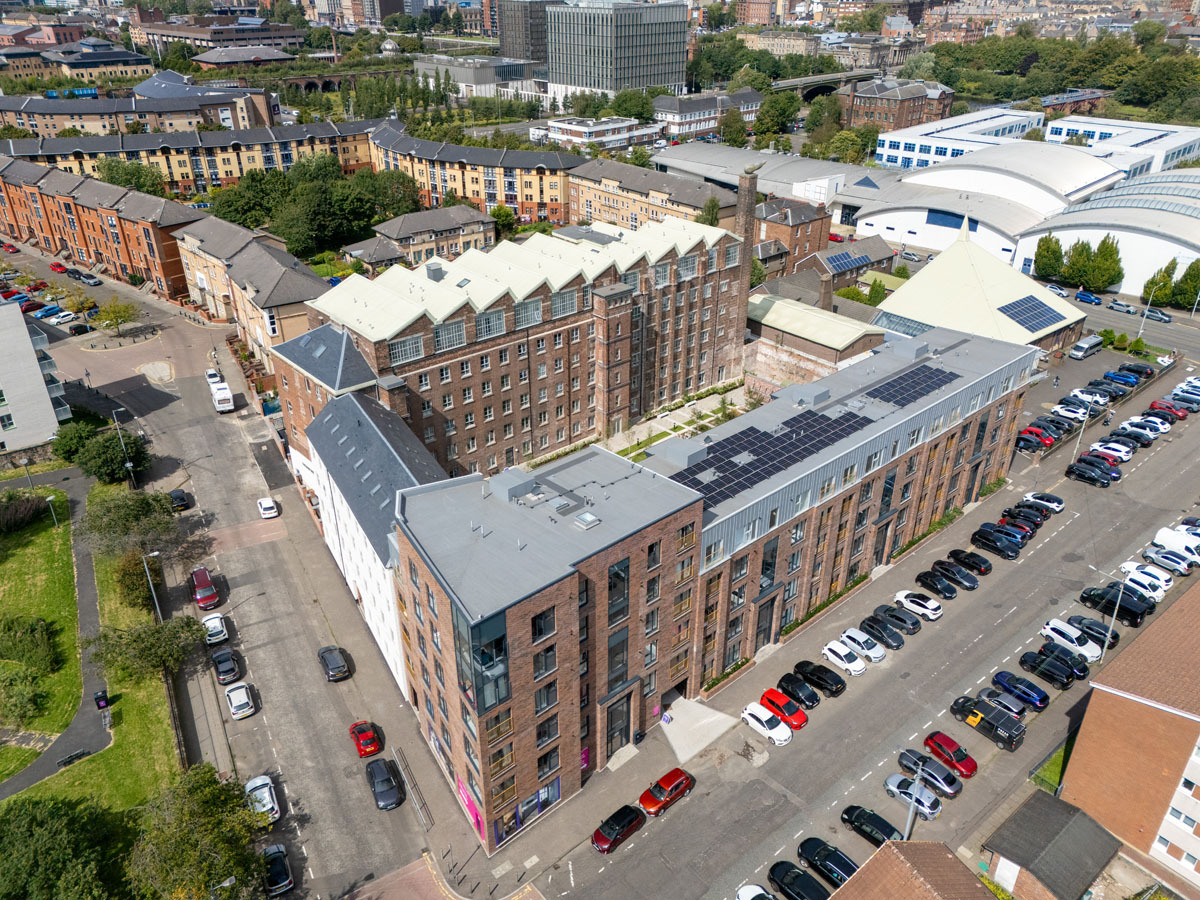
The Cottonyard development in Glasgow’s New Gorbals exemplifies high-quality urban regeneration, transforming the historic Category C Listed Twomax Mill and a formerly underutilised site into a vibrant, inclusive residential community. As part of the wider New Gorbals masterplan and Glasgow’s vision for a 15-minute city, the project plays a key role in redistributing opportunity, enhancing urban vitality, and improving quality of life for residents. Delivering 100 high-quality apartments, it creates a balanced mix of one-, two-, and three-bedroom homes arranged around a central landscaped courtyard that provides valuable shared outdoor amenity space.
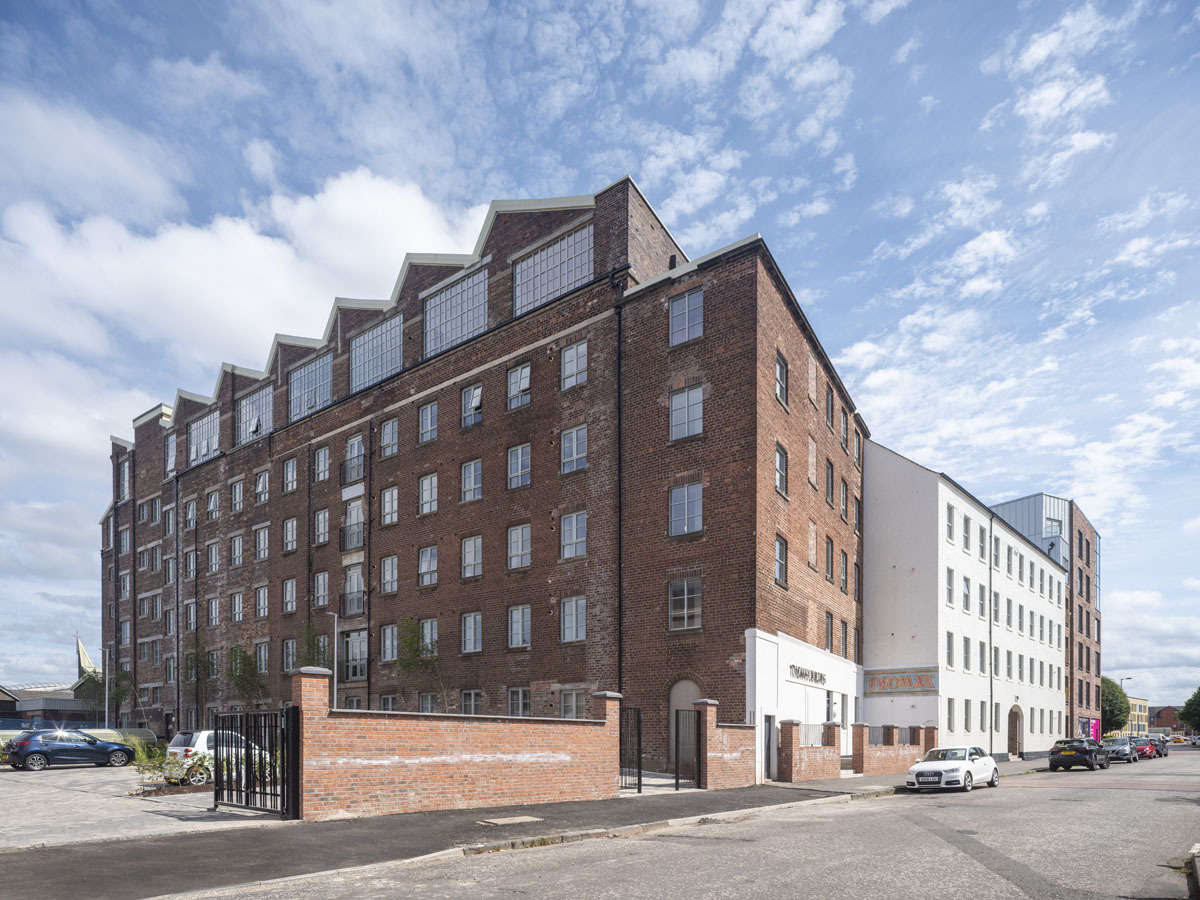
At its core, the scheme reactivates a long-dormant industrial asset, bringing new life to a building that once contributed significantly to the area’s economic and social fabric. The adaptive reuse of the early nineteenth-century mill (formerly a cotton spinning facility and later a major clothing factory) preserves an important piece of Glasgow’s industrial heritage while establishing a renewed sense of place and identity. Key architectural features, including the original cast-iron structure, distinctive saw-tooth roof, and historic window proportions, are retained and celebrated, anchoring the development in its historic context.
Beyond preservation, the project strengthens the local urban fabric by introducing new homes in a highly accessible location, supporting the principles of density, walkability, and mixed-use neighbourhoods. The development contributes to a more sustainable pattern of living by bringing residents closer to existing amenities, employment, and transport links, aligning with the ambitions of a compact, connected city.
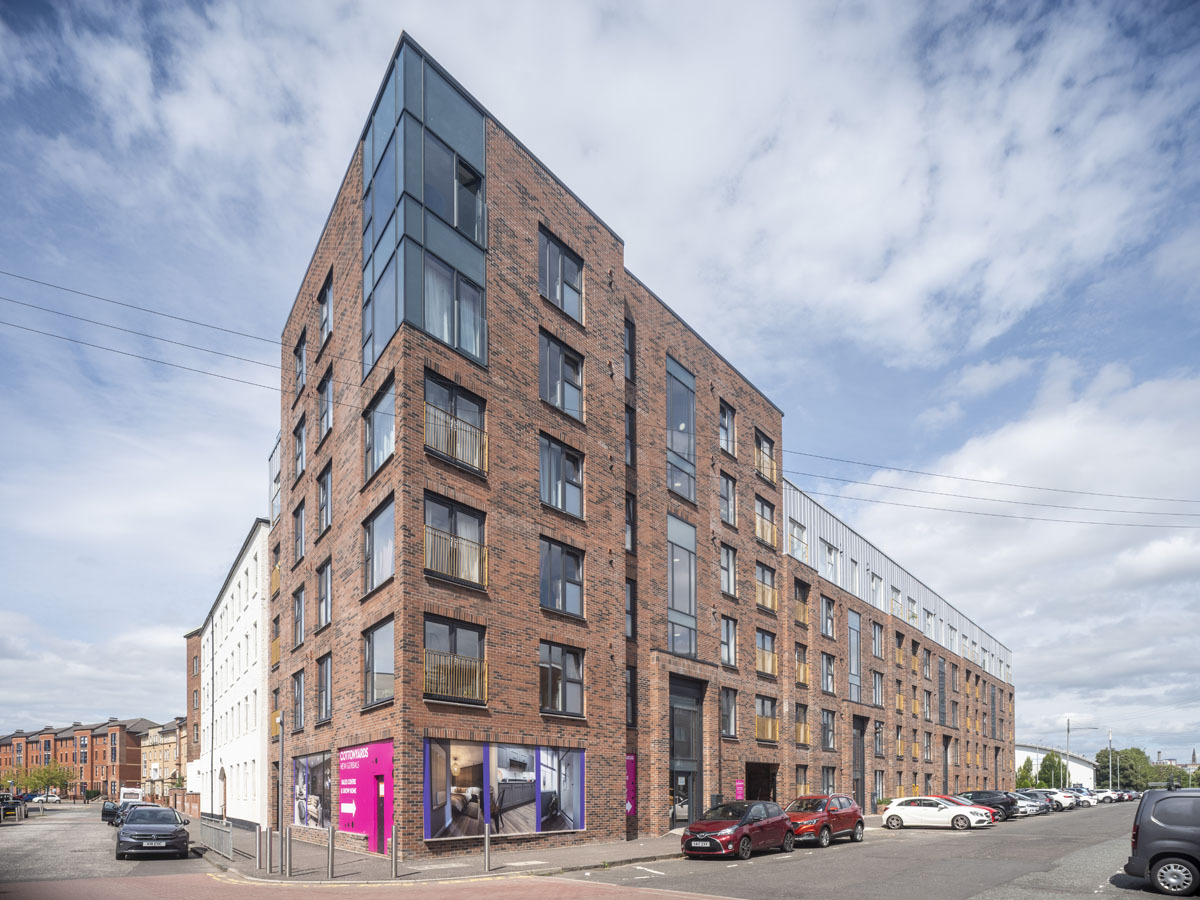
The new-build element, forming the OneMax Collection, complements this approach by repairing the streetscape and reinforcing strong urban edges. Addressing the prominent corner of Old Rutherglen Road and Commercial Road, its carefully considered massing steps up at the junction before aligning with neighbouring tenements, ensuring a confident yet contextually appropriate urban presence. This careful integration helps stitch the site back into the surrounding community, enhancing both legibility and connectivity.
Clay brick plays a unifying role, linking old and new through a coherent material strategy. The retained mill’s original brickwork provides a rich reference point, informing the use of warm red multi-brick in the new-build. Detailed elements such as soldier courses and deep reveals reinterpret traditional industrial architecture in a contemporary language, adding texture and depth while reinforcing durability and longevity.
Importantly, the development fosters community inclusiveness through thoughtful design of shared spaces and public-facing elements. The central courtyard acts as a social heart, encouraging interaction and providing a safe, high-quality environment for residents. At street level, carefully designed boundaries, landscaped edges, and active frontages contribute to a welcoming and human-scaled environment.
Overall, The Cottonyard demonstrates how sensitive heritage-led design and strategic new development can unlock the potential of underutilised sites, driving urban regeneration. It not only preserves and reinterprets Glasgow’s industrial past but also creates a sustainable, connected, and inclusive neighbourhood that supports long-term urban prosperity.


