

Details
Location: London
Brick Manufacturer: Ketley Brick Company Ltd
Brick Names: Staffordshire Blue/Multi Solid Class A Engineering Bricks, Staffordshire Blue/Multi Plinth Bricks, Staffordshire Blue Chamfered Pavers, Staffordshire Blue Multi Square Edged Pavers, Staffordshire Blue Directional Pavers, Staffordshire Blue Ribbed Corduroy Pavers, Staffordshire Blue/Multi Step Nosing Paver (special), Brown Brindle Quarry Tiles
Architect: Allford Hall Monaghan Morris
Brickwork Contractor: Lyons and Annoot
About the project
Heritage-led low-carbon retrofit strategy
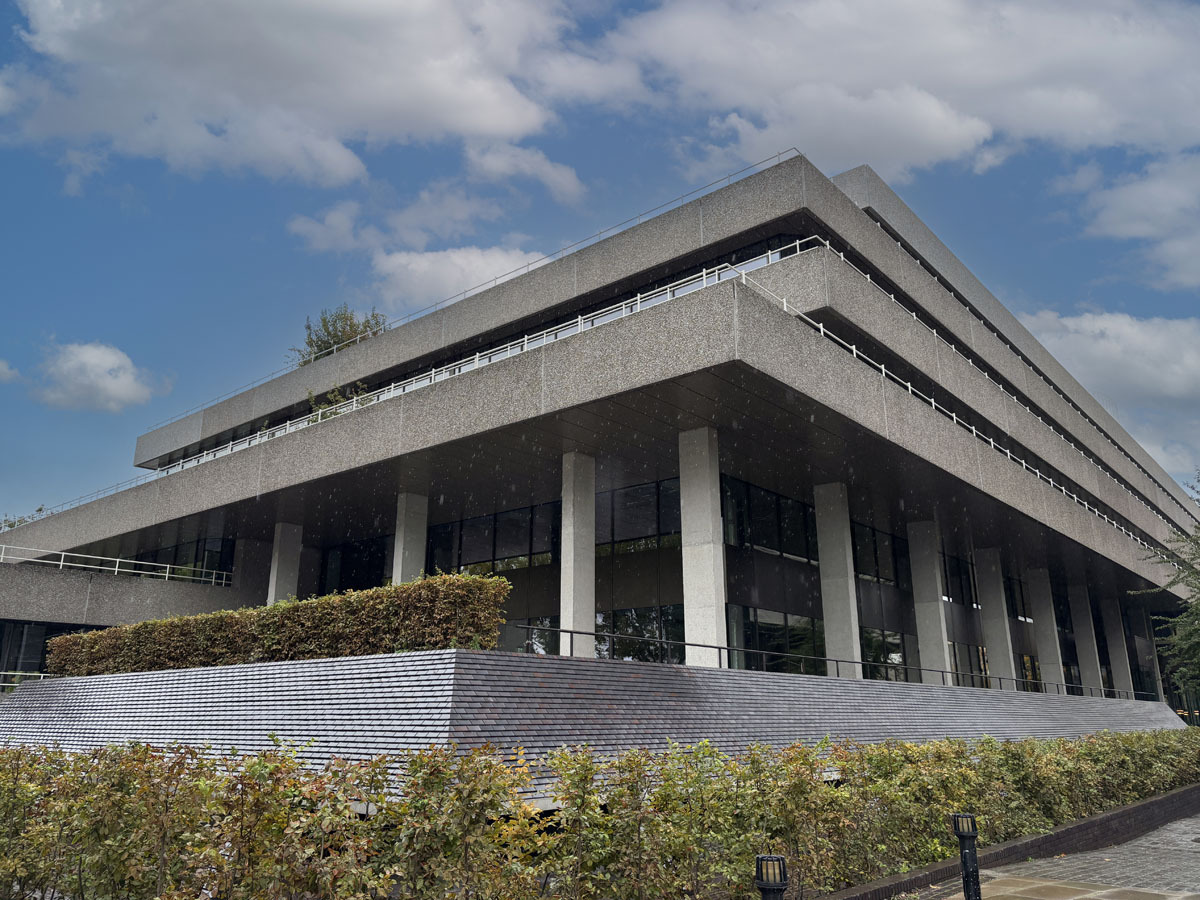
76 Southbank is a Grade II-listed Brutalist landmark, designed by Sir Denys Lasdun and completed in 1983. AHMM’s refurbishment and extension demonstrate how a major commercial redevelopment can achieve exemplary sustainability outcomes while preserving and enhancing London’s architectural heritage.
The project delivers 11,000 m² of additional workspace, yet its most significant achievement is its low-carbon retrofit strategy, which prioritised retention, reuse, and material efficiency at every stage. It embodies the principle that the most sustainable building is the one that already exists.
Carbon Mitigation and Structural Retention
Retaining 80% of the structure and avoiding the carbon-intensive replacement of concrete frames and floorplates saved 10,171 tonnes of CO₂e and delivered an embodied carbon figure of 365kgCO₂/m², significantly outperforming industry benchmarks. This whole-life carbon approach underpins the building’s BREEAM Outstanding, NABERS 5 Star, and EPC A ratings.
Geotechnical Innovation
A major innovation was the reuse of the existing Franki pile foundations. These cast-in-situ displacement piles were originally assumed to require replacement. Instead, extensive testing showed that the 40-year-old piles could support increased loads from the new sixth-storey extension. This eliminated the need for large-scale new piling works and avoided substantial embodied carbon. Reusing deep foundations at this scale is rare in commercial redevelopment, representing a significant circular-economy achievement.
Circular Economy and Material Reuse
Before new material was introduced, Lyons and Annoot reinstated over 71 tonnes of reclaimed bricks, 27,360 floor tiles, and 95 tonnes of paving blocks. Over 200 precast-concrete façade panels were removed, refurbished, and rehung. This salvage process saved over 210,000 kg of CO₂, reduced manufacturing and transport impacts, and retained the building's distinctive granite-aggregate expression.
Material Specification and Continuity
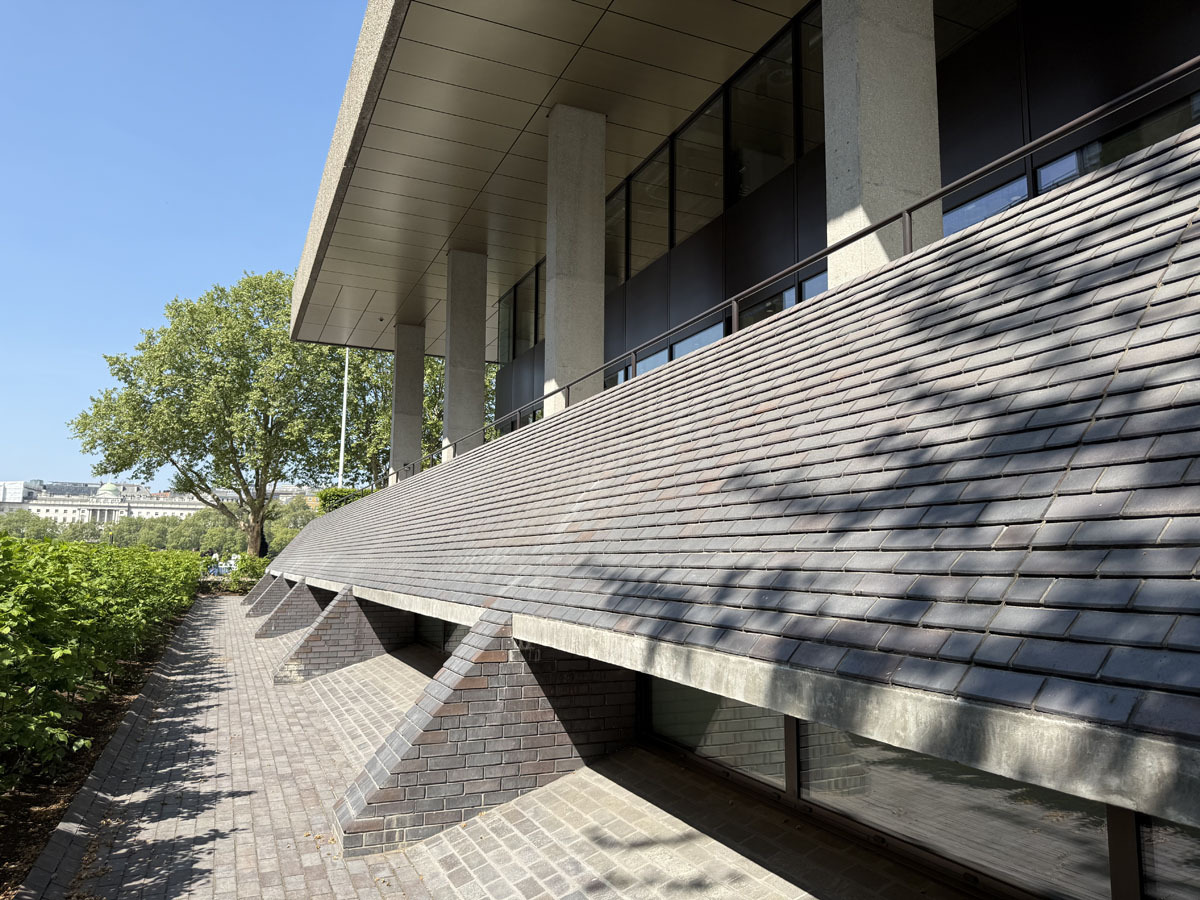
Where new brickwork was required, the design team matched the original discontinued Etruria marl clay bricks. AHMM specified 63,500 Ketley Solid Class A Staffordshire Blue Multi engineering bricks for the façades and ground levels. Their kiln-controlled tonal variation replicates the weathered appearance of the 40-year-old originals, ensuring visual continuity and providing a durable, low-maintenance material with a long service life. Over 35,000 Ketley plinth bricks were used to remodel the base, creating a sloping profile that sheds water away from the masonry and protects the foundations.
Operational Energy Performance
The upgraded thermal envelope incorporates the largest installation of Schüco’s low-carbon aluminium stick system, significantly improving airtightness and thermal performance.
Combined with high-efficiency glazing, passive shading from the building’s horizontal terraces, and optimised orientation, these measures contribute to predicted emissions of 17.9kgCO₂/m², reduced to 12.6kgCO₂/m² when on site renewables are included.
Building Services and Ventilation Efficiency
The fully electric building uses air- and water-source heat pumps, supported by a bio-solar roof with 175 photovoltaic panels. Fresh-air ventilation is demand-controlled, responding automatically to CO₂ levels, while exposed soffits and minimal floor voids reduce material use and improve thermal-mass performance.
Climate Resilience and Biodiversity Net Gain
Climate resilience and biodiversity were embedded throughout the design. Over 5,000 m² of landscaped terraces incorporate intensive planting, rainwater harvesting, and habitats for local species, contributing to a 200% biodiversity net gain and the planting of more than 20 new trees. These terraces also provide passive solar shading, reducing cooling loads and improving occupant comfort.
Sustainable Water Management and External Paving
Stormwater is managed through a blue-roof and permeable paving across the public realm, reducing pressure on local drainage infrastructure.
The paving system integrates 18,000 Ketley blue chamfered pavers and 8,000 blue-multi square-edged pavers, matched to 95 tonnes of salvaged originals, ensuring both environmental performance and material continuity.
Interior Specification and Active Travel Infrastructure
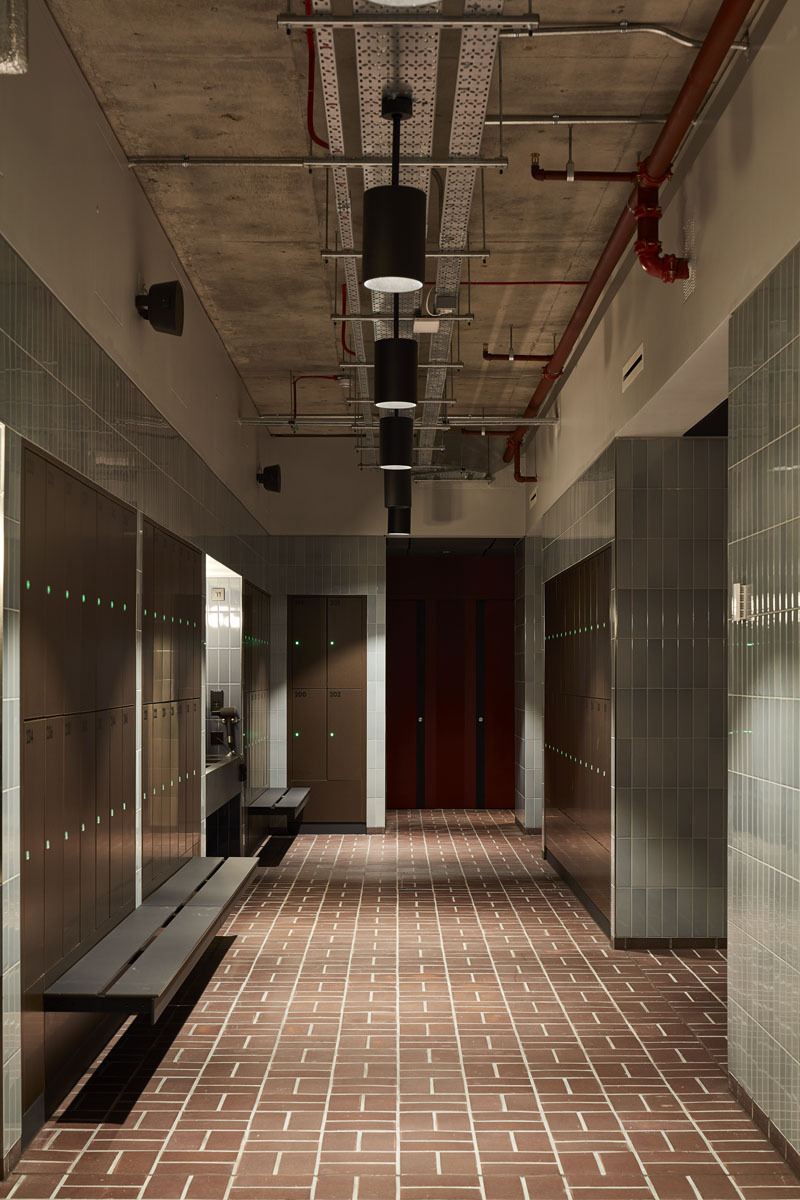
Durable, low-maintenance materials extend the sustainability strategy into the interior spaces. A new internal brick staircase uses specially extruded Staffordshire blue-multi step pavers, engineered for inlaid brass nosings. To support active travel, 16,000 brown-and-brindle Ketley quarry tiles line the 530-space cycle store and showers, providing a robust, long-lasting finish.
Social Value and Public Realm Enhancement
The redevelopment generated over 90 jobs, 31 apprenticeships, 14 placements, and 379 volunteer hours, including a Construction Youth Trust partnership to support young people entering the sector. Removing the former vehicle ramp and creating a new 1,000 m² publicly accessible collonaded entrance improved the public realm by enhancing permeability, accessibility, and community use.
Conclusion
76 Southbank won the Pioneering Retrofit category in the Footprint+ Changemaker Awards, which recognises positive change in sustainability.
By retaining structure, reusing materials, and designing for longevity, the project maximises its embodied carbon savings while delivering high operational performance and measurable social value.
Sponsored by Michelmersh Brick Holdings PLC

As Britain’s Brick Specialist, Michelmersh Brick Holdings PLC unites the best in clay traditions. The Group represents six recognised premium brands across the UK and Europe; Blockleys, Carlton, FabSpeed, Floren.be, Freshfield Lane, and Michelmersh, producing 120million clay bricks, pavers, special shaped bricks and prefabricated brick systems.
Using modernised production methods that emphasise sustainable and innovative building solutions, adhering to stringent production requirements, Michelmersh guarantees high-quality product standards with a low ecological footprint.
We lead the way in producing Britain’s premium clay products, enhancing our built environment, adding value to the architectural landscape for generations to come.


