
Details
Location: Manchester
Brick Manufacturer: wienerberger Limited
Brick Name: Forum Smoked Branco
Architect: Edmunds Architects
Brickwork Contractor: Short Construction
About the project
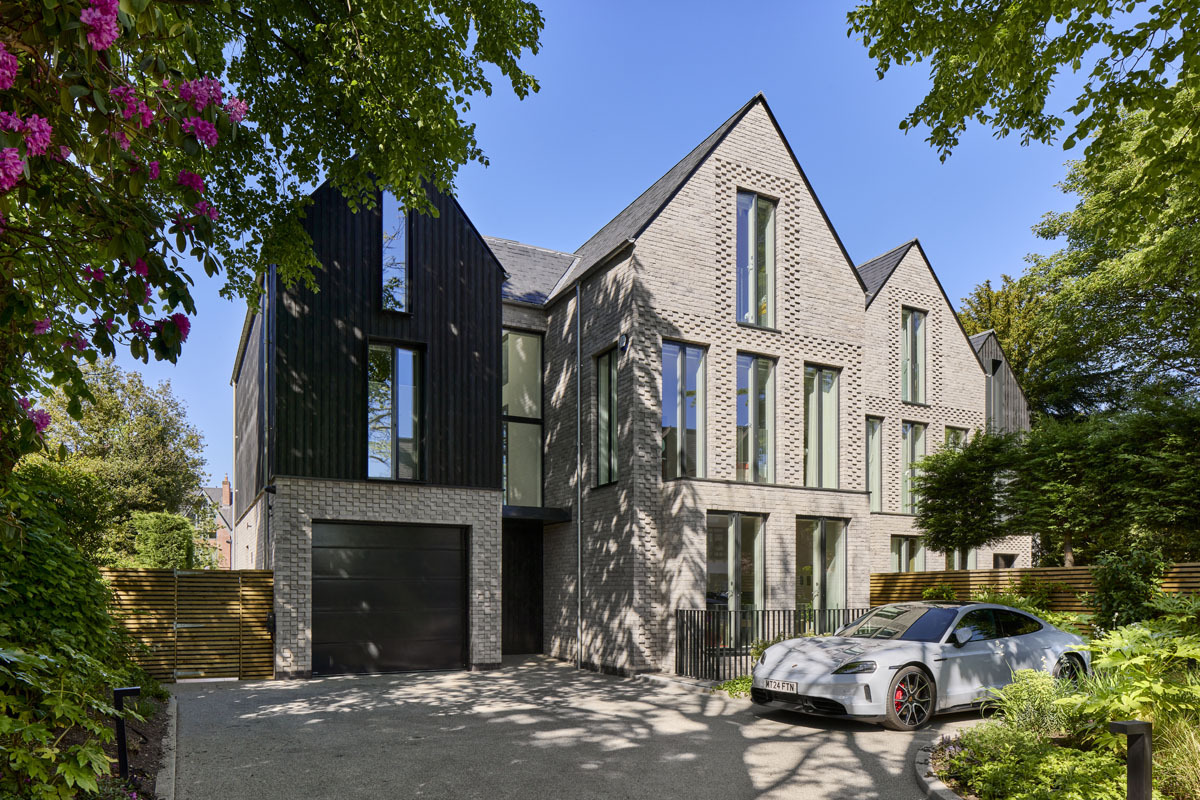
Didsbury Park is a striking example of how sustainable, contemporary design can sit comfortably within a historic setting. Located in the heart of the St James Conservation Area in Didsbury, Manchester, the project by Edmunds Architects comprises two bespoke, zero-carbon family homes. With brick at its core - both aesthetically and environmentally - this small development demonstrates how material intelligence and sustainability can go hand-in-hand.
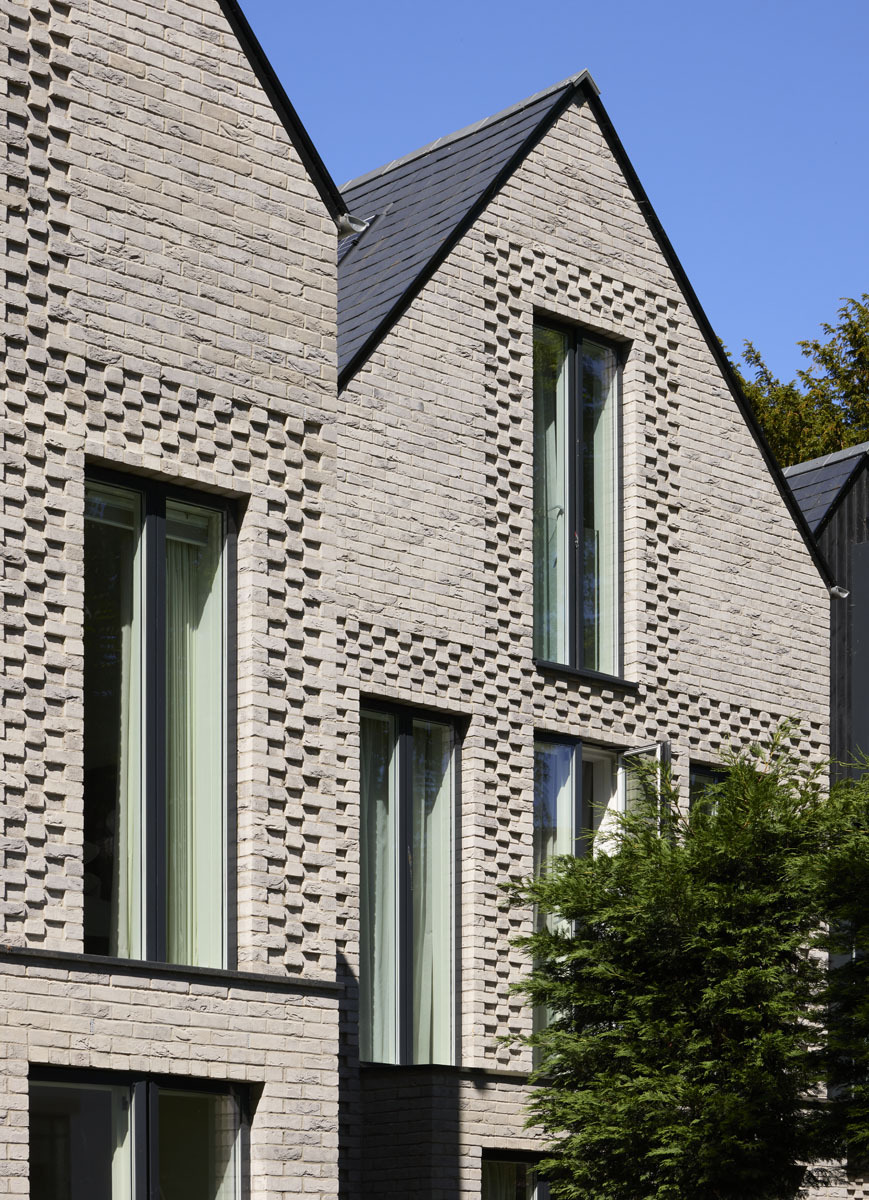
Set amongst Grade II listed red-brick buildings, the homes respond directly to their context through a refined and contemporary use of brick. Edmunds Architects selected Wienerberger’s Forum Smoked Branco brick for its subtle grey tones and textured/handmade appearance, offering a modern interpretation of the area’s characteristic masonry. Brick is not used simply as cladding, but as a design language - its detailing adds rhythm and texture to the façades, with subtle modulation, recessed brick header details, and deep window reveals. These contemporary expressions of a historic material establish visual continuity with the surroundings, without resorting to imitation or pastiche.
Crucially, brick also plays a role in the development’s sustainability credentials. As a low-maintenance, durable and recyclable material, the brick envelope supports the homes’ long-term environmental performance. Its thermal mass helps regulate indoor temperatures, reducing heating and cooling demand throughout the year. The brick is complimented with charred timber cladding also know for it’s low maintenance and appealing texture.
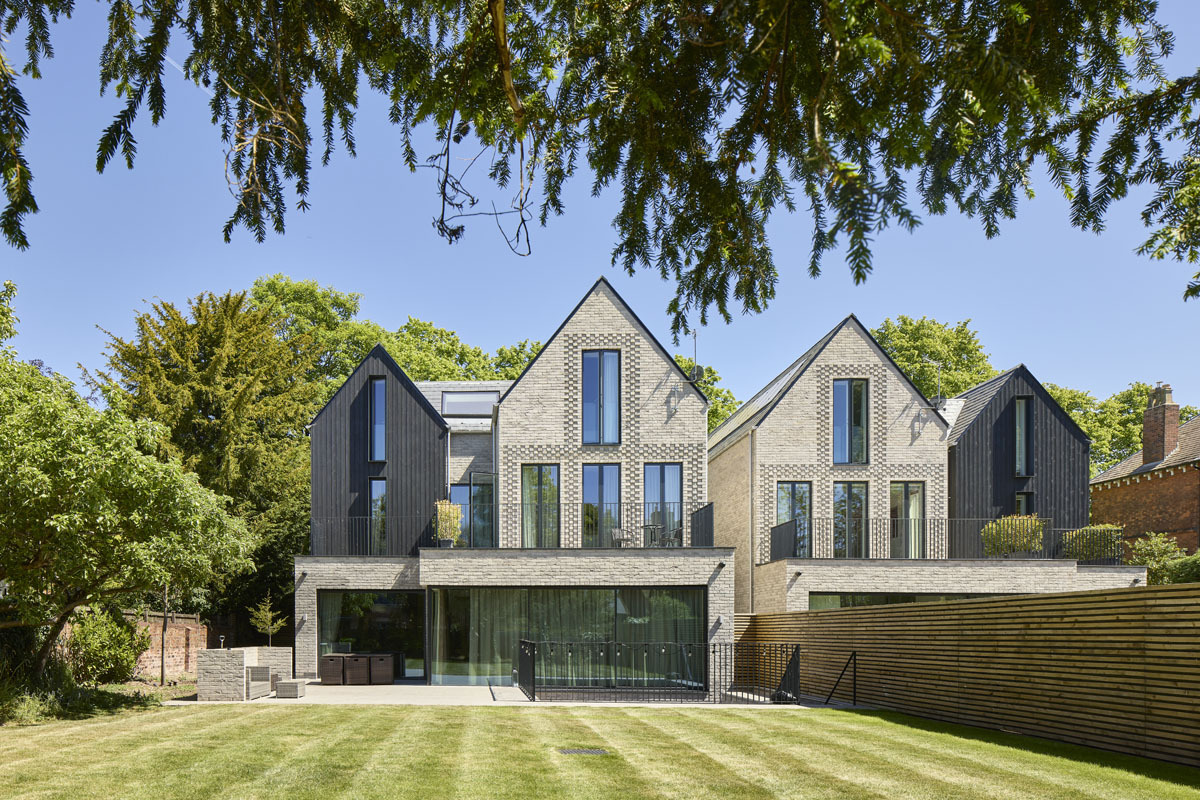
Each of the two 5,000-square-foot homes is designed for modern family living, with open-plan layouts, deep garden connections, and natural light flooding through triple-height spaces. Despite their size, the homes achieve remarkable energy efficiency. Powered by a 3kWp solar PV array, and equipped with mechanical ventilation with heat recovery (MVHR), the homes exceed building regulations by delivering a 44.7% reduction in carbon emissions against the Target Emission Rate. They achieve an EPC rating of A (92), a significant achievement for houses of this scale.
This performance is enhanced by high levels of insulation and airtight detailing, but it is the architectural integration of sustainability that sets Didsbury Park apart. The brickwork is not simply a skin, but part of a wider strategy that combines material honesty with environmental intent. From the front, the homes read as grounded, robust, and timeless; from within, they are light-filled, breathable, and adaptive - designed to meet the needs of modern families while safeguarding the planet for future generations.
The brief began with a personal ambition: to replace an existing home with a contemporary, sustainable family house, and develop a second for sale. In achieving that, Edmunds Architects have created something much more: a small housing development that proves innovation and heritage can coexist, and that sustainability need not be an add-on, but a defining design principle.
Didsbury Park is a model for how small-scale developments in sensitive areas can lead on sustainability, without compromise. Through its thoughtful brick-led design, commitment to carbon reduction, and focus on quality of life, it offers a compelling vision for the future of housing in historic environments.


