
Details
Location: London
Brick Manufacturer: Ketley Brick Company Ltd
Brick Names: Staffordshire Blue/Multi Solid Class A Engineering Bricks, Staffordshire Blue/Multi Plinth Bricks, Staffordshire Blue Chamfered Pavers, Staffordshire Blue Multi Square Edged Pavers, Staffordshire Blue Directional Pavers, Staffordshire Blue Ribbed Corduroy Pavers, Staffordshire Blue/Multi Step Nosing Paver (special), Brown Brindle Quarry Tiles
Architect: Allford Hall Monaghan Morris
Brickwork Contractor: Lyons and Annoot
About the project
76 Southbank is a Grade II-listed Brutalist landmark, adjacent to the National Theatre. Designed by Sir Denys Lasdun and completed in 1983 as IBM’s headquarters, the building is widely considered his final major work.
AHMM’s refurbishment and extension celebrate the building’s original character and heritage while adapting it to meet 21st-century sustainability standards and delivering an additional 11,000 square metres of flexible office space.
Design continuity
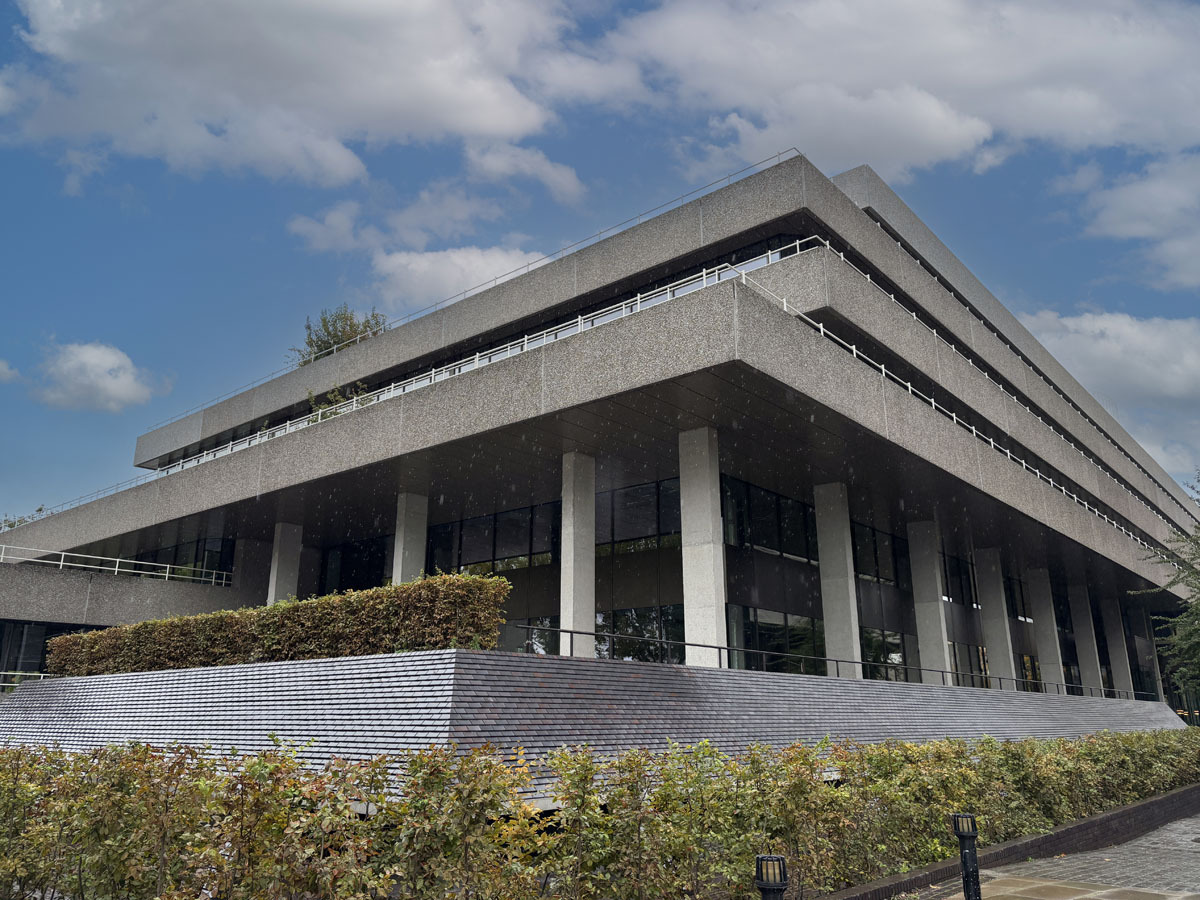
The new sixth-storey extension continues Lasdun’s signature horizontal ‘strata’ architecture, appearing as a natural continuation of the original composition in which the old and new are woven together.
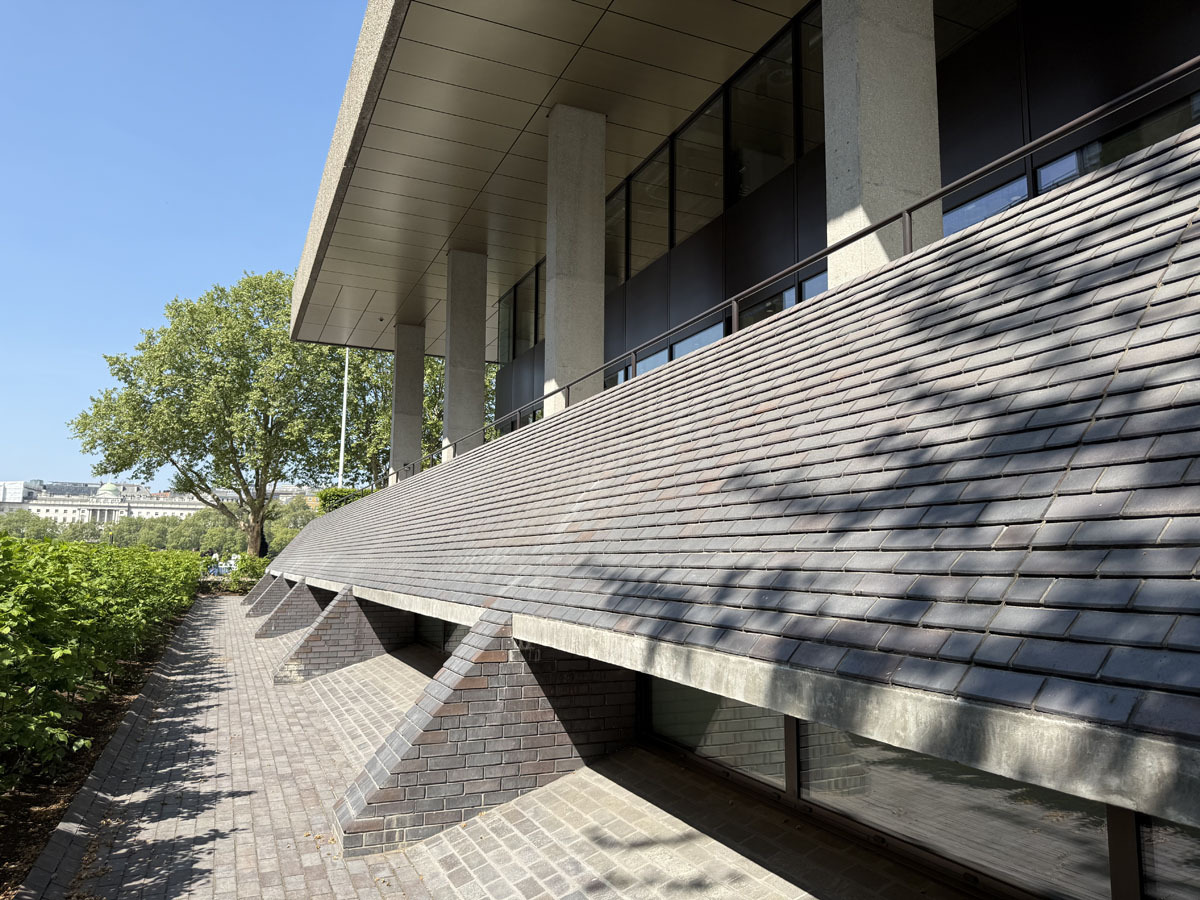
The upper structure floats in pale precast concrete, while the building’s ground level and lower terrace are anchored by a substantial brick plinth that wraps the base and transitions into the surrounding public walkways.
The removal of the harsh 1980s concrete vehicle ramps opens the ground plane to the plaza, creating a continuous urban carpet connecting the building to the wider Southbank.
Material reuse and matching brickwork
Over 71 tonnes of reclaimed bricks, 27,360 floor tiles, and 95 tonnes of paving blocks were cleaned and reinstated by Lyons and Annoot before new material was introduced.
As the original Etruria marl clay bricks and pavers were no longer manufactured at the orginal factory, 63,500 Ketley Multi Solid Class A Staffordshire Blue Multi engineering bricks were specified for the elevations and ground levels.
Their blue/purple tonal variations with random flecks of red/brown derived from the kiln-controlled atmosphere rather than from added pigments, replicate the natural weathered appearance of the 40-year-old originals. The result is virtually indistinguishable from the existing fabric.
The plinth was remodelled using over 35,000 Ketley plinth bricks (24,020 plinth stretchers, 11,000 headers, and returns) in matching tones, creating a water-shedding slope that keeps the foundation dry.
Whereas standard facing bricks would deteriorate over time, Ketley’s Class A engineering bricks provided the compressive strength, low water absorption, and durability for a façade built to last for generations.
Connecting public Realm to internal spaces
Ketley Etruria marl products, laid in the plaza and lobby, created the illusion that the ground plane flows into the building.
Externally, 18,000 blue chamfered pavers and 8,000 blue-multi square-edged pavers match 95 tonnes of salvaged pavers, ensuring a consistent floor finish throughout the plaza. They contribute to the permeable paving strategy, supporting stormwater attenuation across the site.
To assist navigation, 1,530 Ketley blue directional pavers provide visual and physical cues for movement across the site, while 265 blue tactile ribbed corduroy pavers assist visually impaired users.
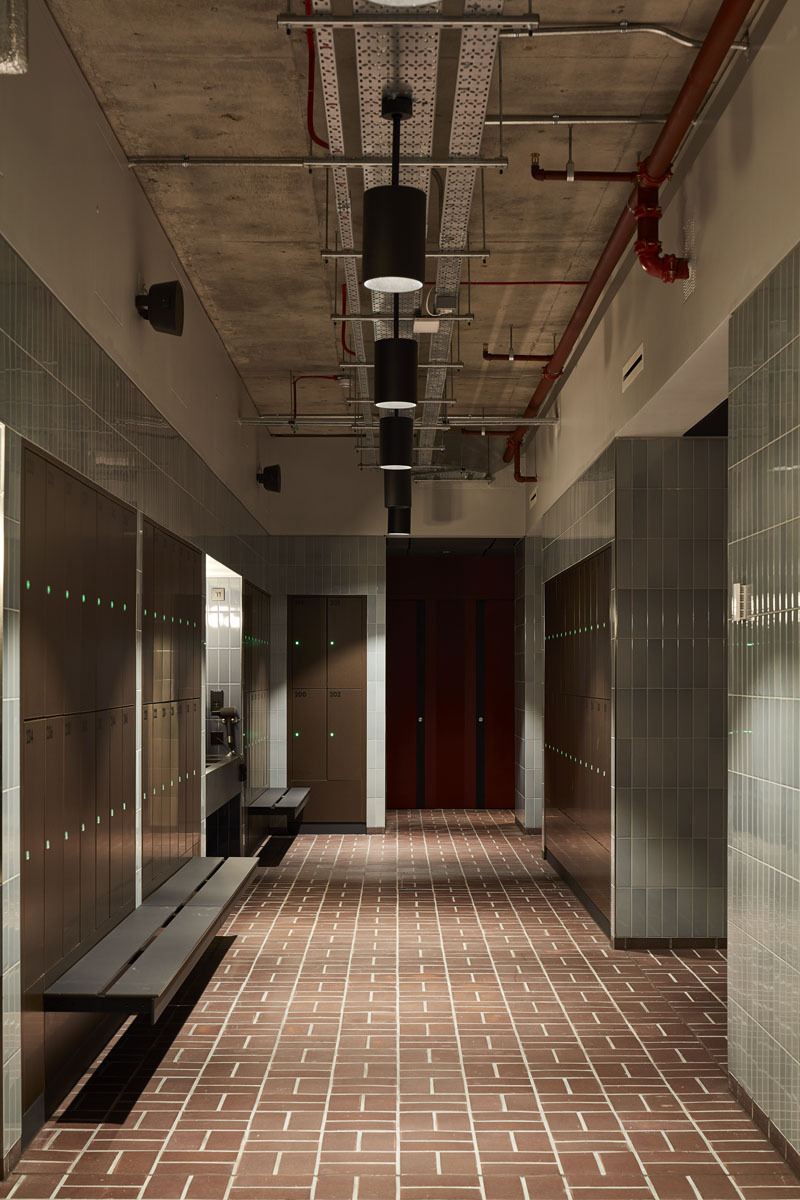
To blur the boundary between outside and inside, the material palette extends into the building’s lower levels. A new internal brick staircase, featuring specially extruded Staffordshire Blue-Multi Step pavers with profiles designed for inlaid brass nosings, extends the Brutalist aesthetic into the building's circulation core. 16,000 Brown-Brindle Ketley quarry tiles line the 530-space cycle store and shower facilities.
Sustainable Achievement
The project won the Pioneering Retrofit category in the Footprint+ Changemaker Awards, which recognises positive change in sustainability.
A low-carbon retrofit strategy prioritising retention and material reuse achieved BREEAM Outstanding, NABERS 5-star, and EPC A certifications.
Retaining 80% of the original structure saved 10,171 tonnes of CO2e, achieving an embodied carbon of 365 kg CO2/m², while reusing over 200 precast concrete panels saved more than 210,000kg of CO₂ whilst preserving the original aesthetic.


