
Details
Location: Somerset
Brick Manufacturer: Northcot Brick
Brick Names: Grange Blend, Bourton Manor Handmade
Architect: Purcell Architects
Brickwork Contractor: A.Willmott Brickwork
About the project
Overview
The Shoemakers Museum, in Somerset, was commissioned by the Alfred Gillett Trust to celebrate the area’s industrial heritage and its bicentenary as the home of Clarks shoes, establishing a new civic and cultural hub.
Its four permanent galleries display a collection of 25,000 shoes from Roman times to the present day, along with hundreds of never-before-seen objects and rare fossils excavated from the site, and provide spaces for education, community activities, and cultural events.
The Design - bridging the centuries
Purcell's design responds to the site's historic and geological legacy, uniting two distinct Grade II-listed buildings: a 16th-century barn and a Georgian manor house, The Grange, which had been disconnected from the town of Street for decades by factory and retail development.
A new two-storey infill extension bridges without dominating the historic buildings, creating a composition that reads as three distinct structures in the primary elevation, flowing around a central lawn.
Constructed with a Timber-Concrete Composite (TCC) system, the base primarily consists of salvaged Blue Lias limestone, featuring fossil traces that serve as a geological anchor. A Bath Stone colonnade supports a modern covered walkway made of glass and glulam, connecting the old and the new as a seamless, flowing experience.
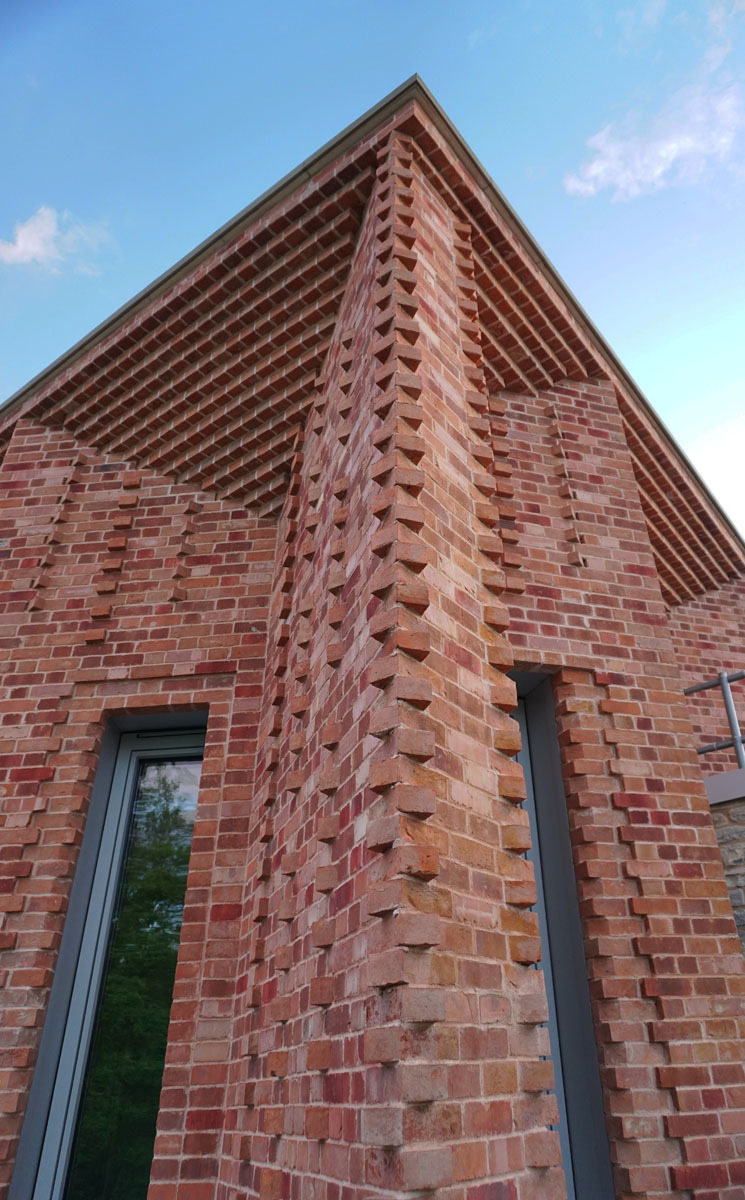
The building's most striking feature is its upper brick façade, corbelled, perforated and projected, its detailing drawn directly from the design language of Clarks shoes, symbolising the craftsmanship of shoemaking and hinting at what lies inside.
Brickwork - the language of shoemaking
The intricate folds of the brick façade mirror the creases and texture of natural leather with detailed patterns derived from Clarks shoes.
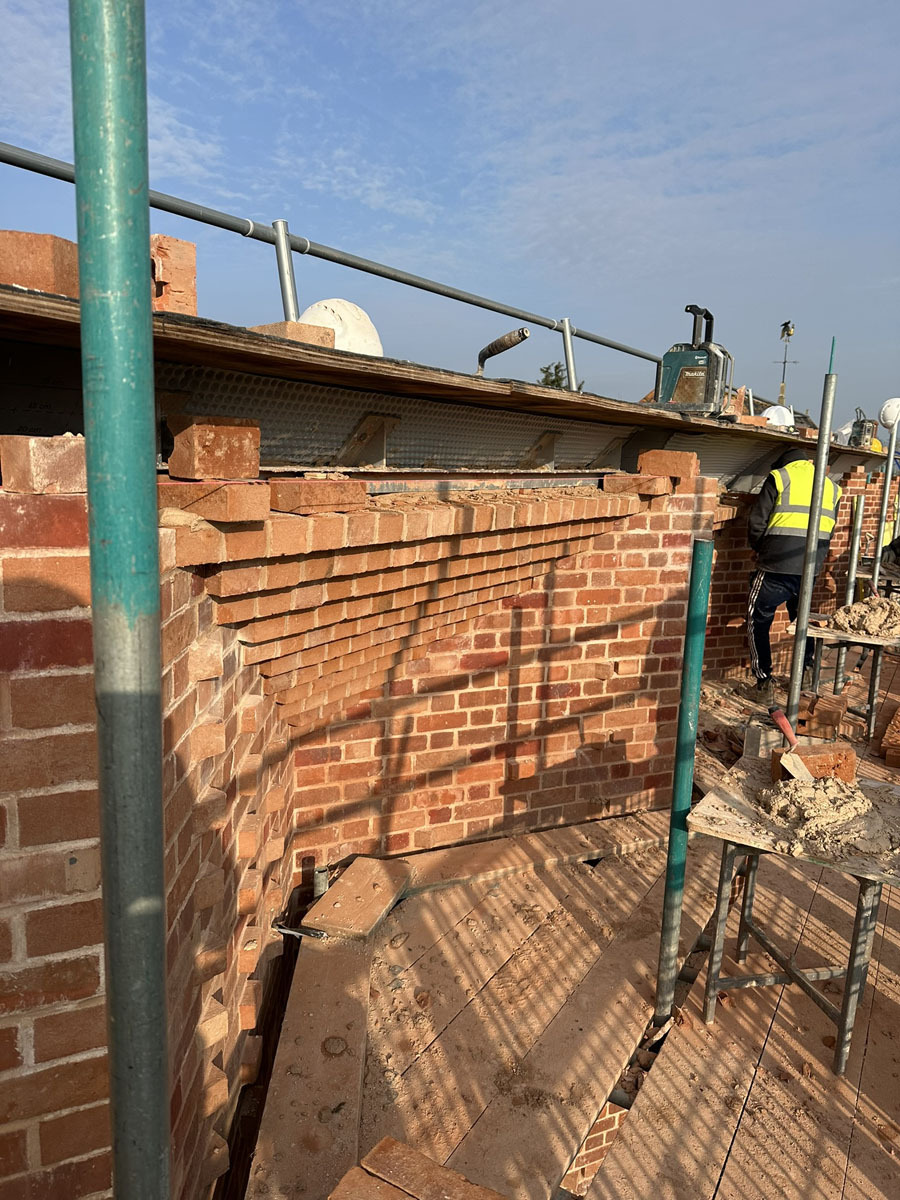
The corbelled eaves are layered in 13 steps, creating a ‘floating’ cantilevered effect that recalls the "pinked" or jagged edges of cut leather. As the light changes throughout the day, the corbels cast deep shadows, revealing the projected headers, giving the appearance of visible stitching.
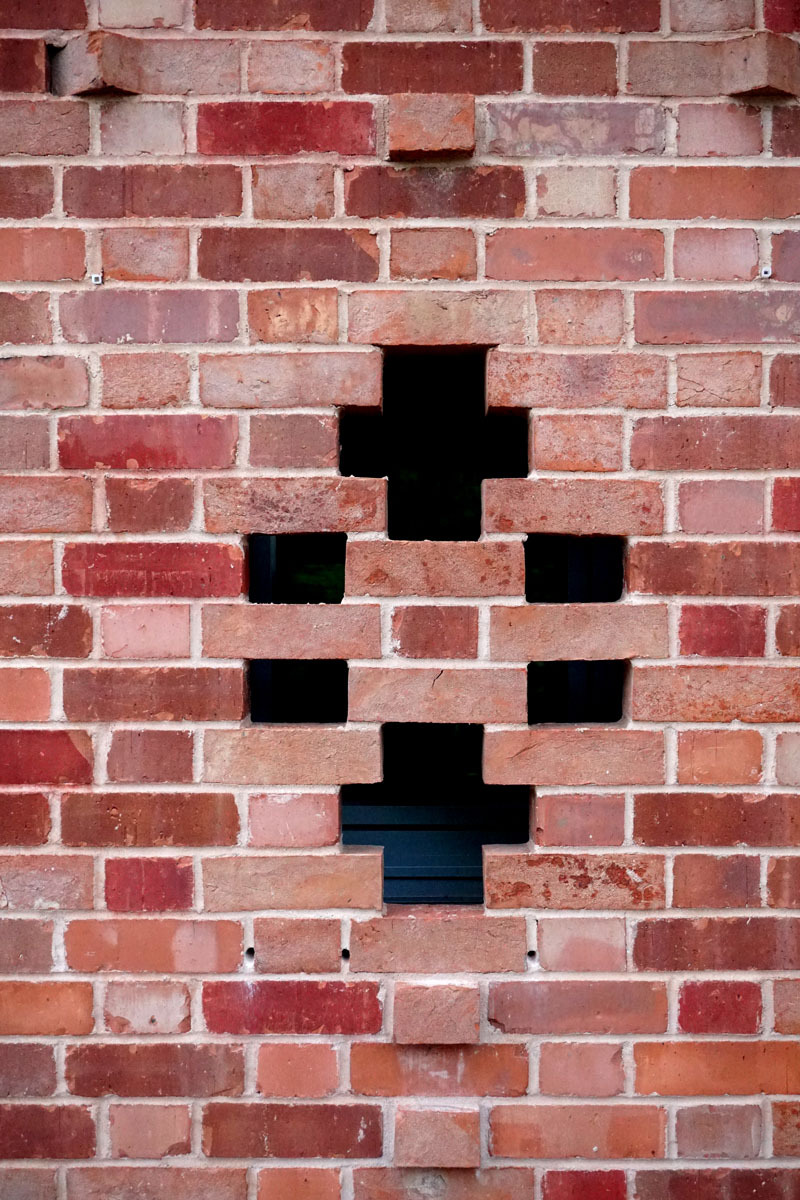
The perforated bonds reference the decorative holes on brogues, whilst also allowing daylight into the galleries and giving the building a lantern-like glow at night.
To stay within a tight budget and minimise the need for custom moulding, the intricate facade pattern is achieved through precise design and skilled bricklaying, using 13 standard specials sourced locally from Northcot Brick. The warm red-orange tones of the bespoke Grange Blend and Bourton Manor handmade specials, finished with a light tumble, soften the newness of the brickwork, lending it a texture and warmth that sits naturally alongside its centuries-old neighbours, whilst contrasting with the crisp precision of the cast stone colonnade.
Iconic cultural landmark
This exemplar of narrative architecture bridges the centuries, creating an iconic cultural landmark that is revitalising the town centre and strengthening its community identity. Achieving LETI A for whole-life carbon and an A-3 EPC, the building embodies the same principles that defined two centuries of Clarks craftsmanship - quality without pretension, honestly made, built to last.
The building has been shortlisted for Permanent Exhibition of the Year in the globally recognised 2026 Museums + Heritage Awards.


