
Details
Location: London
Brick Manufacturers: Forterra PLC
Brick Names: Staffordshire Blue Clay
Architect: Bureau de Change Architects
Brickwork Contractor: Irvine Whitlock
About the project
Completed in 2018, The Interlock challenged conventional thinking about brick architecture and has continued to influence conversations around innovation, craftsmanship and material expression ever since. Seven years on fromits completion, the project remains as compelling and relevant as it was when it first appeared on Riding HouseStreet, demonstrating the enduring value of thoughtful experimentation and design ambition.
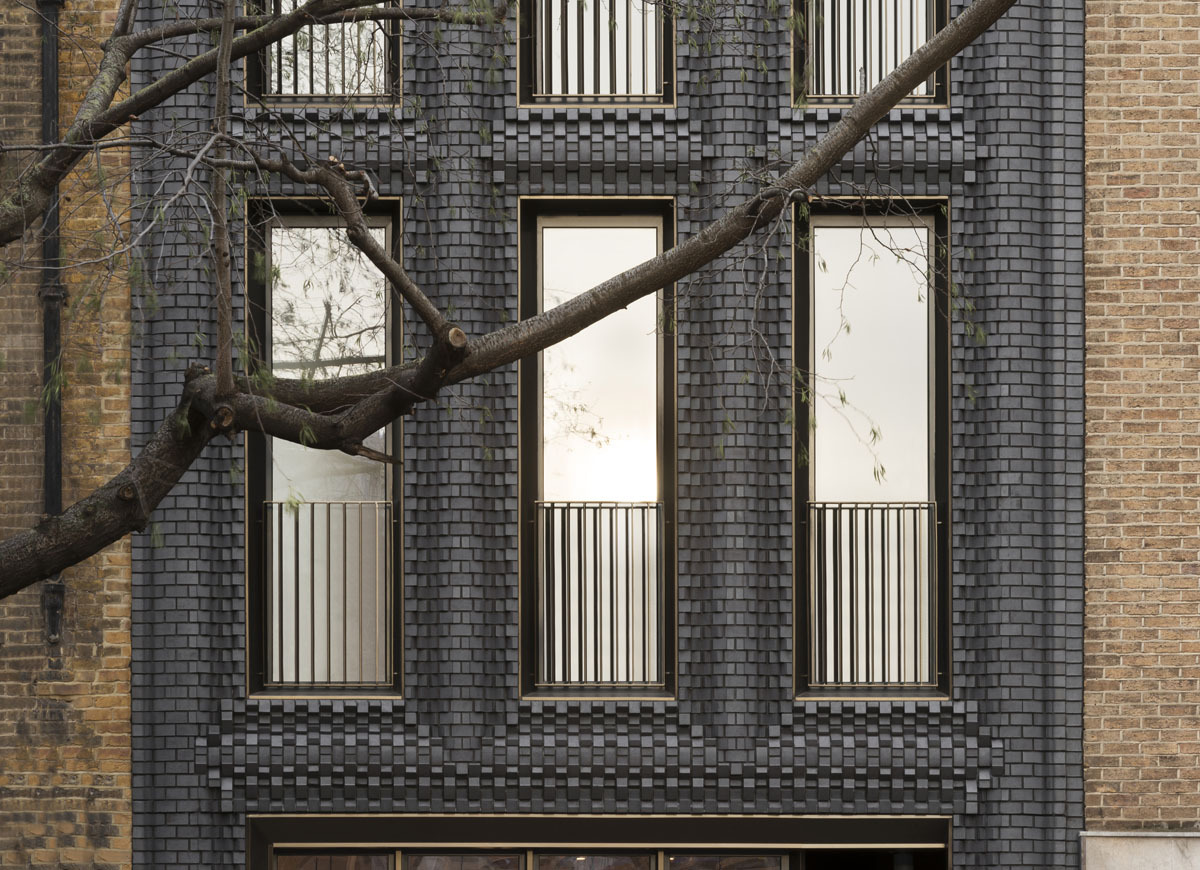
Designed by Bureau de Change Architects, the mixed-use building occupies a prominent corner site in Fitzrovia, apart of London defined by an eclectic architectural character. Riding House Street is a collage of Victorian terraces,post-war interventions and twentieth-century apartment buildings, united by one common material: brick. Ratherthan imitate its neighbours, The Interlock responded to this context by reinterpreting the proportions and rhythmsof the traditional London terrace through an entirely new architectural language.
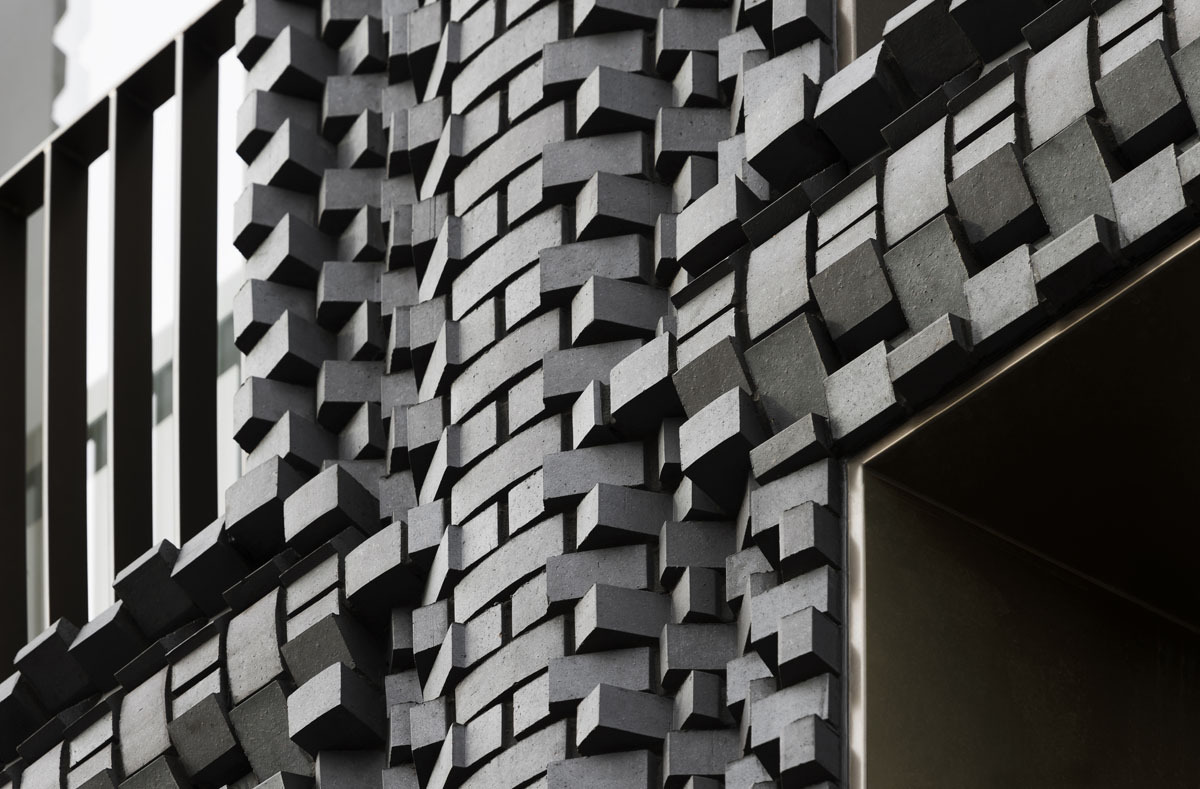
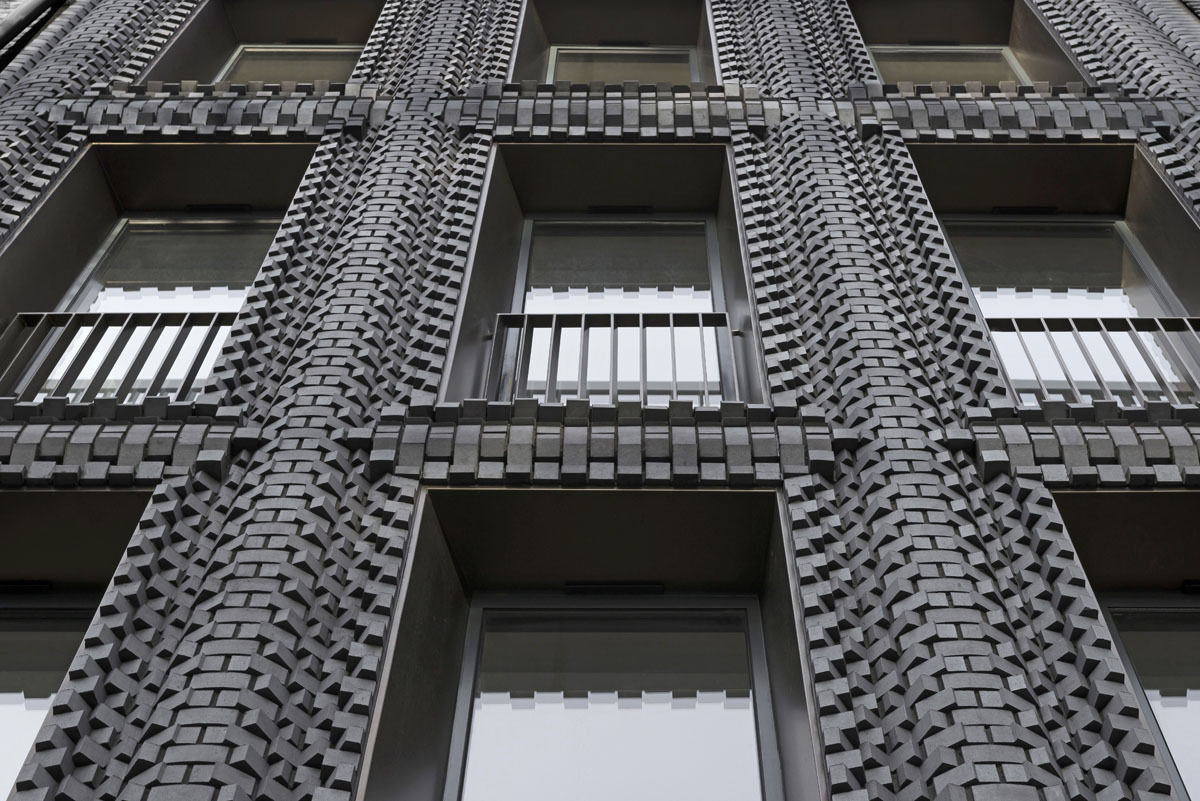
At the heart of the project is its extraordinary brick façade. Working with Forterra's Staffordshire Blue clay, thedesign team developed a family of bespoke brick specials that challenged the conventions of brick construction.Forty-four unique units were created to generate a surface that appears to shift and fold across the elevation.Brickwork swells between floors, wraps around openings and creates subtle changes in shadow and depth thattransform throughout the day.
Despite its complexity, the project never lost sight of craftsmanship. Digital modelling enabled each brick to beprecisely coordinated, but the finished façade relied equally on traditional making and skilled bricklaying. Fourteenhand-crafted steel moulds were used to create the original forms, producing approximately 5,000 speciallydeveloped bricks that were assembled over a three-month period. The result is a building that successfullycombines emerging technologies with time-honoured construction techniques.
The Interlock's legacy lies not only in its visual impact, but in the questions it asked of brick as a material. Itdemonstrated that clay brick could be both innovative and enduring; capable of responding to context whilesimultaneously expanding the boundaries of architectural expression. The project challenged assumptions that brick must be repetitive or restrained, showing instead that it can be playful, sculptural and deeply contemporary.
Originally recognised by the Brick Awards with wins in both the Innovation and Small Housing Developmentcategories, The Interlock continues to be widely published, studied and celebrated. Its influence extends beyond its modest scale, having established a benchmark for how digital design, specialist manufacturing and craftsmanship can come together to create architecture with genuine and lasting impact.


