
Details
Location: London
Brick Manufacturers: Ketley Brick Company Ltd
Brick Names: Ketley Class A Staffordshire Blue Bricks and Staffordshire Class A Staffordshire Brown Brindle
Architect: John Outram Architects
About the project
Iconic post‑modern landmark
The Isle of Dogs Pumping Station, designed by John Outram, is one of London’s most striking pieces of post‑modern brick architecture and architectural experimentation in the UK.
Commissioned by the London Docklands Development Corporation (LDDC), it was built from 1986 to 1988 to manage rainwater runoff and sewer overflows, to prevent flooding in the Docklands area of East London. It remains fully operational today under Thames Water.
In 2017, the pumping station, transformer house and surrounding wall were awarded a Grade II* listing, as the first listing to come out of Historic England’s Post-Modernism project. The project was described as “one of the most exciting buildings of the 1980s”.
Public infrastructure as civic art
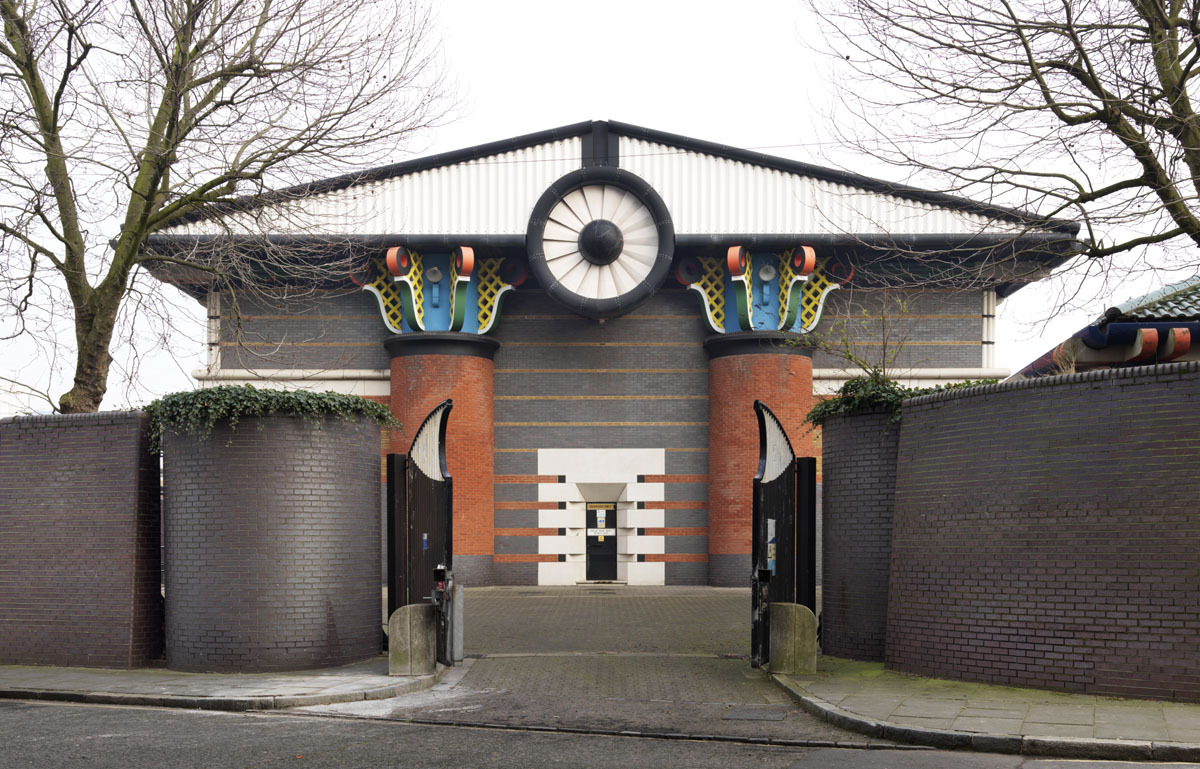
Known as “Temple of Storms”, the pumping station is a rebellion against the idea that utility must be boring and ‘mute’. Instead, the design is dramatic, packed with the symbolism of mythology and imagery of the natural world.
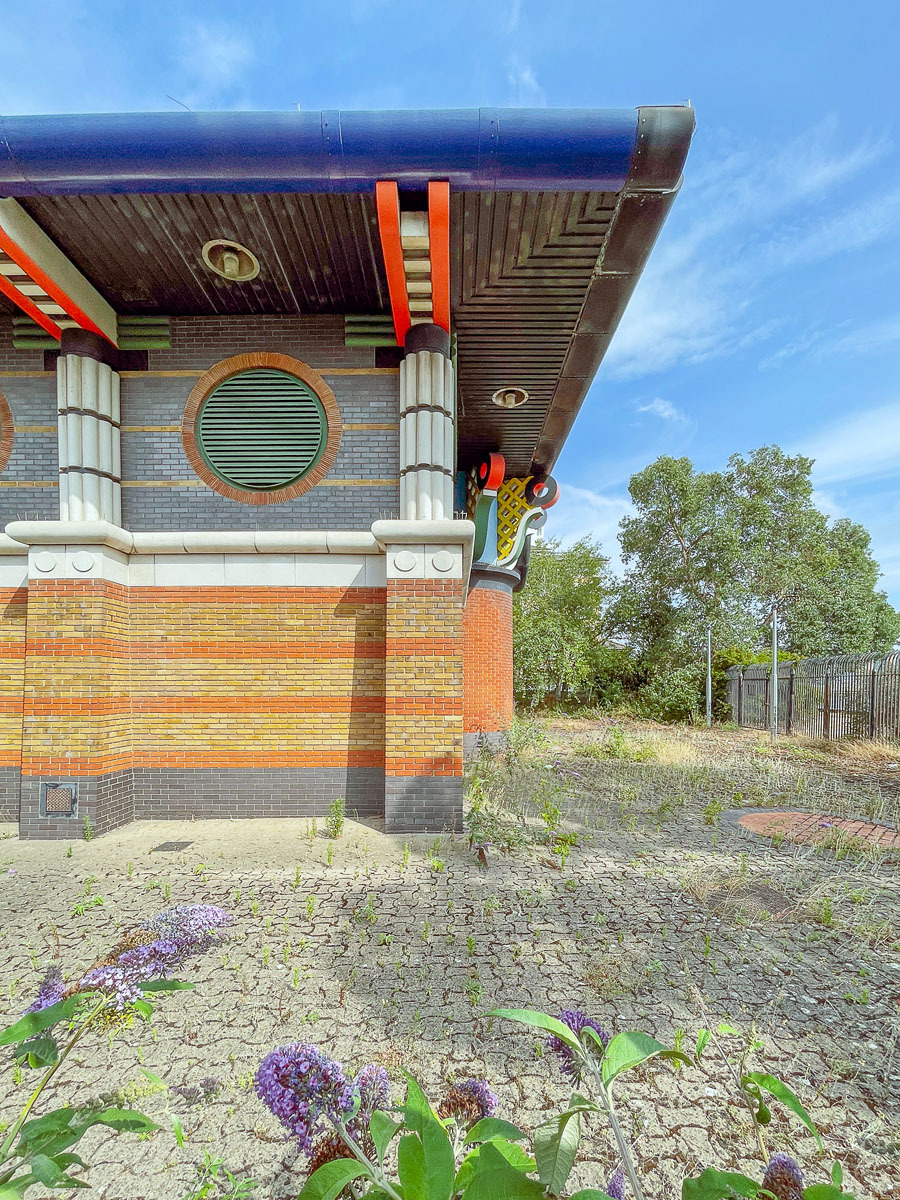
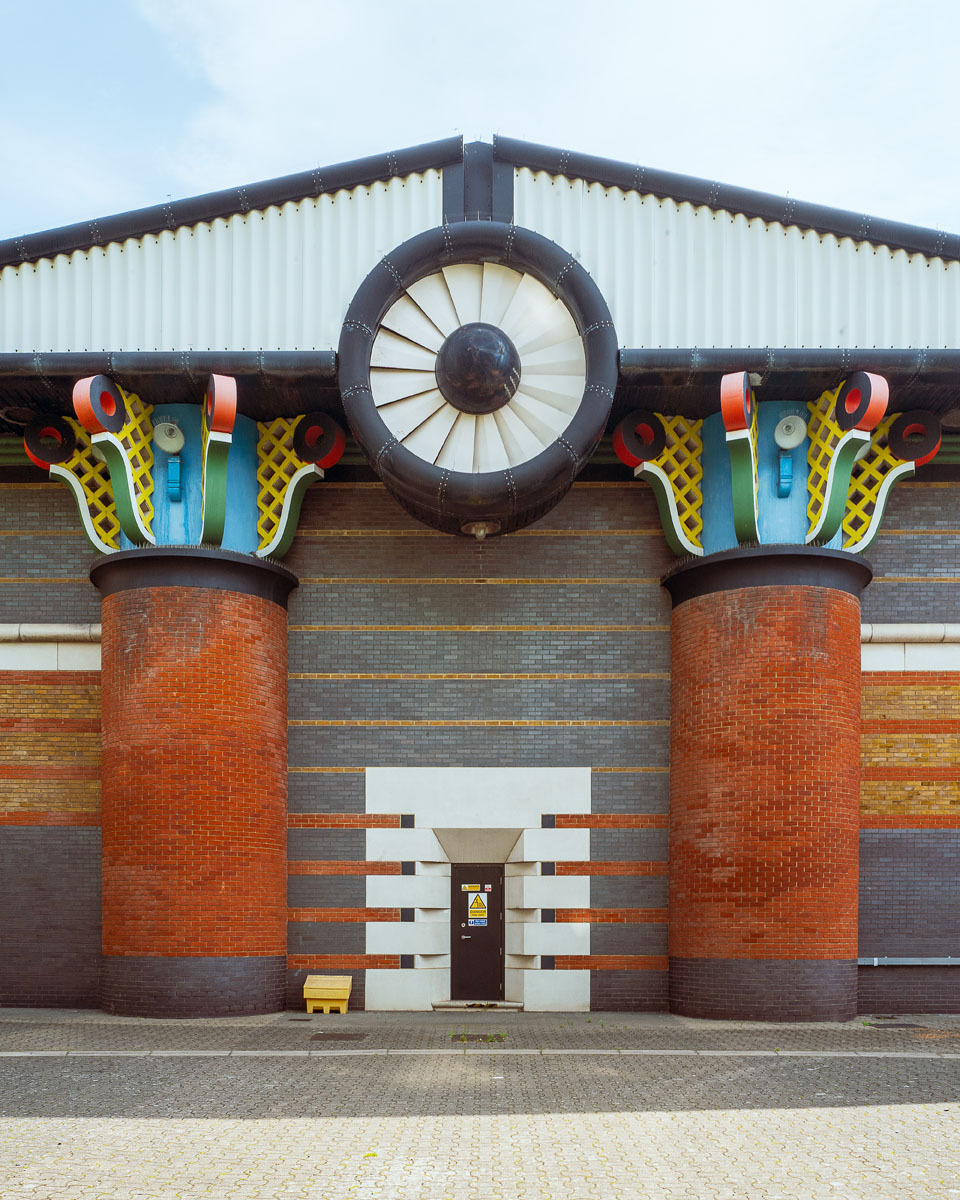
It resembles a classical temple, with massive stylised Corinthian columns at each end that hide ventilation ducts and are topped with brightly coloured capitals, evoking the impression of leafy trees. A striking circular eye at the centre, which functions as a 3-metre-diameter fan, recalls Cyclops, and the pediment can be interpreted as an eagle without stretched wings.
In contrast to the flamboyance of the pumping station, Outram gives Transformer House, a windowless electricity substation, a more sombre, monolithic industrial feel, with chunky "Robot" columns that resemble a temple's colonnade.
Enduring language of Brick
Integral to the pumping station is the polychromatic brickwork. Bands of Staffordshire Blues and red brick create a visual language reminiscent of ancient Egyptian textiles, and their presence at the waterline creates the illusion of a temple emerging from the Thames.
The substation, which won the BDA Architectural award in 1989 is constructed almost entirely from a darker palette of Ketley’s Staffordshire Blues, with tonal variations ranging from metallic blue-black to brindle finishes, creating a subtle strata effect further emphasised by deeply recessed joints.
The large central door is defined by a brick archway, topped with bullnose bricks. A variety of specials including bullnose, cants and radials help form a brick façade surrounding the 4 semi circular columns, giving a layered look to the building.
A boundary wall in an earthy Ketley brown brindle brick frames the site, separating the pumping grounds from the public.
100-year design life
Outram’s brief was to design a building that would survive unmanned and last at least one hundred years.
The importance of Ketley’s Class A engineering bricks lies not only in their natural colours but also in their low porosity (less than 4.5%) and high compressive strength, which would withstand the harsh riverside environment and make them both fireproof and vandal-resistant.
A catalyst for regeneration
The Isle of Dogs Pumping Station is an iconic example of infrastructure elevated to civic art. After 40 years, it remains fully functional and retains its cultural and visual impact without looking dated.
It served as an economic catalyst by providing the flood protection essential to the development of the Enterprise Zone, which later became the financial hub of Canary Wharf. Commissioning of a world-class architect also helped create the image of a high-prestige area of global importance and local pride.


