
Details
Location: London
Brick Manufacturer: Michelmersh Brick Holdings PLC
Brick Names: Charnwood Special Blend, Charnwood Legacy Products
Architects: ADAM Architecture / Indigo Design Associates
Brickwork Contractor: Langdale Associates
About the project
This family house in Wimbledon was built in the early 20th century, and designed in the Arts and Crafts style, using Flemish Bond, red-brown coloured brickwork, with contrasting orange-red coloured brickwork around the window openings and plain clay vertical tiling detail between the ground and first floor windows, to the projecting two storey bays.
Although the house was designed with some attention to detail, it had been significantly altered over the years and was not of significant architectural merit, particularly in the context and quality of the adjacent and wider surrounding housing stock. The property had reached the point where it was more economic to replace the existing house for reasons of economy and investment, and to reflect its prominent location within the conservation area and its proximity to a listed war memorial opposite.
Modern building techniques were used to create a thermally efficient and sustainable building to provide a home that is cost-effective to build, run and maintain. The proposed design and external appearance is still expressed in high quality brickwork and set out to provide a house of high architectural merit in sympathy with the best of the housing stock of the better-quality houses of the late 19th and early 20th centuries to the north.
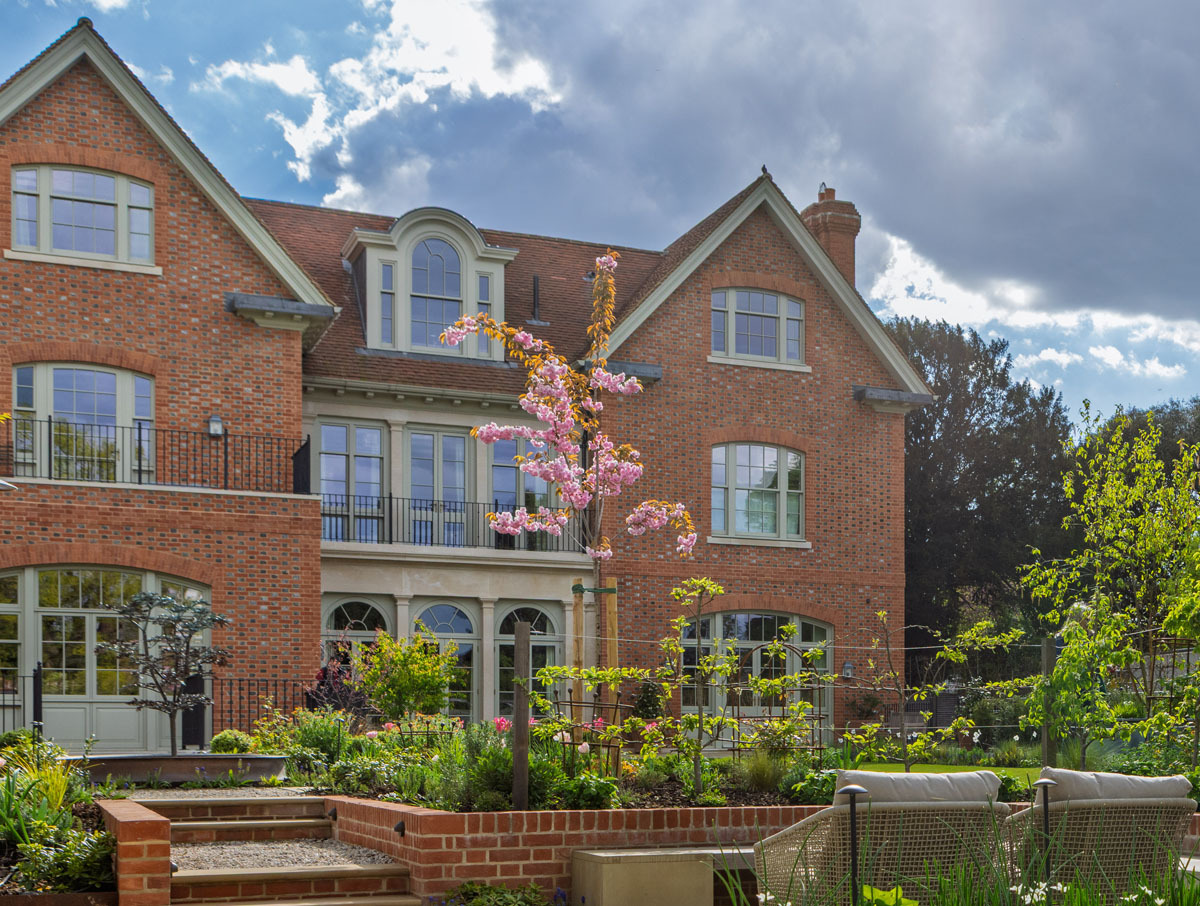
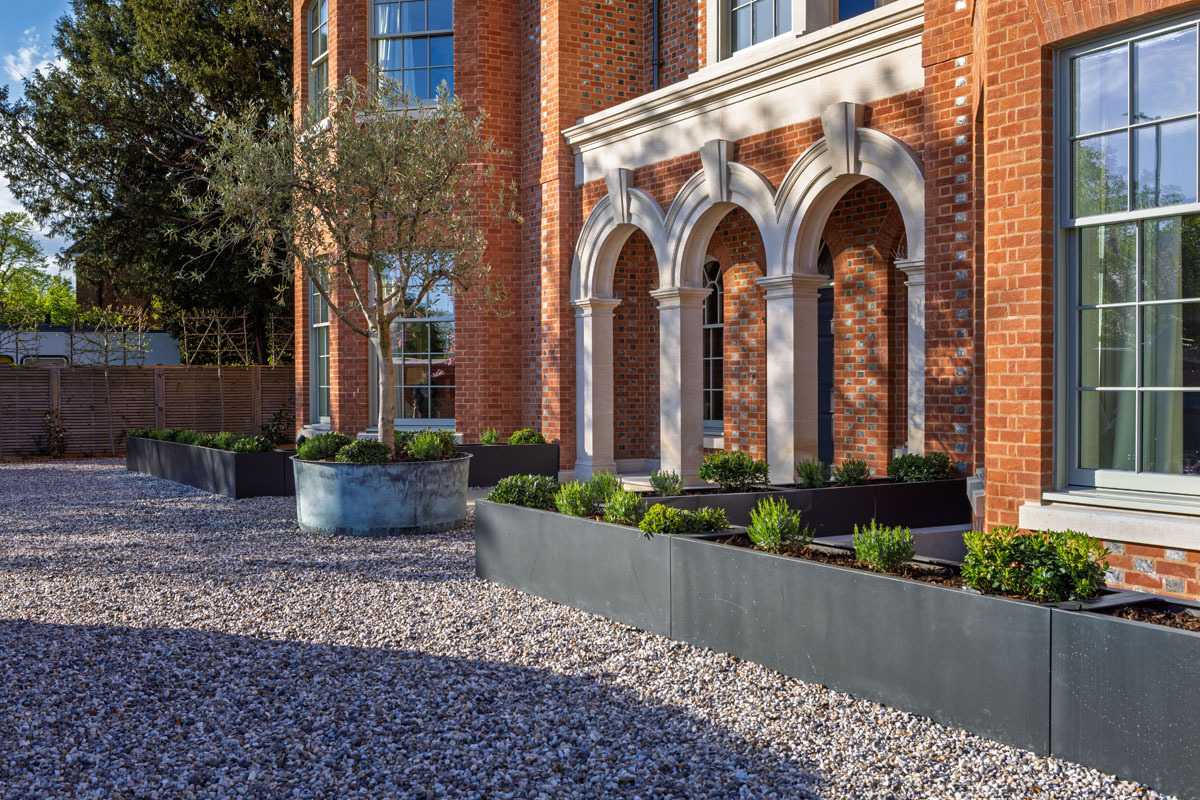
The home is designed in the Queen Anne style, using Flemish Bond brickwork, with painted timber sash windows and doors, all with stone sills. The front elevation has projecting, two-storey, polygonal bays either side of a central front door and porch, which is formed using dressed stone columns and arches, and finished with a moulded stone cornice above. The bays finish at a bracketed timber cornice, connecting these to the main eaves line, and with hipped roofs to the projecting wings behind the front bays. The attic accommodation is lit by two dormer windows above the front bays, with a Venetian central window to both the front and rear.
To lessen any impact the proposals may have on the surroundings, the front building line is set back approximately 1.5 metres from the existing building line and sits behind the existing approximately 2-metre-high brick boundary wall to the front elevation, with new timber panelled gates. The central ridge line is at the same height as the roof of the existing house.
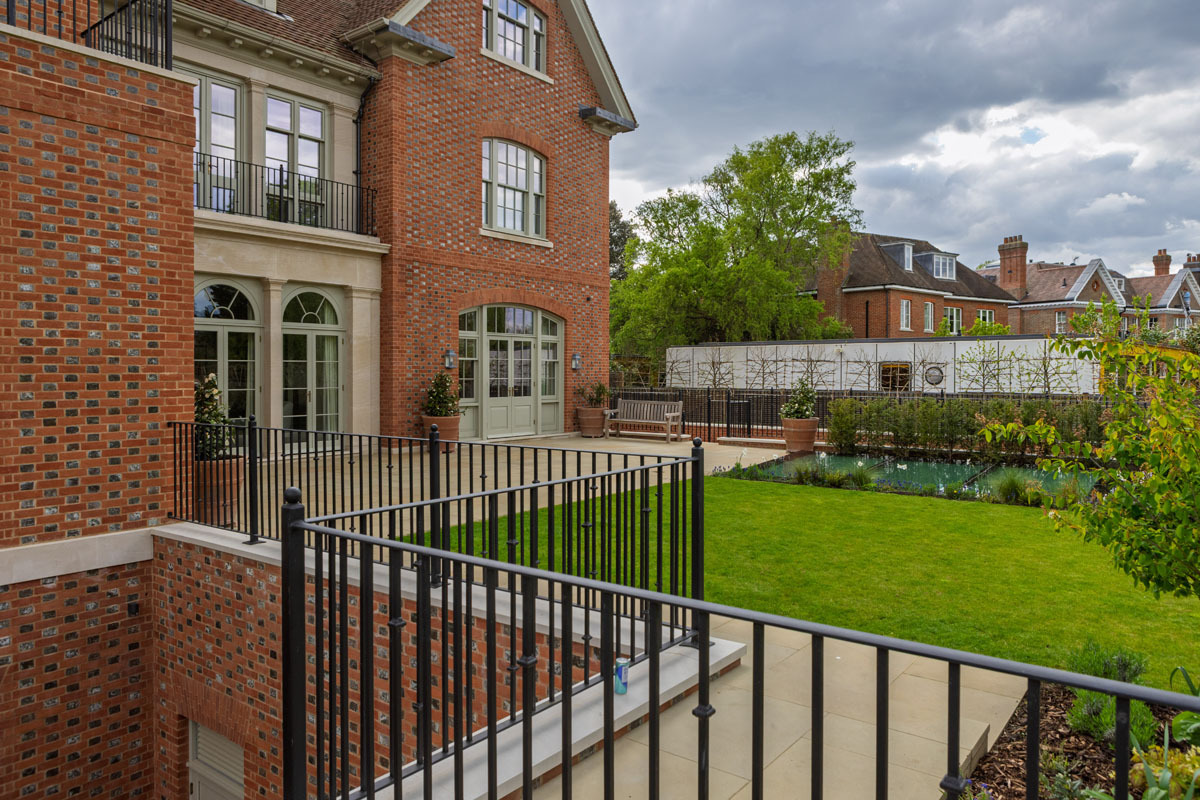
The rear elevation opens out onto a terrace area adjoining the garden. Like the front and side elevations it uses predominantly Flemish Bond brickwork, but with more dressed, moulded stonework to the central section. Larger areas of glazing have been used to connect with the rear, landscaped garden area.
The design prioritises a reduction of energy demand by way of maximising the insulation standards through the fabric of the building, as well as the air tightness throughout. By avoiding large areas of glazing the traditionally designed house provides a greater area of masonry combined with proportionally sized areas of window and doors, to produce a more thermally efficient form of construction, which is also more straightforward to construct and maintain.


