
Details
Location: Cobham, Surrey
Brick Manufacturer: Michelmersh Brick Holdings PLC
Brick Name: Lindfield Yellow Multi
Architect: Phillips Tracey Architects
Brickwork Contractor: Pettitt & Jane Building
About the project
Cobham House is a replacement dwelling within a quiet cul-de-sac, characterised by detached homes set within generous plots. The brief was to design a new house that positively responds to its context while providing a comfortable and flexible home.
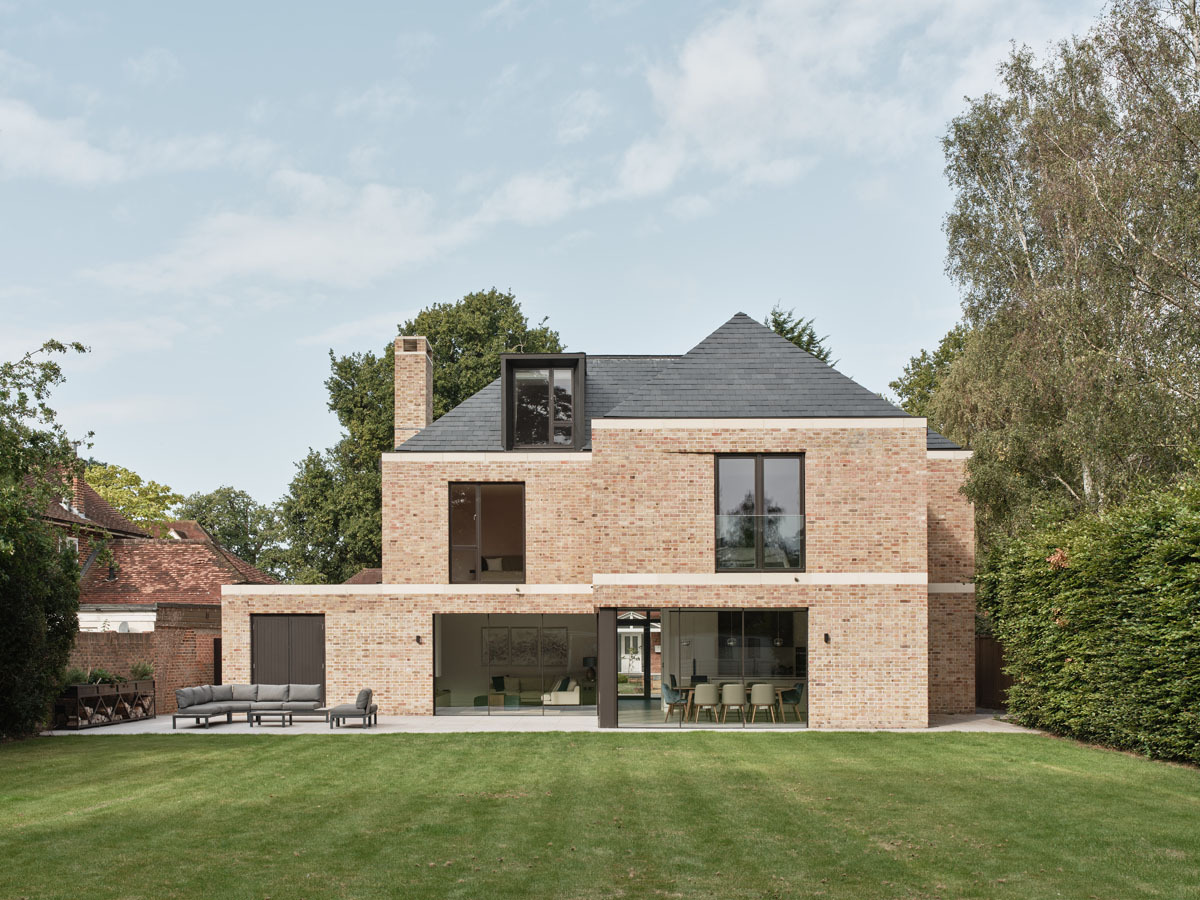
A key challenge was to create a building that felt both rooted in the established character of the road, whilst being careful not to default to classical pastiches. The design addresses this with a familiar 2.5-storey form and carefully composes the elevations using human proportions and traditional materials.
A masonry envelope was fundamental to delivering the simple concept of a well-proportioned brick form with deep openings. This approach provides the home with a sense of permanence and long-lasting quality, which was an essential part of the brief.
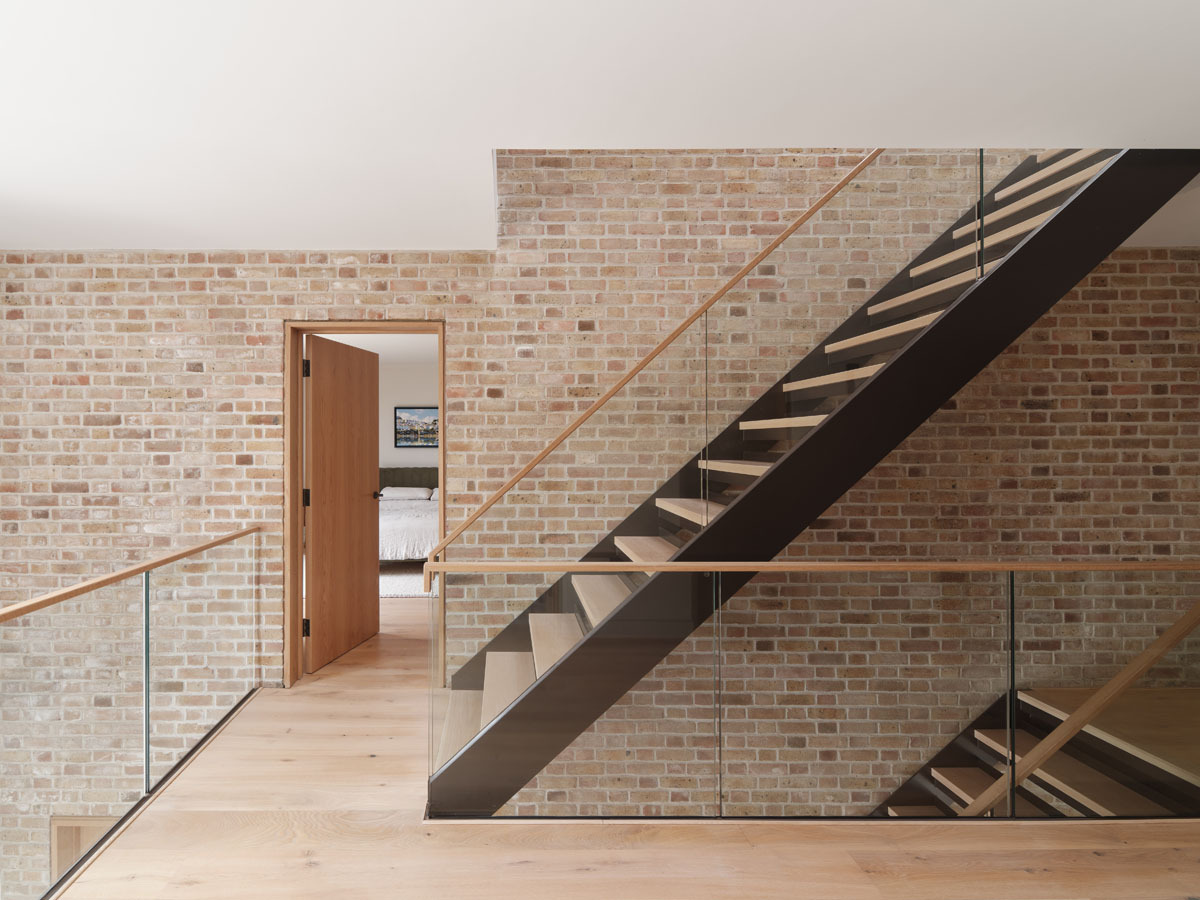
A three-bay front elevation has a calm and ordered presence with brickwork emphasising the proportions and mass. Brickwork continues internally to provide a rich self-finished texture. A more informal treatment of the rear elevation is complemented by a substantial brick chimney and a large gravity-defying cutaway corner, which allows the internal spaces to open out onto the garden terrace.
A splayed brickwork window reveal at the first floor provides a subtle adjustment to the composition as well as providing a wider aspect for natural light to penetrate deeper into the master bedroom.
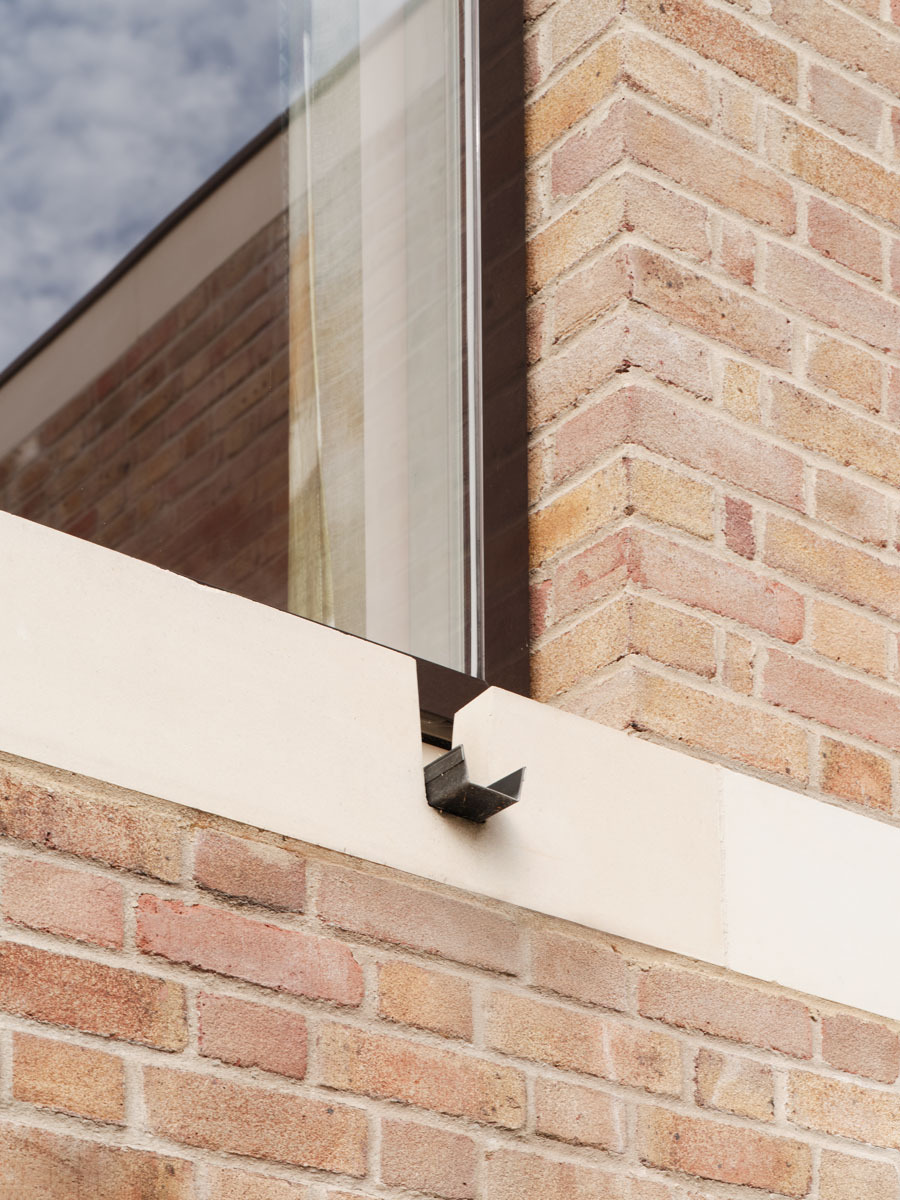
The sand faced Lindfield Yellow Multi provides subtle variation in tone and texture to the large expanses of masonry. Whilst considered detailing, including flush stone sill bands with hidden mini-gutters and spouts, provides contrasting horizontal articulation without relying on applied decoration.
The roof edge has a stone coping with hidden eaves gutters to remove the need for overhanging eaves. This allows the brickwork to remain as the dominant visual element. The use of a Flemish bond provides a further layer of texture and interest.
Lime mortar was used to provide a consistent finish to the pointing on both the brickwork and stone. Historic England’s guidance was followed to leave the arrisses of the brick clean and clear of mortar. The joints were then firmly stippled with a churn brush to give an open-textured and weathered appearance.
The building fabric is designed to exceed current performance standards, with brick providing thermal stability and durability. Its thermal mass helps regulate temperatures, reducing reliance on mechanical systems.
Brick’s low maintenance requirements and long lifespan contribute to whole-life sustainability, minimising the need for replacement, repair or application of additional decorative finishes. The use of lime mortar also provides the opportunity for the brick to be easily recycled in the future.
The site’s close proximity to the manufacturer helped minimise embodied energy use during its construction, complementing the practice-wide approach to specifying natural local materials wherever possible.
Cobham House demonstrates how brickwork can elevate a contemporary dwelling through its material integrity, performance, and craftsmanship. By combining traditional materials with a refined architectural approach, the project delivers a contextually responsive and enduring home that will continue to improve with age.


