
Details
Location: Manchester
Brick Manufacturers: wienerberger Limited / Michelmersh Brick Holdings PLC
Brick Names: Olde Farndale Multi, Staffordshire Smooth Blue (specials) / Porcelain White Smooth
Architect: OMI Architects
Brickwork Contractor: Steve Desmond Casey (SDC)
About the project
The Hibbitt Centre is a combined Six Form Centre and Sport’s Pavilion Building at the Manchester Grammar School. Over 500 years old, the school moved to its current site in Rusholme in the 1920s. Today it is a private school for boys aged 7-18 with a total of over 1,600 students, 15-20% of whom receive bursary support (on average covering 94% of fees) to attend.
The school had expanded in piecemeal manner over the previous 100 years reducing legibility of the original design intent of the campus. The new building was therefore envisaged as an attempt to address these wider design issues and to sit comfortably within its context whilst also meeting the requirements of the brief.
The new building provides sixth form specific facilities such as dining room, classrooms, a common room and support spaces. In addition, the brief also required the provision of new sports changing rooms and associated spaces.
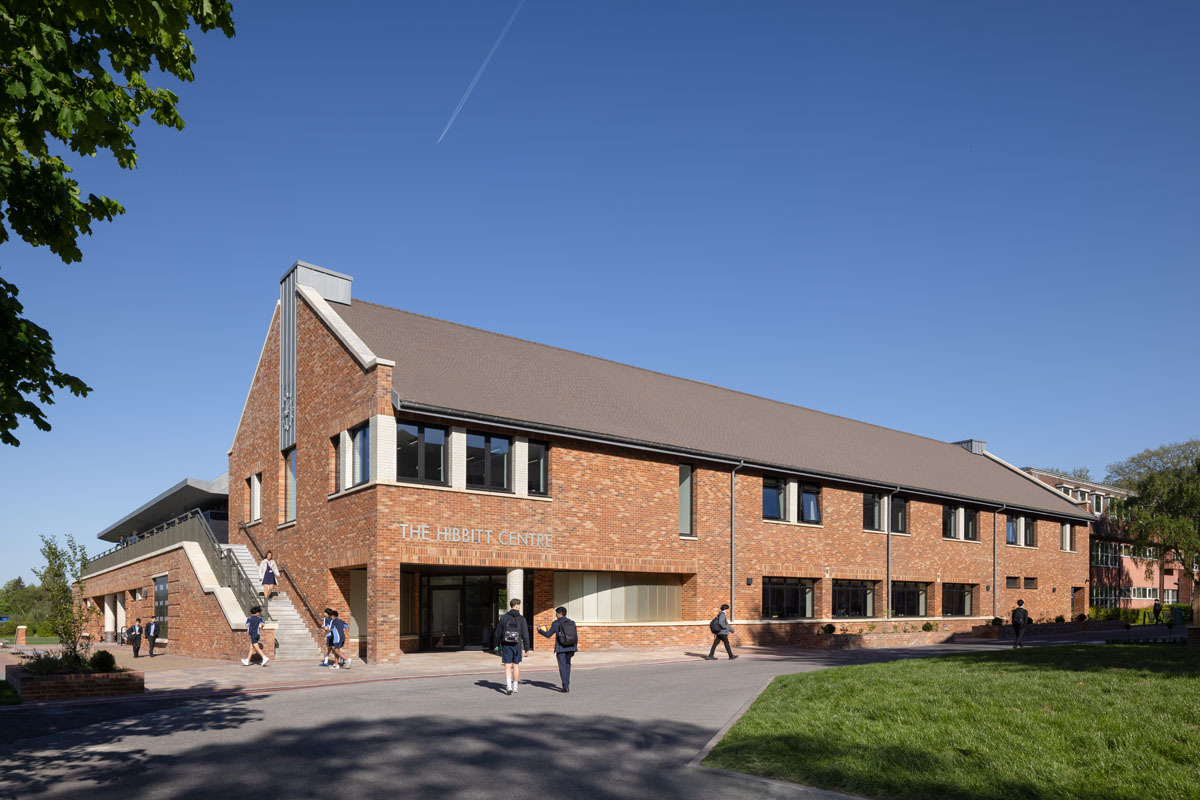
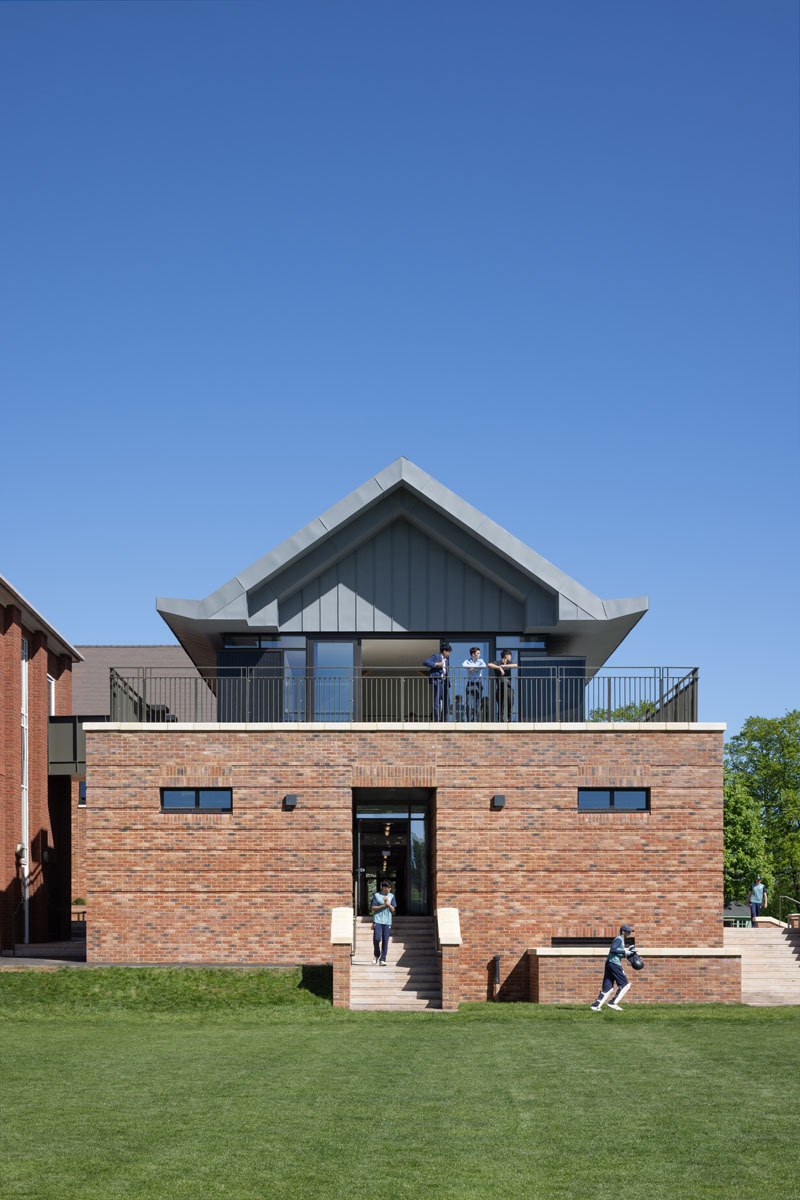
The building is ‘L-shaped’ and connects with and mirrors an existing building to form a new quadrangle space. An east-facing wing, contained under a pitched clay-tile roof, provides a dining room at ground floor with classrooms above. A south-facing wing includes changing rooms and sports facilities within a solid masonry plinth acting as a contrast to a visually light-weight common room over.
The deeply recessed building entrance is located at the junction of the two wings and is articulated by an external staircase giving access to a first-floor terrace providing views of the adjacent sports pitches. The stair also introduces a diagonal element into an otherwise strongly horizontal composition.
The detailing and materiality of the building was informed by Neo-Georgian style of the buildings the school had built in the 1920s. Constructed of a dark red sand-faced bricks, clay roof tiles and large sash windows, these buildings have a scale and mass that is offset by the richness of the brickwork detailing.
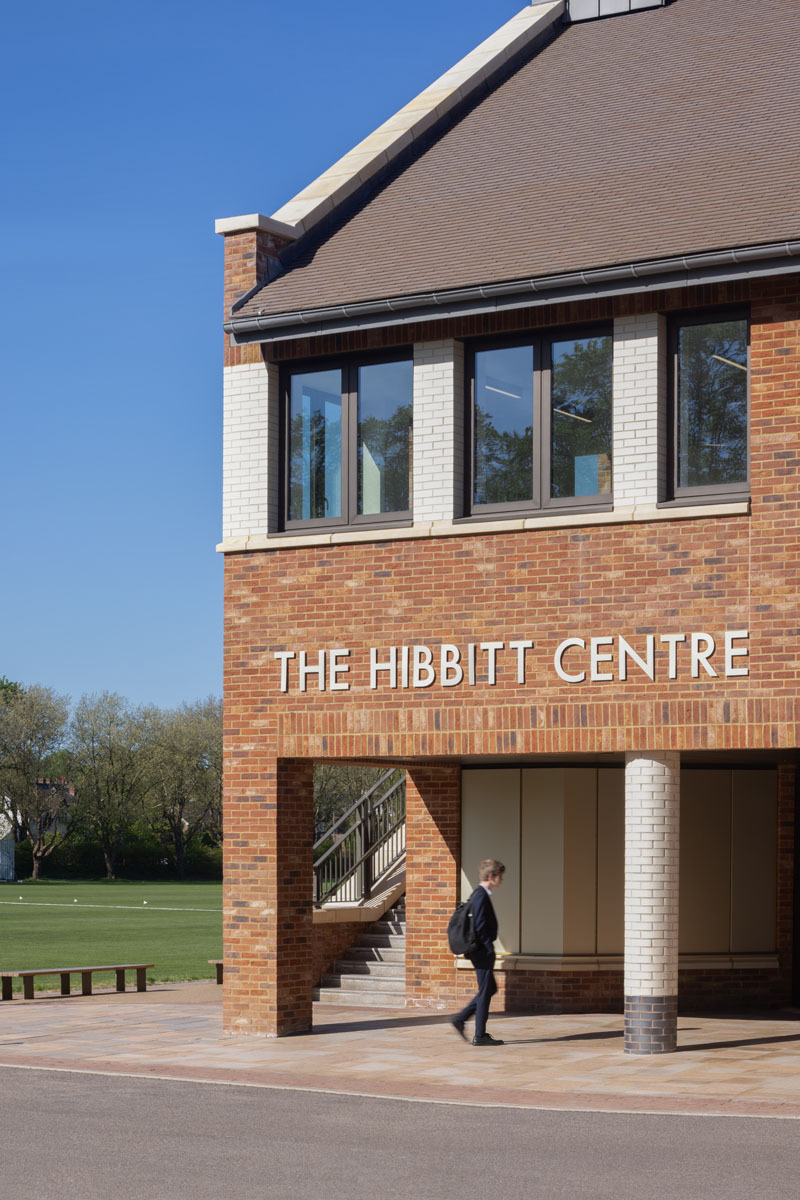
The new building embraces the solidity and connotations of permanence and continuity that is implied by the use of well detailed clay brickwork. Openings have soldier-coursed lintels at their heads and, when these openings become larger, these become a double course which extend to the underside creating brickwork soffits or ‘beams’. Recessed brickwork panels express the structural ‘bays’ of the new building to be expressed and a horizontal recessed brick banding detail replicates that found on the 1920s buildings.
Discrete areas of contrasting white brickwork are introduced between windows, within recessed panels to the courtyard elevations as wells to cylindrical brick columns which demarcate the building’s entrances. Brickwork is also introduced in key internal areas, visually bringing the external facades into the building and providing a robust wall treatment to high traffic areas.
The project demonstrates how a sensitive approach to context and a considered use of high-quality robust materials can create a building that positively contributes to its environment as well as providing accommodation suitable to the needs of current and future students.


