
Details
Location: Oxford
Brick Manufacturer: York Handmade Brick Company
Brick Name: Byland
Architect: Hopkins Archtiects
Brickwork Contractor: Vetter UK Ltd
About the project
The Schwarzman Centre for the Humanities establishes a new cultural and academic hub within Oxford's Radcliffe Observatory Quarter, bringing together seven Humanities faculties, seven Bodleian Libraries, two research institutes, a 500-seat concert hall, lecture theatre, performance lab and recital hall. As the University of Oxford's first publicly accessible building, it integrates academic, civic and cultural life.
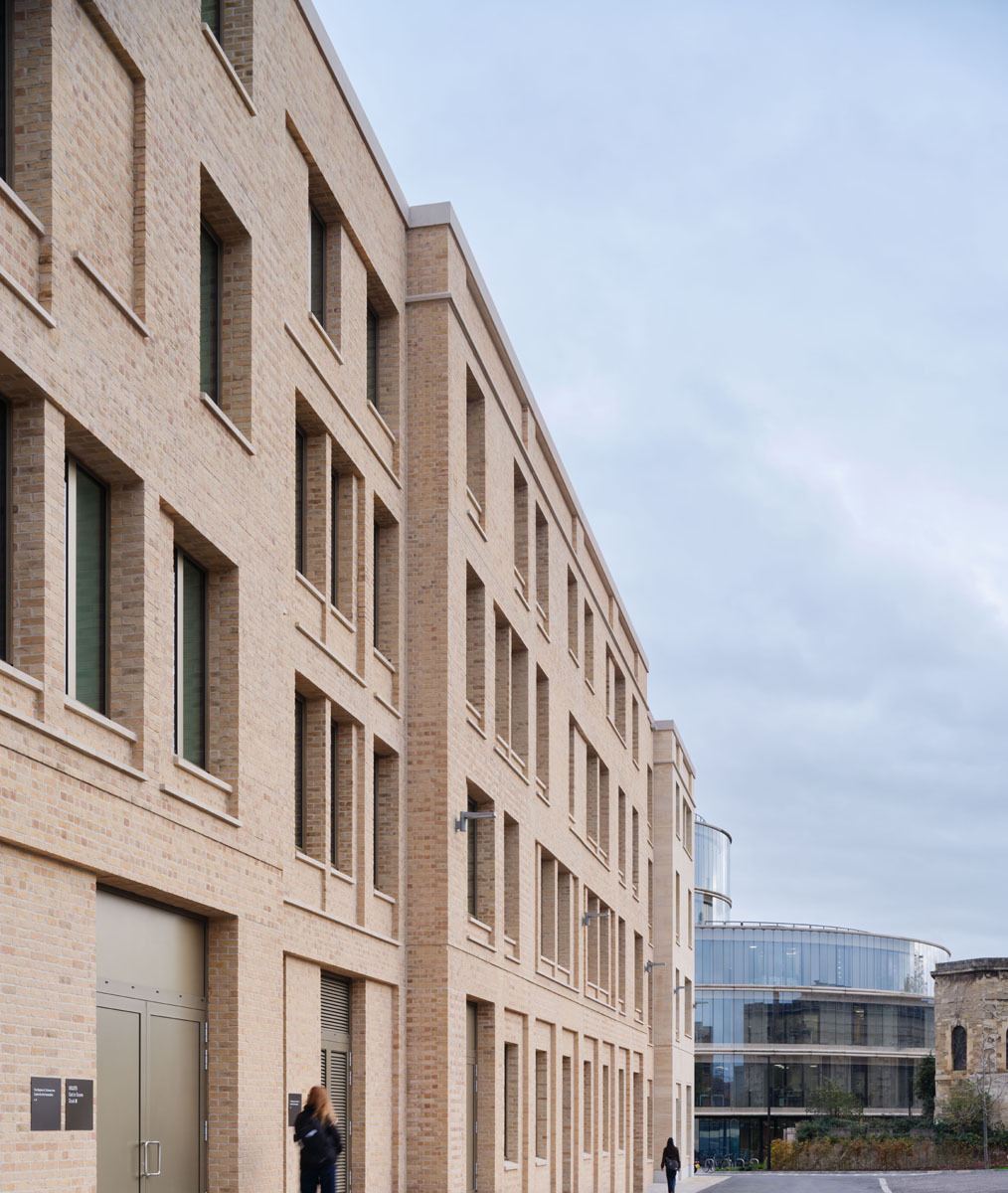
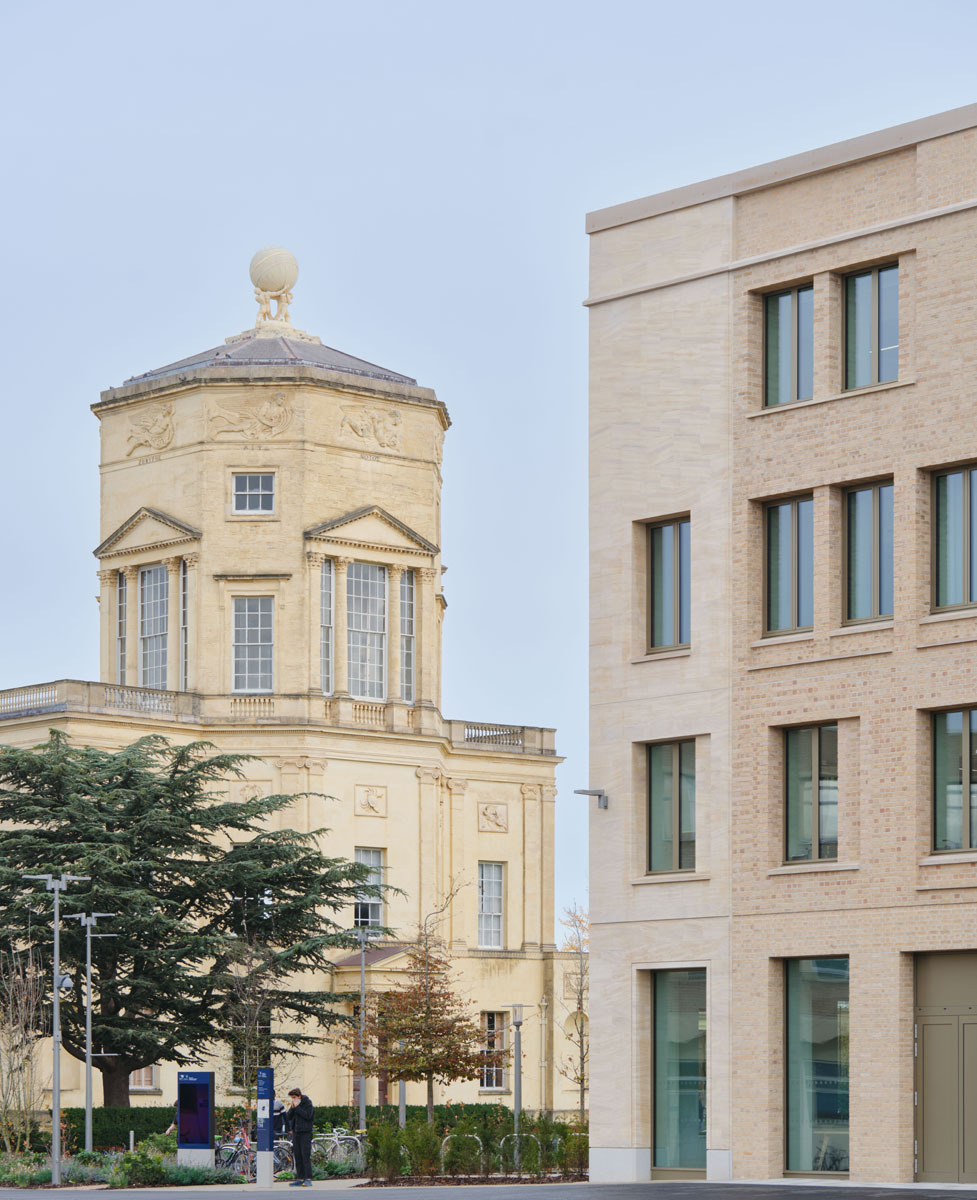
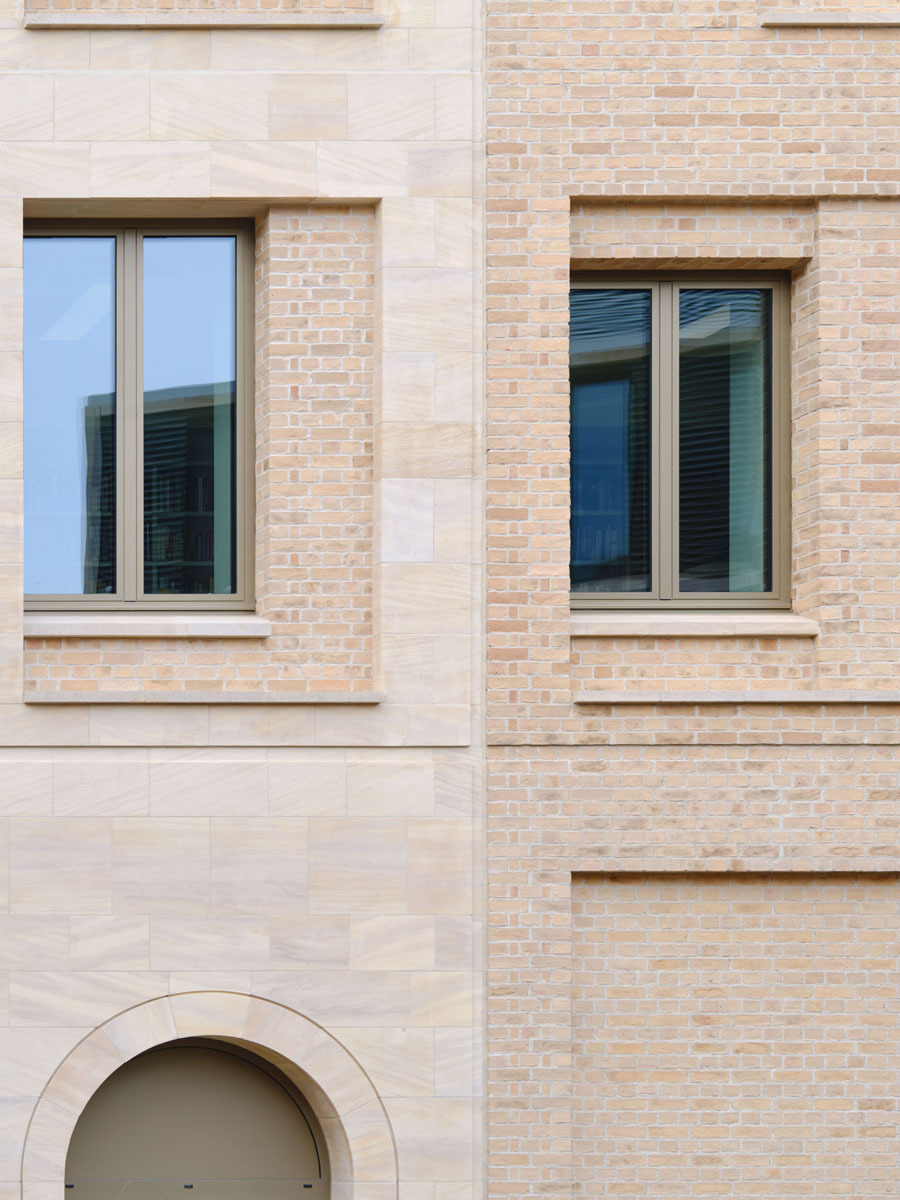
Forming the centrepiece of the Radcliffe Observatory Quarter and surrounded by architecturally disparate buildings, the façade reconciles this context. On the principal north and south façades, Clipsham limestone, long associated with Oxford's built heritage, links the Grade I listed Radcliffe Observatory to the north and Oxford University Press to the south. The east and west elevations are clad in handmade clay brick by York Handmade, complementing the warm stone tones and responding to the varied surrounding streetscape.
Brickwork selection, encompassing type, mortar, pointing and bond, was a rigorous process. Seven full-scale sample panels were constructed on site, evaluating products from York Handmade, Petersen Tegl and San Anselmo against criteria of colour consistency, texture, dimensional tolerance, porosity and weathering performance. Extensive mock-ups by Vetter UK assessed mortar tone, pointing profiles and workmanship quality. Early panels lacked texture and suffered from lime staining, prompting revised lime mortar pointing with a churn-brush finish, delivering the desired depth, textural quality and craft character.
The irregular texture and tonal variation of the brick softens the building's scale against neighbouring streets and college boundaries. The warmth of the buff brickwork and honey tones of the limestone create a coherent material language across all four elevations, a contemporary interpretation of Oxford's historic palette, grounded in tradition but resolved with restraint and precision.
The brickwork was procured within 200 miles of the site, reducing embodied carbon and supporting regional supply chains, part of a wider strategy retaining 97% of project spend within the UK, rooting the building's material language to its location.
The façade was predominantly prefabricated by Explore Manufacturing, with large precast panels produced by casting concrete directly onto bricks in reusable timber moulds. Minimising visible movement joints was critical to maintaining the monolithic aesthetic of Oxford's masonry tradition. A bespoke brick-stitching detail was developed, omitting selected bricks from panel edges in a saw-tooth arrangement; once adjacent panels were joined on site, bricks were hand-set into the remaining gaps, visually stitching panels together and concealing the joint. Façade runs of up to 21.5 metres were achieved without visible movement joints. The entire envelope, comprising 326 prefabricated façade panels, was installed in just ten weeks, delivering significant savings in time, cost and on-site activity.
The building achieved Passivhaus certification in 2025 and is the largest Passivhaus scheme in England, Europe's largest Passivhaus university building and the world's first Passivhaus concert hall. The prefabricated envelope was fundamental to achieving these demanding thermal and airtightness requirements, preserving a traditionally crafted brickwork character without compromising performance.
Completed on budget in September 2025, the project demonstrates how architects, specialists and contractors can deliver innovative, modern brickwork construction of excellent quality within a sensitive historic context.


