
Details
Location: Surrey
Brick Manufacturer: Bulmer Brick & Tile Co Ltd
Brick Name: Fully Washed Red Rubber
Architect: Historic Royal Palaces
Brickwork Contractor: Simpson Brickwork Conservation Limited
About the project
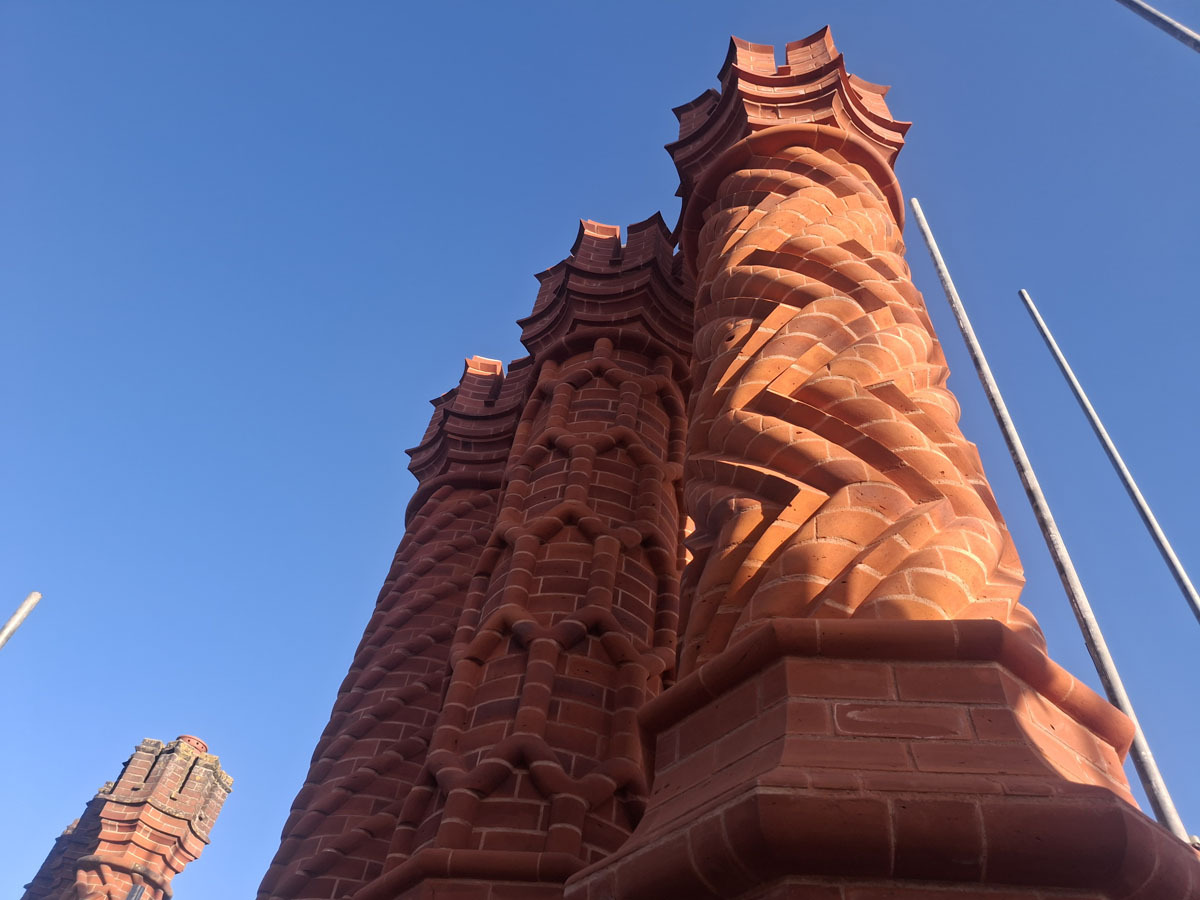
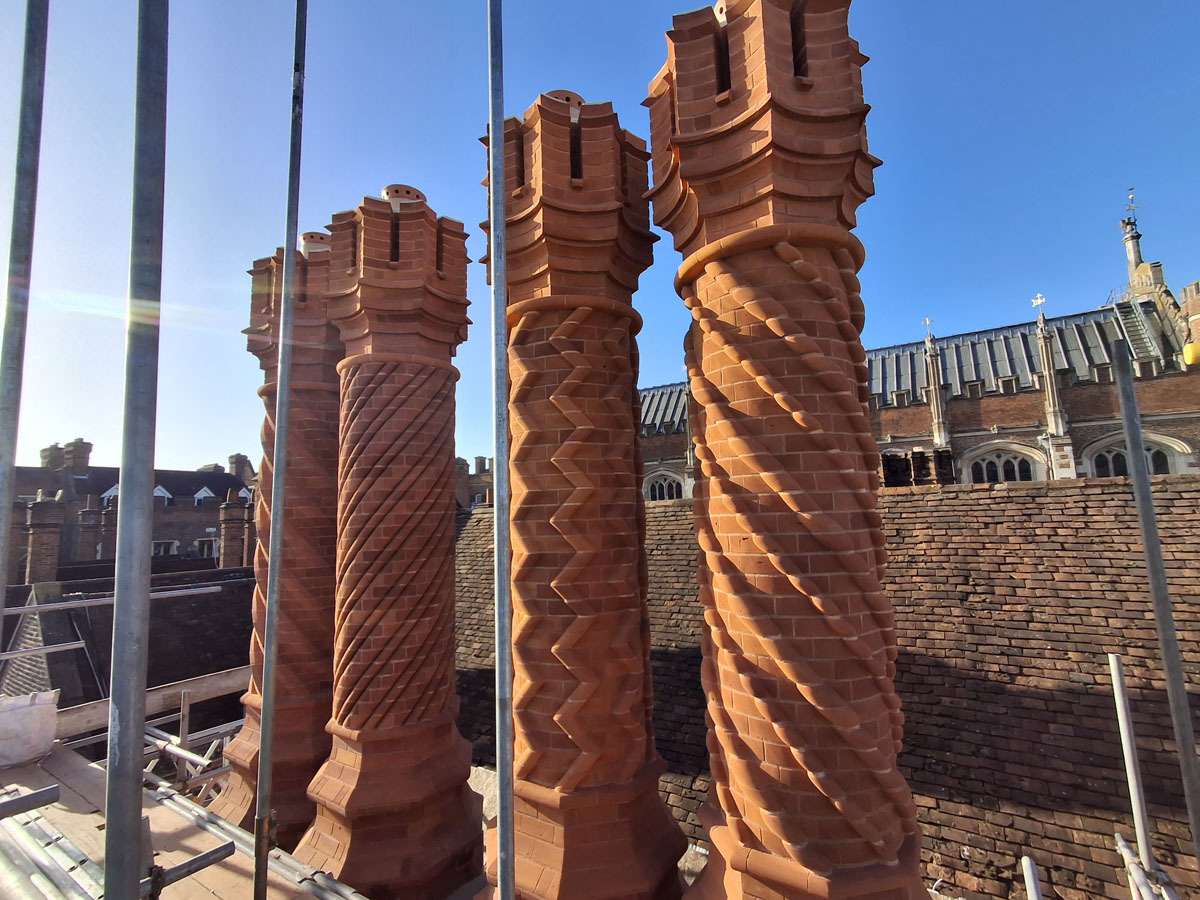
Four structurally unsound chimney stacks at Hampton Court Palace needed to be rebuilt. These Victorian chimneys were highly complex structures, built from hand-cut decorative mouldings.
The original intention was to re-use as much salvaged material as possible, but it was ultimately decided that the chimneys needed to be completely re-made due to their poor condition. The brief was to carefully record and dismantle the existing chimneys, cut all the necessary material – approximately 7,000 new mouldings – and then re-build them.
The project presented a series of challenges, including the absence of any original drawings for these elaborate structures. Construction drawings had to be created using data gathered during the recording process. It was also necessary to design and manufacture cutting boxes capable of re-creating the brick mouldings within extremely tight tolerances.
This branch of the trade is known as ‘cut and rubbed’ brickwork, and the methodology used to produce this work today is much the same as when these chimneys were originally built.
The bricks used were the finest quality fully washed red rubbers produced by Bulmer Brick & Tile Ltd and are an excellent match to the original material. They are made from the same clay seam that Hampton Court sits on, and the method of production at Bulmers has remained largely unchanged for centuries, helping them to mellow gracefully.
These are very fine, soft bricks with a consistent structure and texture that allows them to be cut and carved without cracking or exposing stones or voids. Despite their softness, they are highly durable when maintained correctly using appropriate mortars.
When built using lime mortar, cut and rubbed chimneys can have a lifespan of well over 130 years, as demonstrated by the original structures. Such bricks are suitable for re-use and can be dismantled without breaking up. These sustainable red rubbers will swiftly blend comfortably with the surrounding historic fabric.
The chimneys are the crowning glory of a stunning brick palace, standing as a tribute to the inventiveness and creativity of the original designers and craftspeople. Recreating this work today presents a significant challenge and privilege, requiring skills and processes that closely mirror those of previous generations.
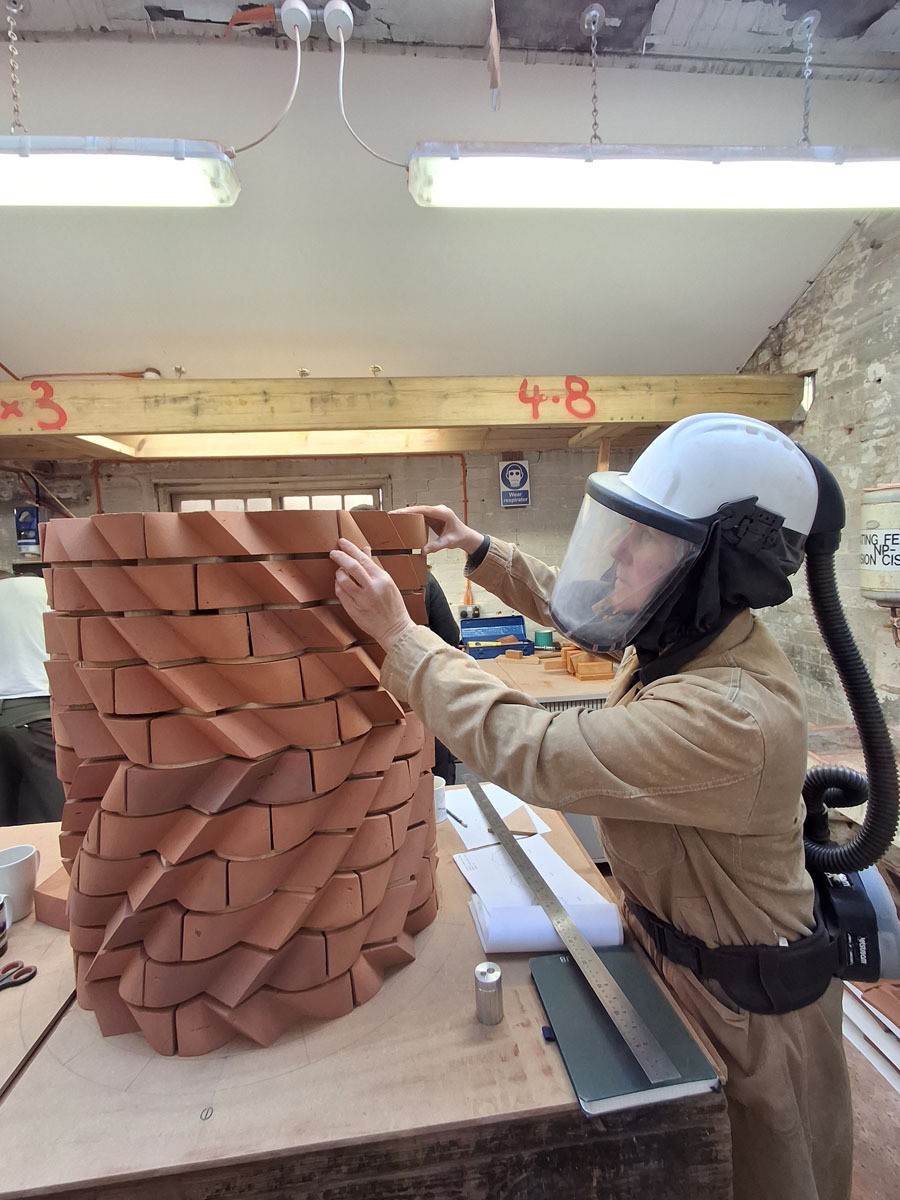
After recording and dismantling, wooden boxes were made to match the profiles of the original mouldings. The red rubbers were hand cut in the boxes using a wire bow saw to produce the intricate shapes. Some of the mouldings could not be fully cut within a box due to their complexity and had to be finished through hand-carving.
Next, the base, shaft and crown were dry-fixed in the workshop. This setting out process required a high degree of precision. Construction drawings were produced at this stage, recording dimensions to facilitate an accurate re-build. Once the setting out and dry-fixing had been completed, the bricks were carefully wrapped for protection during transit.
The final stage was the re-build, using a lime mortar. Measurements, levels and alignment were constantly checked to maintain accuracy. Controlling these elements was particularly challenging because the decorative shapes often prevented the use of conventional plumbing methods. Creative thinking and problem-solving were key aspects of the project.


